Galata Tower is one of the most iconic symbols of Istanbul. It also features to be one of the highest and oldest towers in the city offering breathtaking views of the Golden Horn, Historic Peninsula and an expansive view of the Bosphorus.
This famous observatory tower gets its name from the area where it is situated, Galata District in Beyoğlu, Istanbul. At the top of the Galata Tower, we walk out to enjoy a panoramic landscape just in time for the sun to set over the Golden Horn.
Galata Tower, which is one of the oldest towers in the world, was added to UNESCO Tentative List in 2020, and has undergone extensive renovations to include museum spaces, galleries, and a two storey lookout and observation deck.
On losing Frank Gehry, and remembering the decades he spent transforming material, space, and the future of architecture forever. When I woke up today I didn’t plan to write an obituary, I’ve never written one before. I’m still processing the news that Frank Gehry has passed away. For those of us obsessed with the built…
The Neighbourhood That Rewrote Medellín Cities spend billions trying to “activate” public space. Comuna 13 did it with brick, paint, music, and a set of escalators clawing up a mountainside. Walking into it feels like stumbling into a city built on improvisation—walls turned to canvases, staircases to storefronts, every corner buzzing with kids, vendors, and…
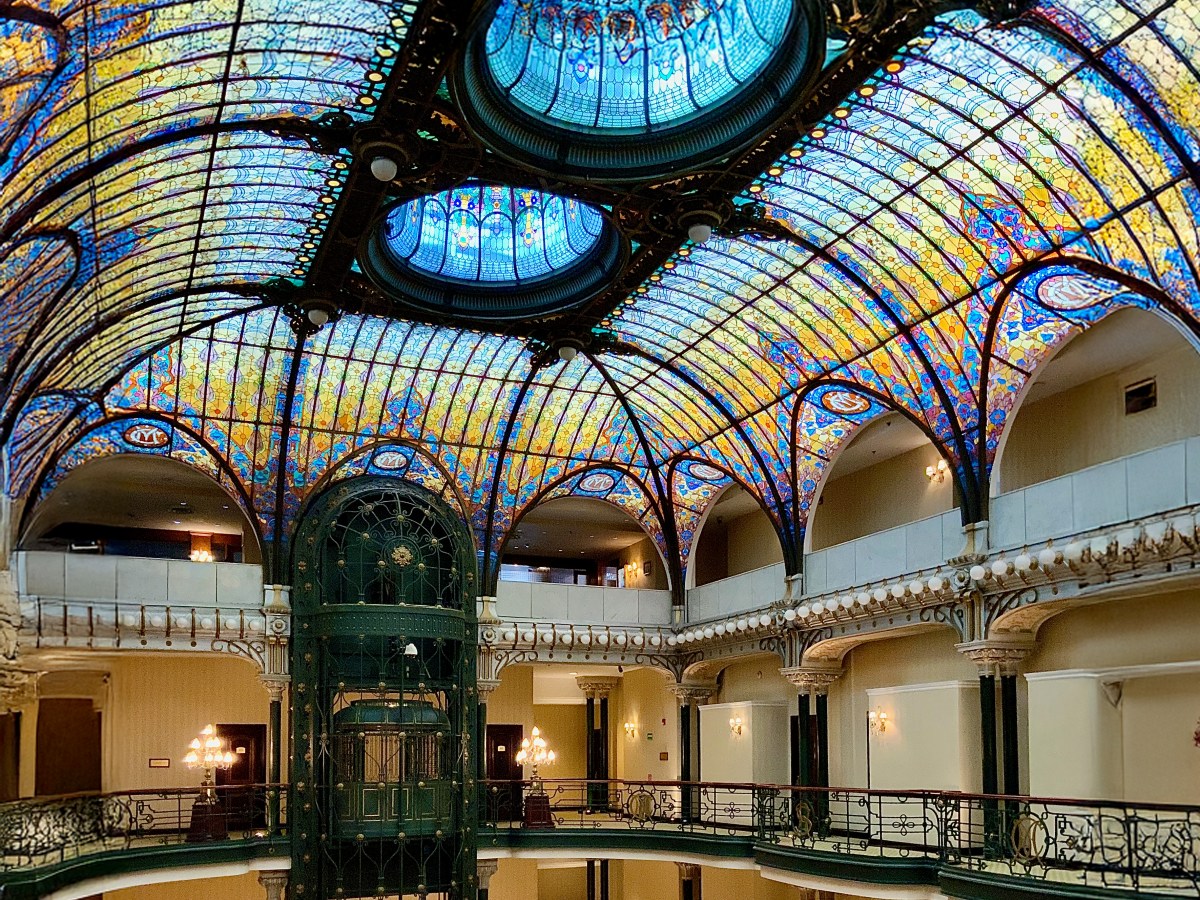
In Search of the World’s Most Beautiful Glass Ceiling Field Reflection: I wasn’t planning to write about an elevator today. But maybe I should’ve seen it coming. Every trip ends with one. As for now, today I was chasing a memory, a fuzzy, architecturalish, probably warped by Pinterest and Instagram memory. A massive Tiffany’s glass…
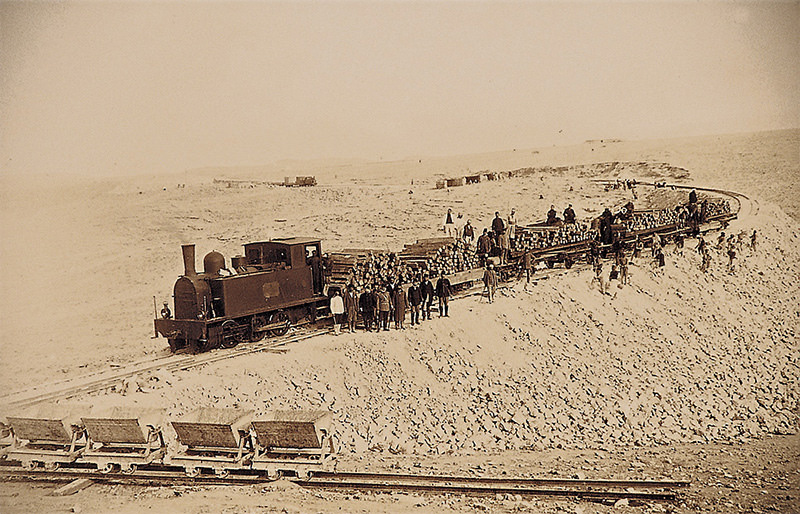
The Jordanian Hejaz Railway, which connects Damascus and Amman to Medina in Saudi Arabia, is a historic example of Ottoman creativity that has made the spiritual journey easier for Muslim pilgrims.
The Hejaz railway line is one of the oldest in the region and the world. It was built in 1902 during the reign of Ottoman Sultan Abdul Hamid II and has allowed pilgrims to drastically cut down their travel time.
Before the railway project became operational, the trip used to take three months, but it now takes only 54 hours.
Salah al-Lozi, director of the Jordanian Hejaz Line Foundation, told Anadolu Agency that the “railway line is the legitimate and heir son of the Ottoman Empire and the Turkish Republic.”
“Since the establishment of the line, its main goal has been to save time and effort for Muslim pilgrims,” al-Lozi said. “It is one of the oldest railway lines in the Middle East and the world.”
The railway line continues to operate from Jordan, but has stopped its services from Syria as a result of the ongoing civil war.
Al-Lozi said a recent agreement with Turkey to develop the project includes building a museum for the historic railway, which will display pictures of how the line was created.
During a recent visit to Jordan by Turkish Prime Minister Ahmet Davutoglu, the Turkish TIKA agency signed an agreement with Jordan’s Hejaz Railway Foundation to build the museum.
When travelling around Turkey, you’ll spot yellow PTT boxes, cargo vans, offices and more all over. PTT, an abbreviation for Posta ve Telgraf Teşkilatı, is the national post and telegraph directorate of Turkey. Formerly, the organization was named Posta Telgraf Telefon. After the privatization of the telephone telecommunications service business, the directorate was renamed, keeping its acronym. It is headquartered in Ankara, Turkeys Capital, however it is known as TURKISH POST internationally.
On 23 October 1840, during the reign of Abdulmejid I, the Ottoman Ministry of Posts was established. In 1855, the first telegraph service and in 1909 the first telephone service were put into use. In the same year the name of the ministry was changed to Posta Telgraf Telefon, “Posts, Telegraph and Telephone” or PTT for short, a name which was used for 86 years. In 1995 the telephone and other telecommunication services were transferred to newly founded Turk Telecom (which was soon privatized). Accordingly, the directorate was renamed as “Organization of Post and Telegraph”. Thus the former acronym PTT is kept.
PTT celebrating its 180th anniversary this month, has a much profound background than it has now. In an interview with the Honorary President of the Turkish Philately Academy, Turhan Turgut talks about his work on Ottoman postal history, his sprawling stamp collection, and what postal and communications tradition endure nearly two centuries later after PTT’s founding.
How did people use to communicate with each other before the establishment of PTT Corp. the Turkish Postal Services on October 23, 1840? What tradition was PTT built on?
Before the establishment of the regular postal system before 1840s, written communication was mainly comprised up of official correspondence between the palace and organizations working with it and its states and sanjaks (Sanjaks were administrative divisions of the Ottoman Empire). Specialcally assigned officers called Sais, Messengers, Satellites or Tatars were responsible for the delivery of the important and vital documents. They sed the main roads defined as the right, left, and the middle routes that started to form Istanbul and extended along Anatolia and Rumelia to reach their destination.
Prayer and Talisman in an envelope sent from Istanbul to Filibe in 1859. PTT.
Stations were built at certain distances on these main roads and their secondary routes. These were the stations where messengers providing correspondence services, armies going for battles and the pilgrimage convoys to Hejaz (Holy region in the west of Saudi Arabia) use for accommodation. Forerunners assigned by the sultan to inform him about the arrival of the pilgrimage convoys in Hejaz and their return back home also benefitted from this transportation system. The civilians were looking forward to seeing these forerunners to hear from their relatives who went on pilgrimages.
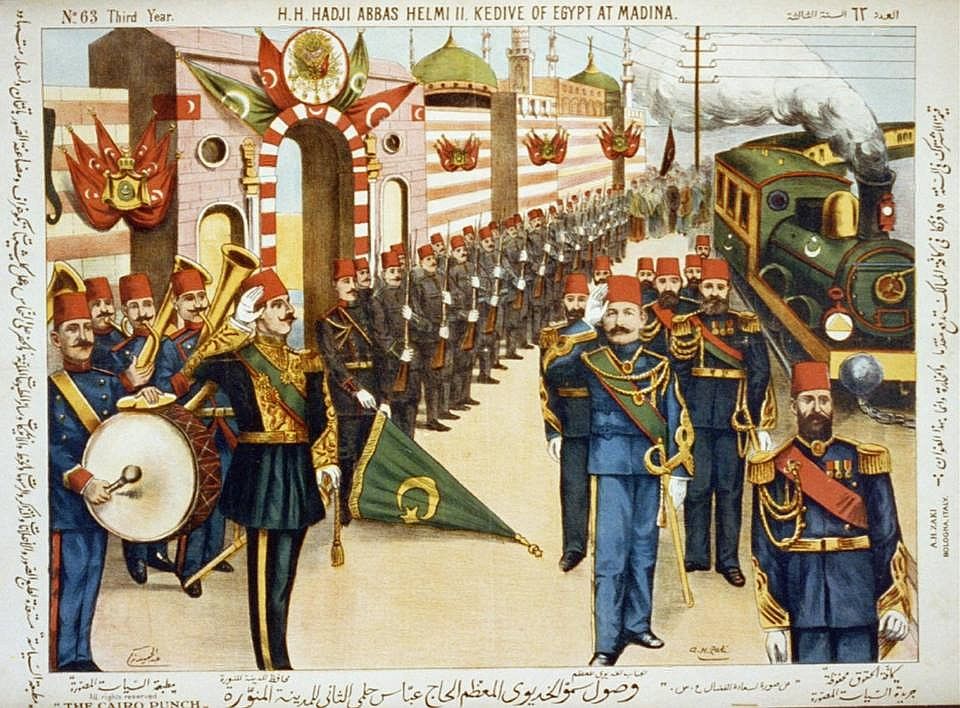
Ottoman Hejaz, Abbas Hilmi Pasha, Khedive of Egypt at Medina. After the Railway was established.
It has been acknowledged that the regular postal system was established during the reign of Kanuni. When Grand Vizier Lütfi Pasha, who served the empire between 1539 and 1541, mentions the messengers in his work called Asafname “I had range horses placed in some places during my administration,” he says, which provides the source for his process in creating the system.
The villagers living close to these stations were assigned as stationers to provide accommodation and food for the residents, to look after their animals and retain their safety. They were also responsible for keeping range horses ready for the use of messengers. When the messenger carrying the document reached his destined station, he would either change his horse or pass the document to another messenger to be delivered to its destination. The general rule was the important and vital documents to be carried and delivered by one messenger. The tradition on which PTT was build and dates back to centuries ago.
Dromedary post branch, where the post was carried by camels.
Under which conditions was PTT (referred to as Posta Nezareti then) established? What is the atmosphere of the Ottoman Empire then?
The initial step from the previous postal system to regular postal system was taken during the reign of II Mahmud. In an imperial inscription, registered in the Prime Ministry Archive, it is requested that any place or individual that can provide postal services in :suitable areas in Anatolia and Rumelia” are put into use. The statment, in the aforementioned imperial inscription, of the letters and relics to be sent by “the people of Islam and either subject to a person or state” shows the postal system did not only include only official correspondence but also private communication.
The first regular postal system service the civilians was established during the Ottoman Empire on 23 October 1840 and referred to as “Postahane-i Amire” Bahcekapi, what is now the IS Bank museum. Although the Postal Service was established earlier, it actually came into use on this date.
There is a close relationship between these developments and the political reforms launched in the Ottoman state in 1839. It was not possible for the Ottoman Empire to stay away from the dynamism that the Industrial Revolution was introducing to Europe. The improving and expanding business connections with Europe lead to the opening of the first Bank (Bank-i Dersaadet) in 1847.
Dentist A.Caraco’s Introduction Card. PTT Post Stamp.
A few years after that the importance of postal services increased greatly with the opening of Osmanli Bank. Because all money and other valuable paper transactions were made through post at the time, a separate tariff of fares were set for them.
Professionals such as merchants, tailors and doctors also started use the postal system to promote their services. During the First World War, were used extensively as a means of communication and propaganda with the war front and made great progress.
Mail delivered from Samatya to Beylerbeyi on the same Day. Ottoman Post. PTT.
During the Ottoman Empire, PTT was an organization that serviced on three continents. How did this corporation and organization function?
In regards to the Ottoman Empire, the empires boarders stretched from what is now Serbia toYemen. The state implements numerous measures to make sure that the postal system reaches all its destinations without any failure or delay. We know that there were 3139 post offices in service from 1840 to 1922. In the few years following September 1855, when Istanbul was connected to Europe by telegraph, an effective telegraph network was established within the Ottoman State.
In the annual dated 1847, it was stated that it took a letter from Istanbul (Constantinople) to reach its destination in Edirne 44 hours, 217 hours to Sarajevo, 203 hours to Adana, 464 hours to Baghdad, and one coin was charged per hours for a three-drachmae (10.6g). Later, the development of the marine transportation shortened the time of the haul between the costal post offices. For example, it took a mail from Trabzon to reach its destination by land 100 hours, but it took less than two days by sea. The mail within the city was delivered the same day.
Ottoman Rail.
With the railways coming to use, the landscape of postal system changed drastically and gained speed. The railway line connecting Istanbul directly to Vienna opened on August 12, 1888. The famous Oriental Express started to run between Paris and Istanbul June 1, 1889. Mobile postal services were provided on these trains and significantly sped up the time between communications. In addition, the train stations changed to post office status that can only accept letters. The mail sent to Europe by sea through Varna until 1886 stated to be sent by rail after that.
With the opening of the railway lines in Anatolia, the destiny of its mail transportation also changed. Postal services were provided at some parts of these railway lines. The transportation of mail through the sea and rail lines and the use of the telegraph becoming more prevalent made the profession of messengers obsolete. In 1918, they were all assigned as mobile civil servants, which caused a traditional service to come to an end.
Was the running of the postal services during the Ottoman Empire successful under the sultans power?
Of course. The postal system was always taking the lead among the most efficiently working institutions in Ottoman Empire. The State considered the privacy and the safety of the delivery service they provided as a debt of honour and took care to protect this with the rules they established by the European countries were adopted to the standards of the state and came unto use after a while.
Even as early as 1834, Paris Central Ambassador Mustafa Resit Pasha was asked to provide information about the French postal system, which he had obtained a copy of the French postal order and sent it over. All the data regarding the postal tariffs and which post offices were entitled to what type of delivery was presented to civilians in a simple language accompanied by maps since the first postal service came into use. As of 1864, all this information was documented in annuals, and after 1892, they were only documented in pamphlets that were only specifically prepared for this same purpose by the Post and Telegraph Supervision. Most of the pamphlets prepared after 1883 were published in Ottoman Turkish and French, and their content was prepared in a manner that they can still set an example for us today.
The Ottoman State took part in the international organizations that took place to prevent any potential confusion and to create a unitiy among interstate postal systems too. The Ottoman State, the founding member of the Universal Postal Union established on 9 October 1874, implemented all the regulations set in international conferences to a large extend.
PTT played a strategic role during the difficult days of the War of Independence. What contributions were provided to this road to victory?
During the National Struggle that started with Mustafa Kemal and his friends, embarking on Samsun on May 19th, 1999, the telegraph officers displayed great sacrifice and patriotism. When the telegraph that the Representative Committee created during the Sivas Congress held between 4-11 September 1919 sent to the Emperor on 11 September 1919 was obstructed by the Grand Vizier, it was decided that the telegraph services between Istanbul and Anatolia to be abolished. As of 21 September 1919, the State of Istanbul stooped accepting and money order and escrows to Anatolia.
After opening of the Turkish Grand National Assembly (GNAT) on April 23rd, 1920, the General Directorate of Post and Telegraph of the GNAT Government was established under the Ministry of Foreign Affairs. This directorate was a continuation of the Istanbul-based General Directorate in terms of its technical infrastructure and human resources and organized in the same manner. It started serving in a tent set up in the Parliament’s garden under the difficult conditions of those days.
“Postal Bill” that was put into service in 1913 was an important innovation in terms of money transfer and trade transactions.
During the War of Independence, communication with letters, transfer and carrying package services interruption continued. But the major responsibility was on the shoulders of the dispatch clerks. Because of the only device for the speed communication was telegraph in the absence of the network of the telephone, every movement of the army was watched and directed. In this period, Turkish dispatch clerks tried to nullify the efforts of the occupation forces to sabotage communication opportunities with super human effort and provided services.
It is known that Atatürk replied as the “wires of the telegraph” to the question “how have you managed to win the victory?” from a foreign journalist. Many fearless and patriotic telegraphers such as Fatsali Halim Efendi and Hamdi Bey played a great role to transmitting information from Istanbul under occupation. During most of the meetings, Mustafa Kemal Pasha made with the military commanders, he used telegraph device himself and almost of the burden of developing common strategies was undertook by the communication device.
Back when we were kids, many of us had pen pals, stamp collections and these were a way to connect with the world before the internet. During times of revolution, the tools of communication were essential to saving lives and delivering important messages to those on the forefront.
Today we have the internet in all its forms, from the use of Twitter to help share messages from war torn regions and oppressed people, to zoom meetings and emails that have kept us all connected during a global pandemic.
PTT History Timeline:
1840 Ministry of Post was established
1855 Directorate of Telegraph was established
1871 Ministry of Post and Directorate of Telegraph were united
1901 Money order (money transfer) service was started
1909 After the establishment of telephone service, organization was turned into the Ministry of Post, Telegraph and Telephone
1939 It has been carrying out its services as subordinate to the Ministry of Transport, Maritime Affairs and Communications as the named of General Directorate of PTT
1984 General Directorate of PTT has been transferred into the status of the State Economic Establishment
1995 General Directorate of PTT was restructured as the General Directorate of Posts and Turk Telecom Corporation
1995 It was started automation service on money order and postal cheque services
1999 It is started to cooperation with Garanti Bankası (Körfezbank) within the transaction services
2000 The name of “General Directorate of Posts” was amended as “General Directorate of Post and Telegraph Organization (PTT)
Toronto, the capital of the province of Ontario, is a major Canadian city along Lake Ontario’s sprawling freshwater shore. It’s a dynamic metropolis with a core of soaring skyscrapers, all dwarfed by the iconic, free-standing CN Tower, surrounded by the most diverse and multicultural communities in the world.
The city has countless green spaces, from the orderly oval of Queen’s Park to 400-acre High Park and its trails, massive Stadiums, Hockey Arenas, international food markets,
Pride Toronto
1. Pride Toronto
Founded in 1981, Pride Toronto continues a legacy that is deeply intertwined with the rich, progressive history of Toronto’s queer community. From a small gathering of dedicated activists fighting for their right to love and be seen, to clashes with the government and police, to the vibrant celebration we know today, Pride has been a long time in the making and has grown into one of the largest celebrations of Gay Pride in the World!
The Toronto Caribbean Carnival, formerly and previously called Caribana (1967-2006), is a festival of Caribbean culture and traditions held each summer in the city of Toronto, Ontario, Canada. It is a Caribbean Carnival event, that has been billed as North America’s largest street festival, frequented by over 1.3 million visitors each year for the festival’s final parade and an overall attendance of 2 million.
The festival was introduced to Canada by immigrants from the Caribbean. It follows a Carnival format, particularly following the Trinidad and Tobago Carnival, but also influenced by the street dancing and masquerading in costume found on every Caribbean island such as John Canoe in Jamaica, Crop Over in Barbados, and other similar festivals in Cuba, Haiti, and the Dominican Republic. This event is very important for preserving and expressing their Caribbean identity, and has been a cornerstone of Summer in Toronto for generations.
Taste of the Danforth is one of Canada’s largest Street Festival, welcoming approximately 1.6 million attendees over 3 days. The Festival is organized by the GreekTown on the Danforth BIA, a not-for-profit organization, run by a volunteer Board of prominent Greek community leaders.
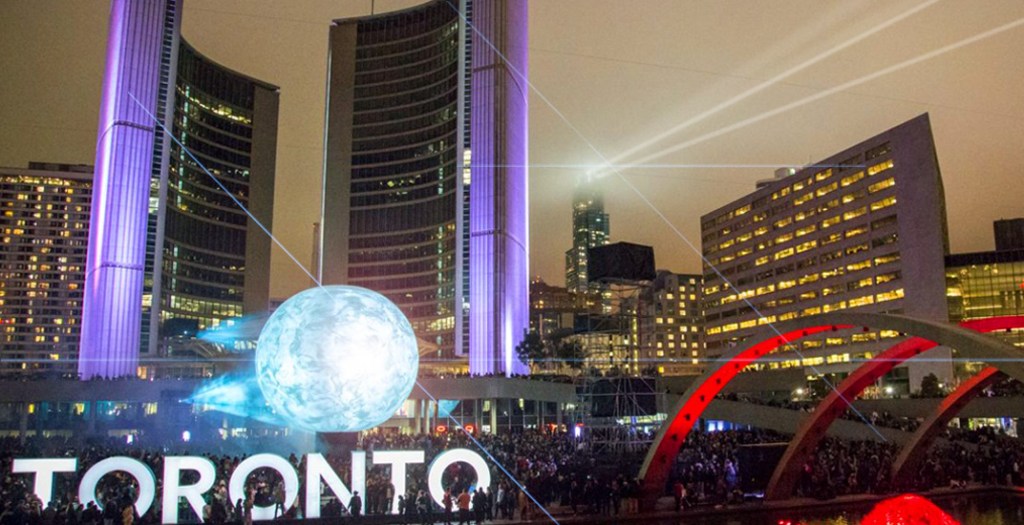
Toronto’s Nuit Blanche sunset to sunrise celebration is the largest contemporary art event in North America. Since it’s inaugural year in 2006, Nuit Blanche has featured more than 1,400 official art installations created by over 4,900 artists and has generated more than $311 million for the cities cultural scene. The all night event will typically have museums, private and public art galleries, and other cultural institutions open and free of charge, with the centre of the city itself being turned into a de facto art gallery, providing space for art installations, performances (music, film, dance, performance art), themed social gatherings, and other activities.
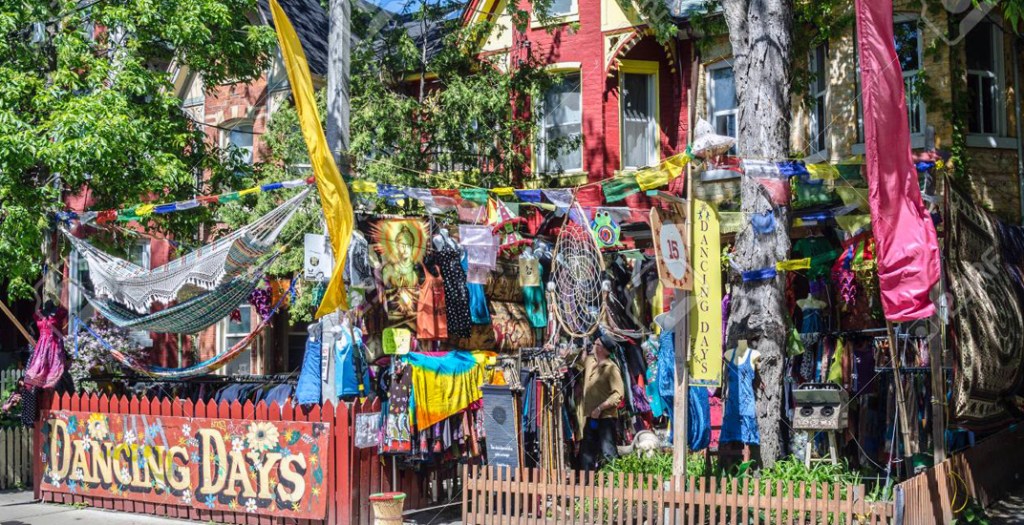
The streets of Kensington Market are yours and open in celebration on throughout the market. Human beings feel at their best in vibrant, human scale, friendly environments. Pedestrian Sundays allows us to taste the amazing cultures of Toronto, dance with strangers, and celebrate community, culture, and ecology. While Pedestrian Sundays don’t permanently change the streets, they will forever change the way you perceive them!
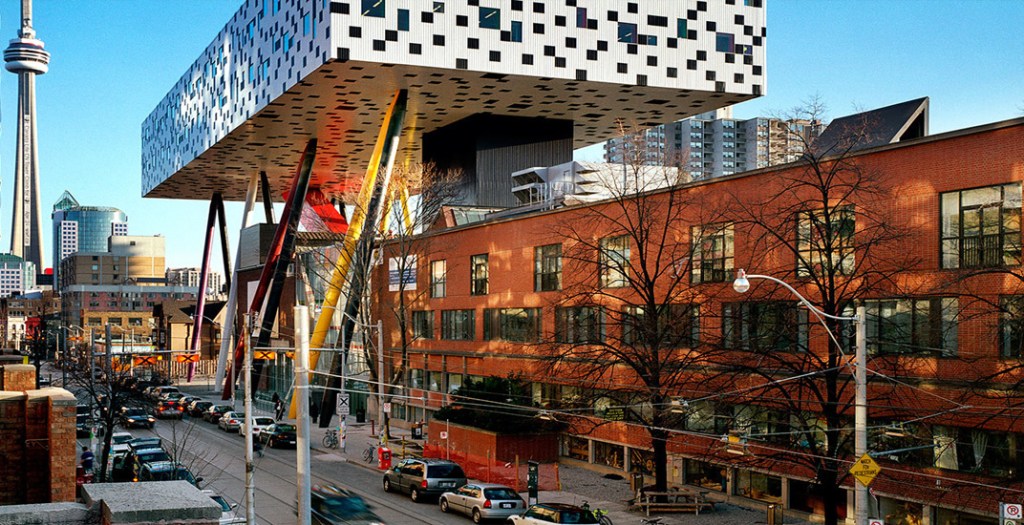
Explore Toronto’s Buildings Since its inception in 2000, Doors Open Toronto has attracted more than two million visits to nearly 700 unique locations. It is Canada’s largest Doors Open event and one of the three largest in the world. Doors Open is a 100% free an invites the public to explore and discover Toronto’s buildings of architectural, historic and cultural significance. During the last weekend of May, visitors can participate in walking tours, special activities, and explore more than 150 properties that are either not usually open to the public, or would normally charge an entrance fee.Expand AllDoors Open Toronto accordion panelsCollapse AllDoors Open Toronto accordion panels
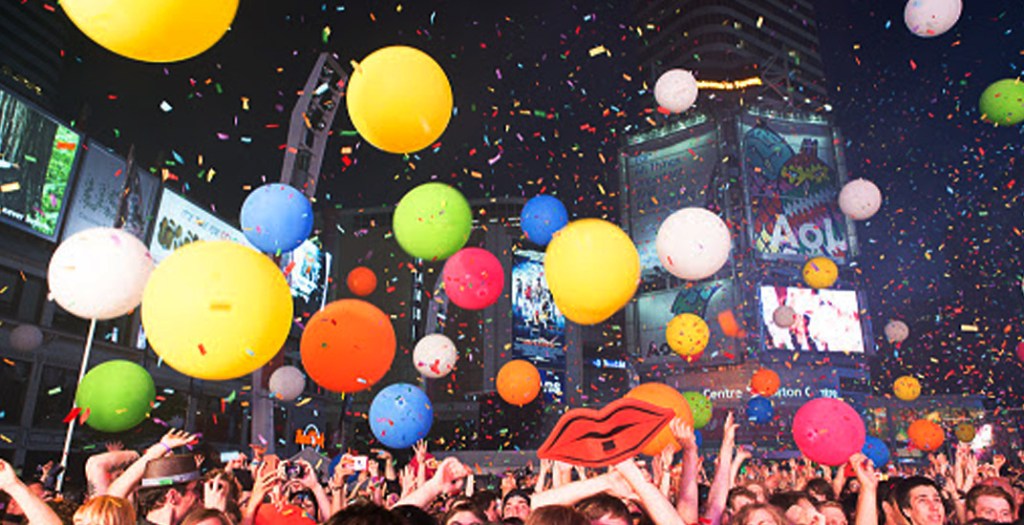
NXNE has been discovering new music and new ideas since 1995. Over 200,000 attend the Festival every June in Toronto. In addition to presenting great, emerging musicians, NXNE also features: eSports, comedy and much more over 10 hot days every summer.
Celebrating 25 years of live music, NXNE is the longest running music festival in Toronto. As a partner to Austin’s SXSW, NXNE has brought big names like The Flaming Lips and The National to Yonge and Dundas Square for free shows, while filling the clubs with live music from local bands. Not just an audio festival, NXNE’s lineup often includes film, art and gaming programs.
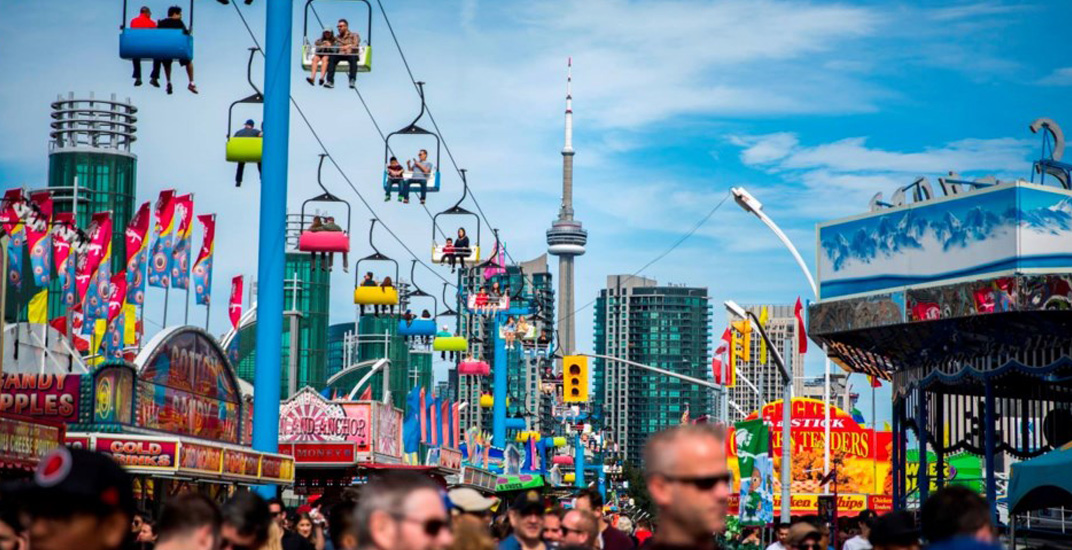
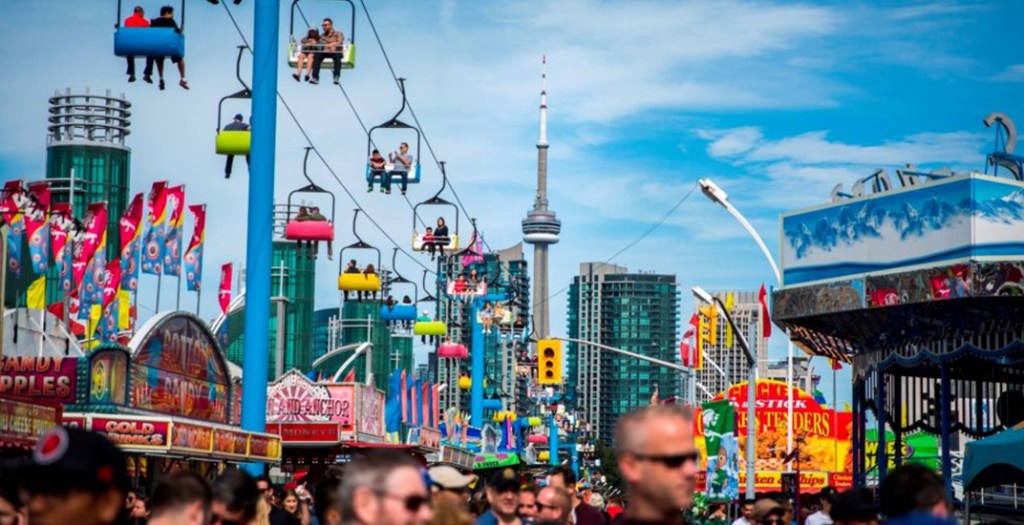
While technically more of a fair than a festival, The Ex, as its known by locals, is a beloved tradition for Torontonians at the end of every summer. It’s the local carnival you went to in your small town growing up – times ten. The food creations regularly make the news and remain a main attraction for many who dare to try a mac and cheese popsicle or a spaghetti donut ball. The carnival rides and games are as epic as they were when you were a kid, and multiple stages are filled with live music and circus entertainment.
The Toronto International Film Festival is one of the largest publicly attended film festivals in the world, attracting over 480,000 people annually. Since its founding in 1976, TIFF has grown to become a permanent destination for film culture operating out of the TIFF Bell Lightbox, located in Downtown Toronto.
The Beaches(also known as “The Beach“) is a neighbourhood in Toronto, Ontario, Canada that, as the name suggests, is fronted with an expansive sun loving beach. The Jazz festival began in 1989, when local jazz artists were booked to perform at the Kew Gardens Bandshell in the beaches.
Now celebrating her 32nd anniversary, the festival has blossomed into a month long mid-summer event that attracts thousands of fans and makes a major contribution to promoting Canadian jazz excellence locally and on the world stage.
Casa Casuarina was built in 1930 by Alden Freeman. Alden Freeman’s father, Joel Freeman was Treasurer of The Standard Oil Trust (also known as Rockefeller’s Company) and left Alden a fabulous wealth when he passed away. That gave the young and wealthy Alden the opportunity to retire at the age of 27 from being an architect and travel all over the world. Alden was also a descendent of the Mayflower on his mother’s side and felt a very strong tie to history.
Freeman, always well-travelled and very intelligent, loved the adventurous spirit of Christopher Columbus and on one of his many trips around the world, went to visit the Alcazar De Colon in Santo Domingo (Dominican Republic) which was built by Diego Columbus (Christopher Columbus’s Son) and is known for being the oldest residence in the western hemisphere. Alden was so inspired by the house that he decided to build his own home in Miami Beach as homage to the Alcazar De Colon and bought back 2 bricks from the house.
One sits to the right hand side of the main entrance and one sits in his former house in the city of Santa Barbara, California (named the “Montarioso” estate, which was later donated to the city and was then restored and studied by the Pearl Chase Society of Santa Barbara). Alden dreamed of living in a bohemian society with all of his friends from local areas such as Coconut Grove and Coral Gables. In addition, on his many trips abroad he would meet fascinating people and always invite them to hang out in his beautiful home here in Miami Beach.
The Hubbell & Hubbell Company was the contractor responsible for the construction of Casa Casuarina. If you look down, you will see that the ground is original key lime coral, which was part of the original house designed by noted 1920s interior designer Addison Mizner who virtually created West Palm Beach.
The property had a total of 24 apartments. Freeman lived in the top-floor-front apartment on the southeast corner. The remaining 23 apartments in the building were available for rent and to house many of Freeman’s friends that visited Miami Beach.
Alden Freeman died at Casa Casuarina on December 29, 1937 following a prolonged illness. The house was then sold to Jacque Amsterdam for $100k, who continued to run the house as an apartment complex that he named the “Amsterdam Palace. In April 1939, Amsterdam did a small renovation of the house in which he installed an elevator shaft (where the current bell is located), replaced the lily pond in the Courtyard with terrazzo flooring and moved the kneeling Aphrodite statue to the front terrace. Rooms were rented for $600/month during winter season and $30/month in the summer.
In the ensuing years, Amsterdam Palace passed through the hands of several owners and hundreds of tenants. For a short time in the 1980’s, the house was called Christopher Columbus Apartments. After a while, the building gradually felt into disrepair, but miraculously, most of the original fittings and artworks survived.
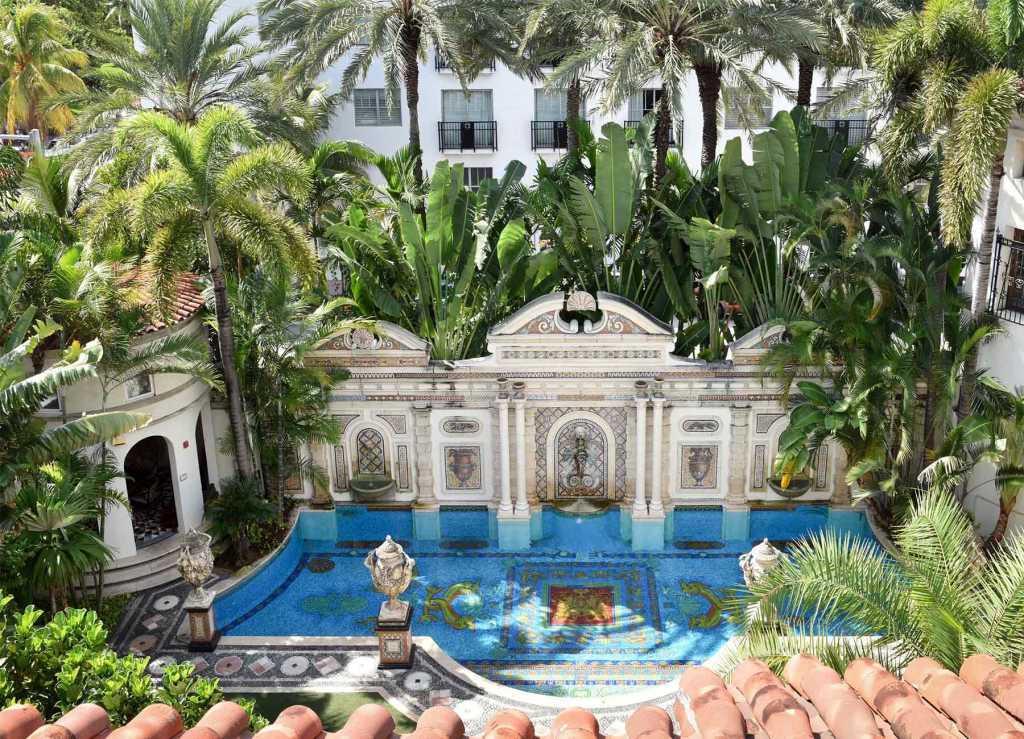
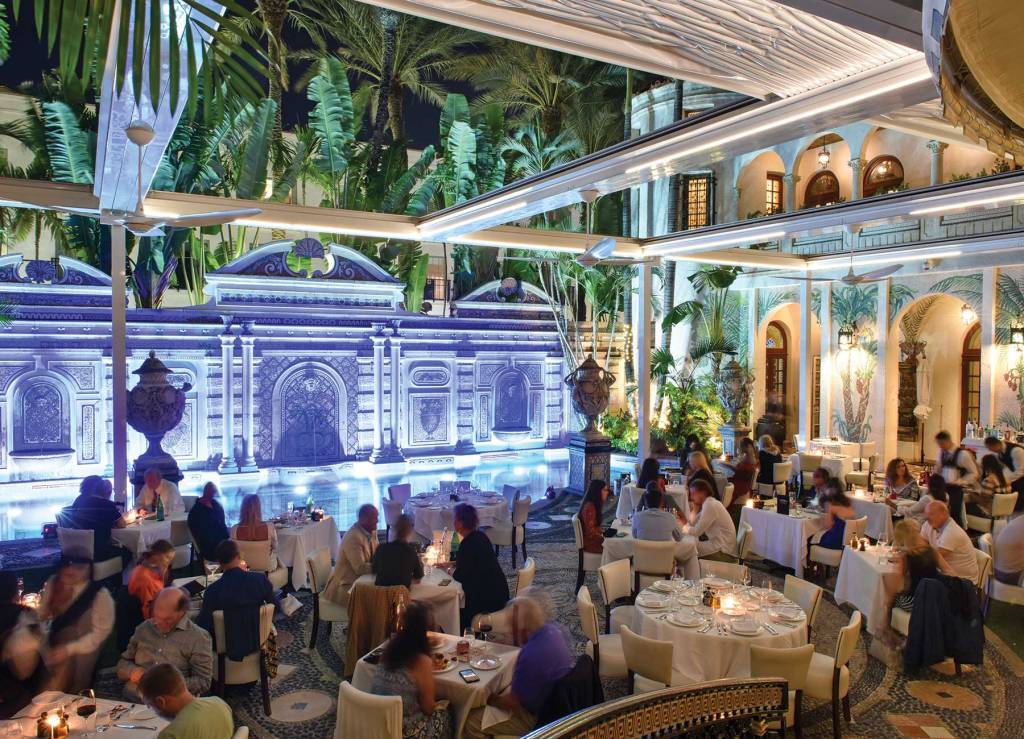
In 1992, while on vacation with his family in Miami Beach, Versace took a walk down Ocean Drive and was immediately attracted to the house by the “Kneeling Aphrodite” statue and fell in love with the unique Spanish architecture of the property. Obsessed with Greek and Roman mythology, Versace purchased the original house built by Freeman for $2.95 million and the lot next door, an old art deco hotel called the Hotel Revere. Although this neighborhood was placed on the National Register of Historic Places in 1979 and despite strong opposition from the Miami Design Preservation League, Versace bought the Revere Hotel next door for $3.7 million in order to demolish it and put in the Garden, Swimming pool and South Wing.
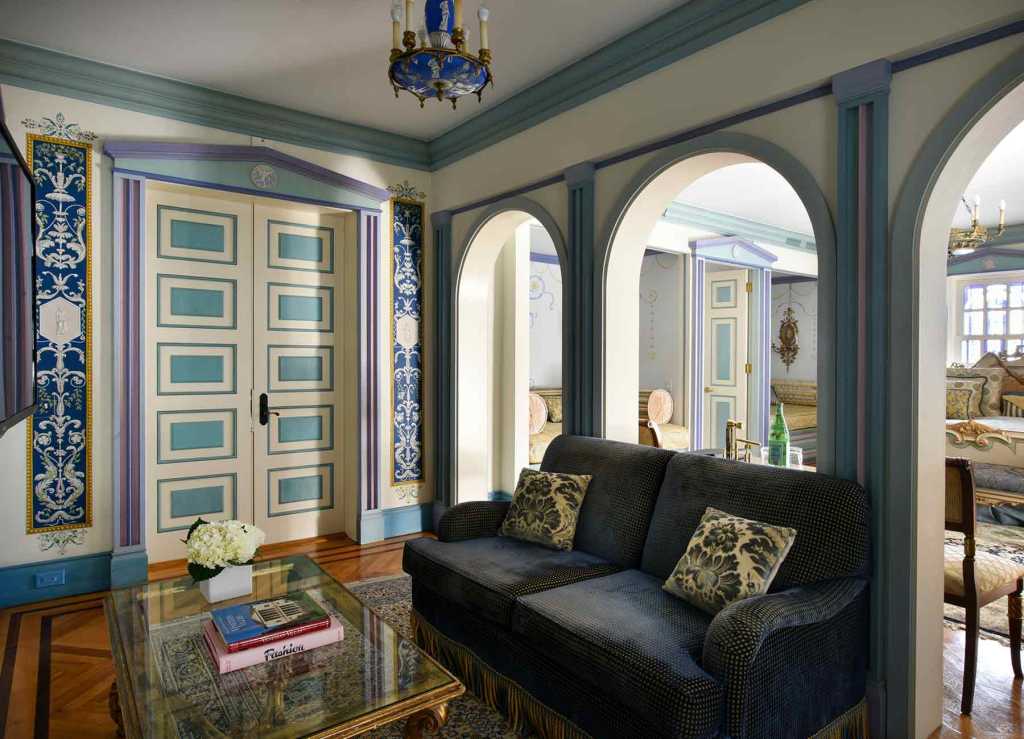
Versace invested an additional $32 million in renovations in which he added the south wing, the pool and garden and turned the 24 apartments into 10 large suites in the original house and an additional 2 new suites in the south wing. He also removed the elevator shaft in the Courtyard, replaced the fountain and reconstructed the observatory, including a new copper dome. Versace had planned to buy the then-vacant lot next door to the north in order to put in a second garden, but when his death intervened it became part of the Victor Hotel.
The renovations took almost 3 years to complete and in July 15, 1997, only 5 yrs after purchasing the home, Versace was killed on the front steps of the house on his usual morning walk home from News Cafe.
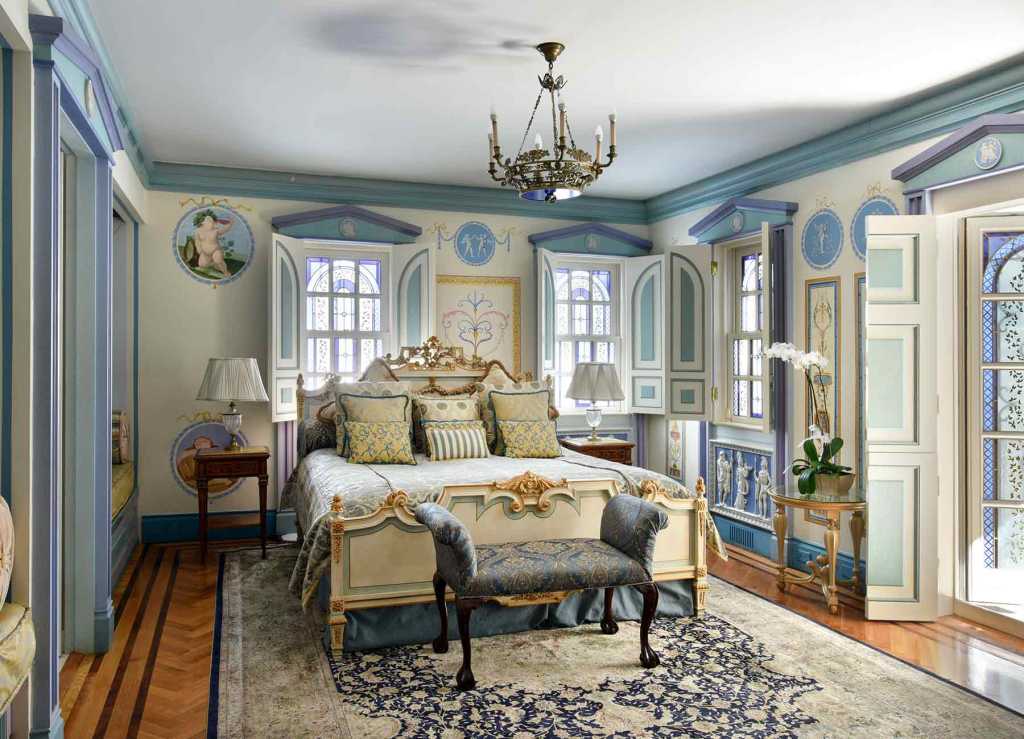
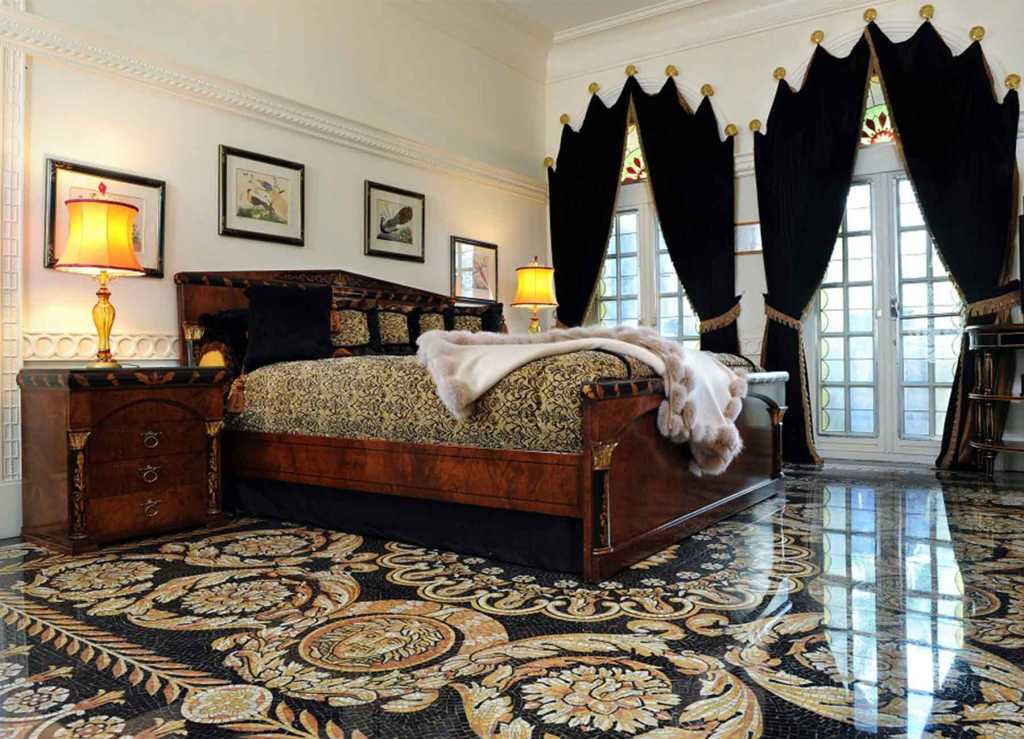
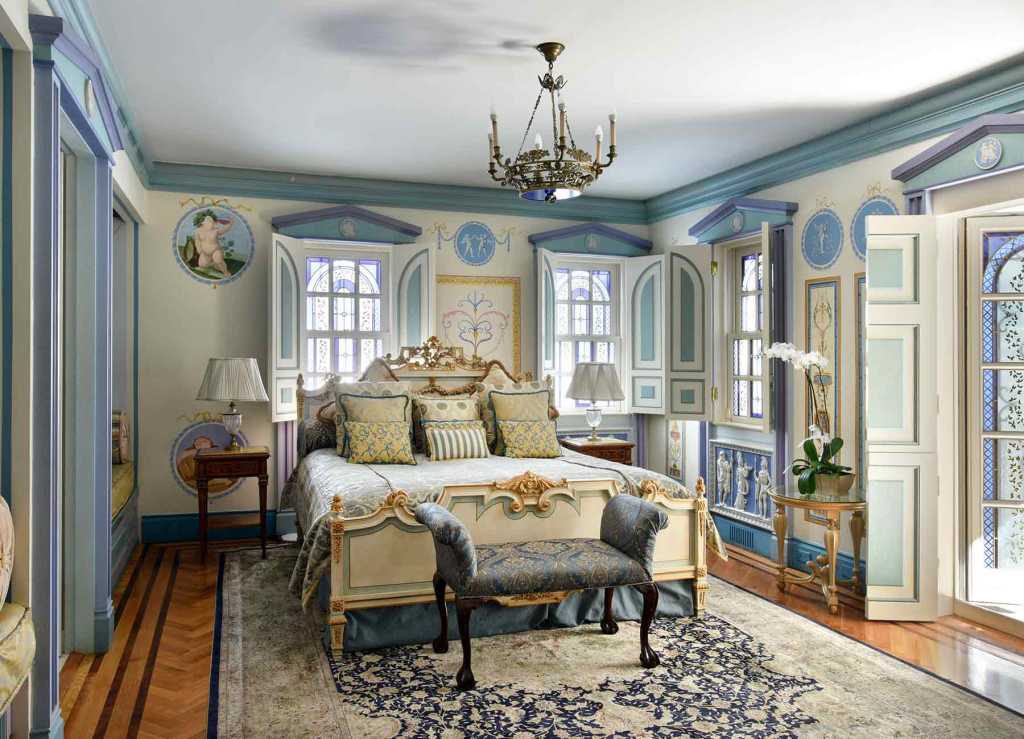
In addition to Gianni Versace, the house was also used by his many close friends and family members. His brother Santo’s bedroom is now called the Venus room, his sister Donatella’s bedroom is the Signature suite.
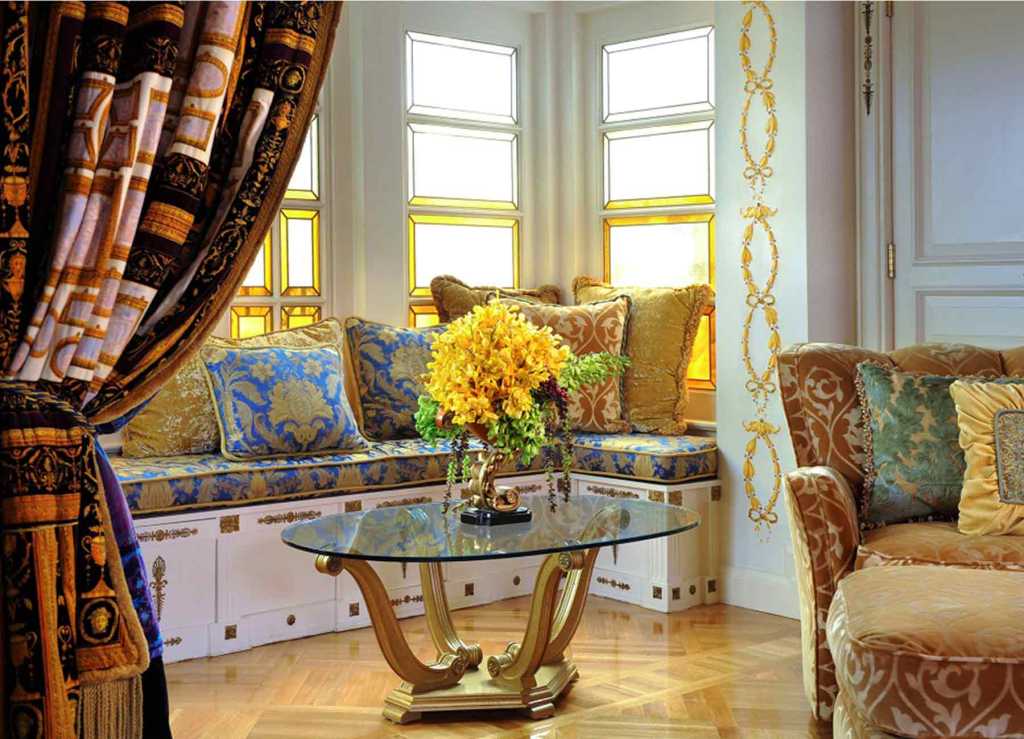
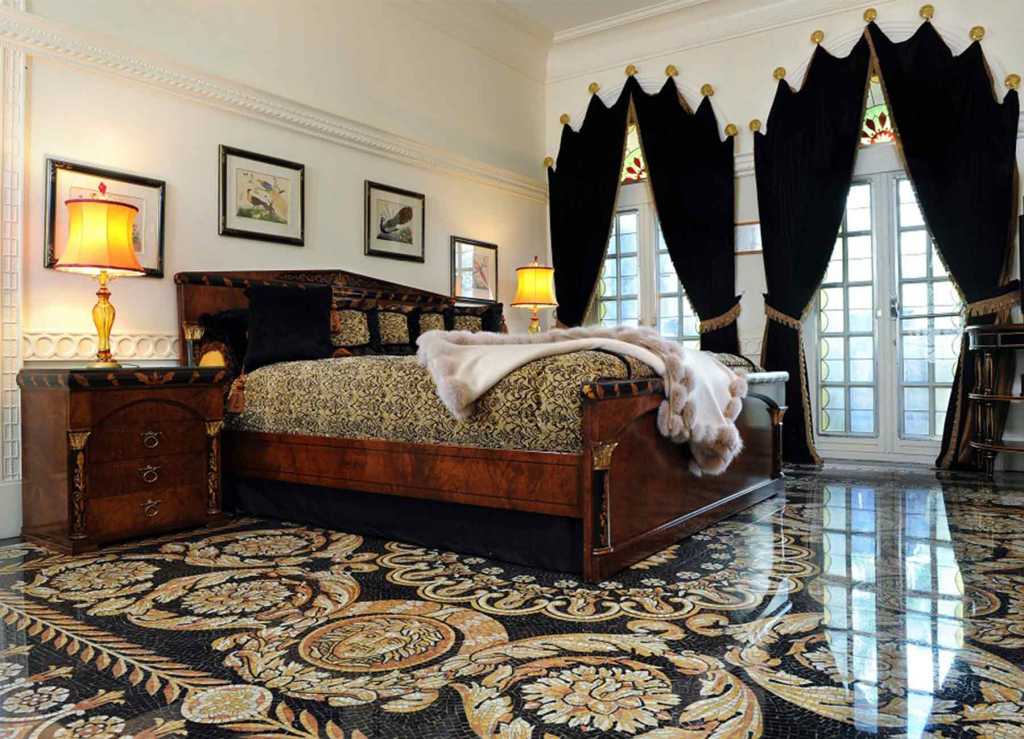
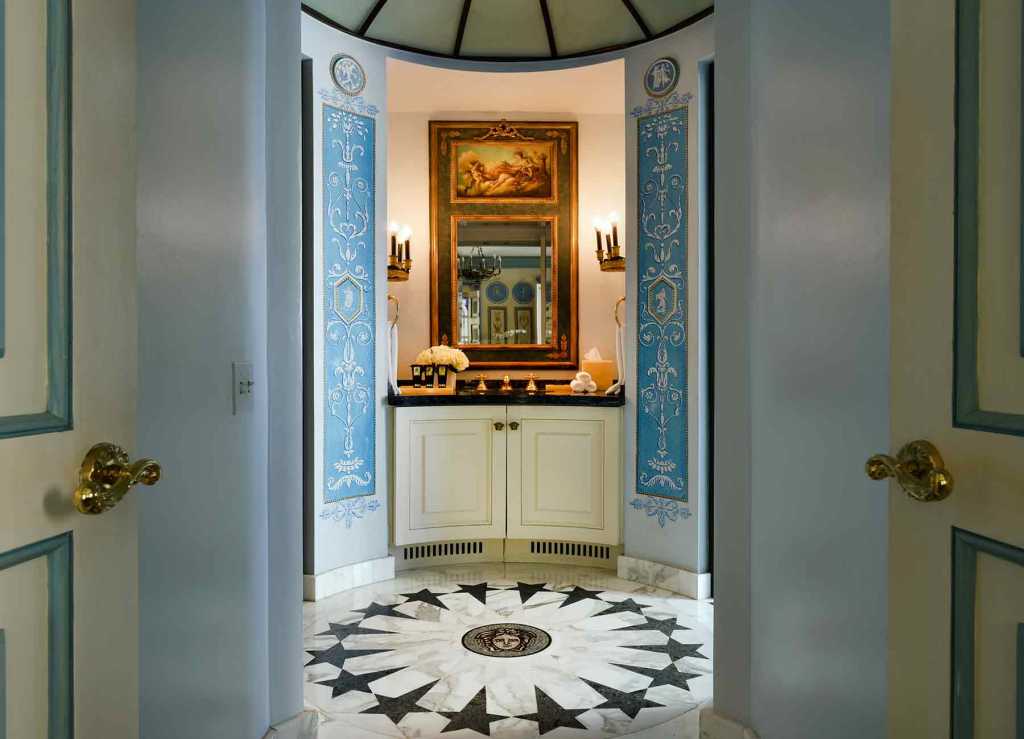
Some contents of when Versace lived here were auctioned in New York City in April of 2001 for a reported $28 million. What still remains here from the Versace era are the richly decorated walls, floors, ceilings, and windows, as well as the pool, garden, and the entire south wing.
The house sat empty for about 3 years and in September of 2000, Donatella finally sold the property to Peter Loftin, a telecommunications magnate from Raleigh, N.C. for $19 million. Loftin used this house as a private residence as well as a hotel, membership club and private events venue from 2001 to the end of 2009.
In December of 2009, Events impresario and restaurateur Barton G. Weiss leased the property and took over the Mansion, imprinting his own signature style on the storied house and reopened as The Villa by Barton G. In September 2013 Florida business connected to Jordache Enterprises bought the Mansion at auction with a winning bid of $41.5 million.
Legend maintains that Casa Casuarina was the original name given to the house when it was built in 1930 as homage to the only remaining tree in the lot after the 1926 hurricane that hit South Florida. Freeman was forced to cut down the tree in order to make room for the construction of his new house. Casuarina esquisetifolia is the botanical name of the tropical tree popularly known as the “Australian Pine”.
Graduate Hotels is a collection of hotels located in college towns across the country, launched in 2014 by Nashville-based real estate company AJ Capital Partners. Each hotel reflects the nearby college.
Recently, Graduate announced it is going global with their upcoming UK openings in Oxfordand Cambridge. Their designers pulled from more than 900 years of University history to inspire their bespoke, one-of-a-kind spaces.
Find nods to “Alice in Wonderland,” college crests, discoveries like the DNA double helix and more.
Istanbul’s Çamlıca television and Radio Tower is a soon to open television studio and observation tower located in downtown Istanbul, Turkey. Upon completion is the highest tower in Europe, surpassing the Eiffel Tower with a total height of 369 meters (1,210 ft). Named the Çamlıca Kule, the futuristic looking tower soars above the Bosphorus and surrounding 7 hills of Istanbul.
With the summer fast approaching, and the completion of its final height, we have taken a walk to explore the different perspectives and angles of its innovative design, which can be seen from many parts of the city. Camlica Tower will soon join other world record breaking towers like the CN Tower in Toronto, the Burj Dubai, and Eiffel Tower in Paris, marking Turkeys entrance into the modern world of super towers.
Designed for the Ministry of Transportation and Communication, the new PTT Telecommunications tower replaces several outdated structures currently in use, and support an estimated 125 broadcasting transmitters. Nearing final completion, the tower has reached it’s final height and will open to the public once Covid-19 restrictions are lifted.
Location: Üsküdar, Istanbul Contractor: UDHB General Directorate of infrastructure investments Architect: Melike Altınışık Architects Static Engineer: Balkar Engineering Peer Review: Thorton Tomasetti Telecommunications and Broadcasting engineer: ABE Teknoloji Electrical Electronics engineer: HB Teknik Mechanical Engineer: Çilingiroğlu Engineering Wind engineer: RWDI Facade Engineer: Newtecnic Landscape Architect: DS architecture
We take a walk around the markets and shops of Kadiköy, Istanbul, truly one of the coolest neighbourhoods in Turkey. Located on the Marmara Sea coast on the Asian Side of town, the Kadıköy district and its Moda neighbourhood in particular have soared in popularity over the past few years, leading it to be named one of the 50 coolest neighbourhoods in the world.
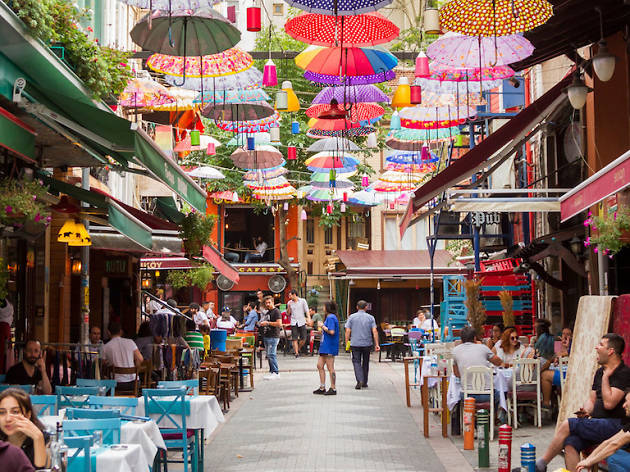
Hundreds of new bars, cafés, restaurants and shops have opened here, making the area a must-see for those really wanting to get a feel of how the city hangs out these days. While it may be the apple of the eye for an ever-increasing number of Istanbulites, Kadıköy still features a more relaxed vibe than the bustling European side, a fact quite evident upon first visit.
A first person perspective walk around a new Istanbul Starbucks located in the recently renovated Narmanlı Han. These recently renovated courtyard is located in the famous pedestrianized İstiklal Caddesi Street in Beyoğlu district of Istanbul. Today I went walking around the wonderfully social Istiklal Caddesi, Istanbul’s busiest shopping street.
The courtyard and surrounding buildings were built in 1831 to house the Russian Embassy and then a Russian prison until 1914. Renovation on the project ran between between February 2016 and September 2017 and now the courtyard of Narmanlı Han contains a Starbucks and the Museum of Illusions as well as other retail space and restaurants.
In the center of the block is a large courtyard which features a beautiful new water fountain and surrounding seating.
As with many metropolis around the world, Istanbul has a rich street culture full of activities, sounds and more. Today we wander from Fatih main street, up through the counterfeit market and then the backstreets where fake Nike and Adidas shoes are made. Bustling vendors and workers move thousands of products around the small shops of Istanbuls the Historic Peninsula. Each store is stocked with fake designer clothes, fake football shirts, souvenirs, carpets etc are … souvenirs, jewellery, carpets, shisha pipes, shoes, watches and sometimes even spices.
Once we’ve walked through the back streets of this energetic and noisy neighbourhood, we cross over into a typical market street where Covid 19 and the strict lockdowns has closed down many shops. However we can still see many people out buying Turkish Delights, Produce, Freshly Baked Breads, and countless deserts. A quick turn and we’re crossing the new Haliç Metro Bridge.
The Golden Horn Metro Bridge is a cable-stayed bridge along the M2 line of the Istanbul Metro, spanning the Golden Horn in Istanbul, Turkey. From here we make our way back from Fatih districts to the Beyoğlu neighbourhood on the European side of Istanbul. From the bridge we can see the entire skyline of historic Istanbul, with clear views of the Sultans Grand Mosques, the Hagia Sofia, Galata Tower, and the Bosphorus Bridge (Istanbul’s First Bridge) in the distance. Back in Beyoğlu, the walk takes us along the recently refinished waterfront path and park before we enter back into the streets passing some Ekmek Balik (fish sandwich) stands and then just in time to catch the sun setting over the Galata Bridge. Cotton candy skies illuminate the skyline as we circle around Galata Bridge.
With the sunsetting, we hear the evening prayer of Ramadan filling the air, while the fish restaurants lighting up the underside of the bridge. As the wind starts to pick up, and clouds get heavy, we sneak into into a store just as the rain falls. After a short rain we venture out back onto the streets, with the lights reflecting, the streets are painted in bright coloured reflections.
With each cobblestone, marble facade, and travertine clad building, we take in the rich texture and history of this ancient city. After the sun has set, and our journey coming to an end, we find ourselves near the Historic Galata Tower which soars overhead. For centuries the tower has been a beacon for ships and traveller’s alike, and is the perfect way to finish todays walk.
Chapters:
Sultanahmet Fatih District 0:00
Counterfeit Market 4:06 Beyazit – Fatih Counterfeit 7:358


















 NOMAD SKETCHBOOK