In Search of the World’s Most Beautiful Glass Ceiling
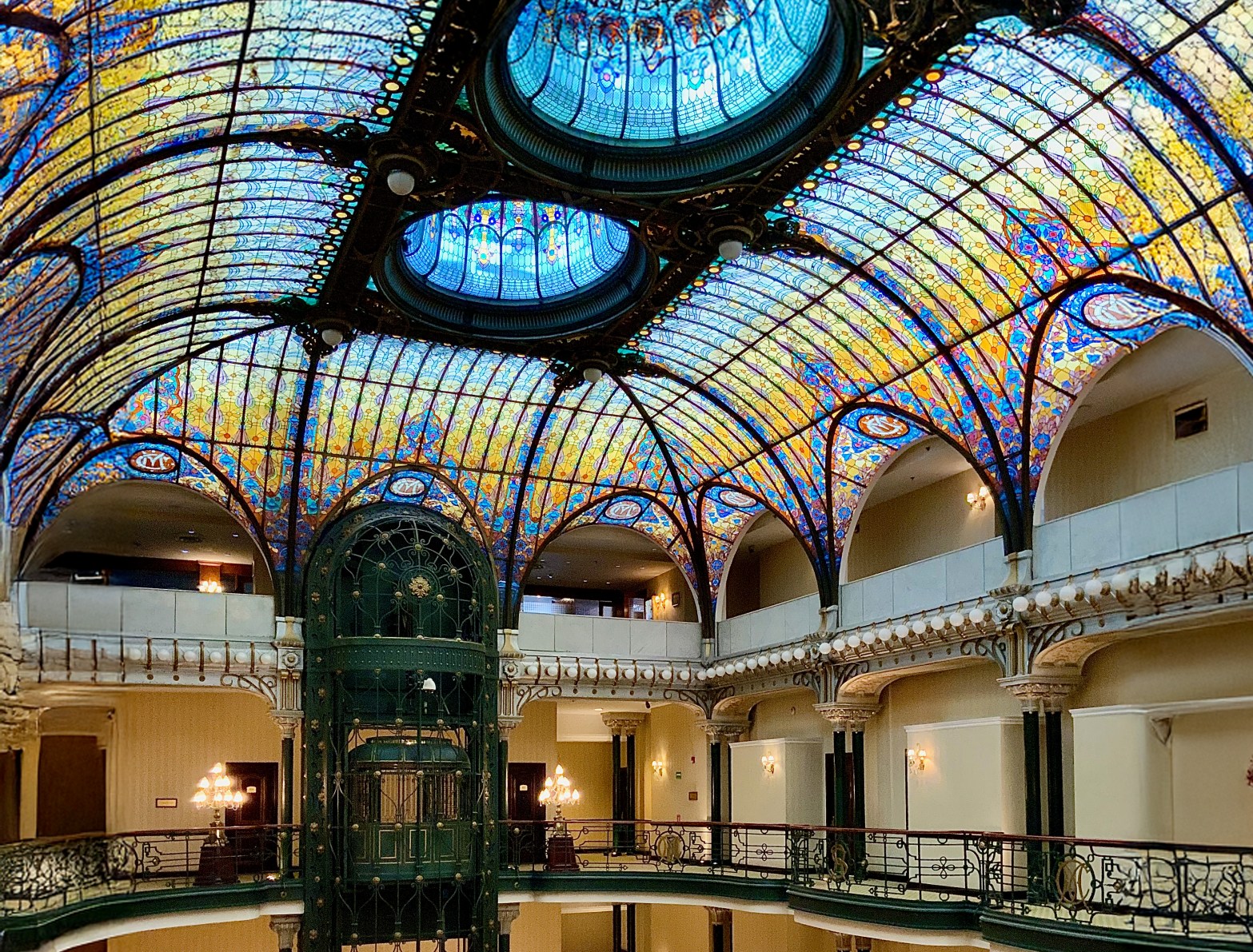
Field Reflection: I wasn’t planning to write about an elevator today. But maybe I should’ve seen it coming. Every trip ends with one. As for now, today I was chasing a memory, a fuzzy, architecturalish, probably warped by Pinterest and Instagram memory. A massive Tiffany’s glass ceiling located somewhere in Mexico City, supposedly with an original wrought iron Otis Elevator. A lobby that feel like I was stepping into a movie set. So I let my internal compass of wandering take over (at this point its feeling algorithmic) and headed out into the heat of the city.
Roma Norte is easy to fall in love with and hard to leave after settling in. It pulses gently with locals and other expats, tropical leaves curling off balconies, hushed cafes where espresso meets mezcal, and one of the highest per capita of dog walkers I’ve ever crossed. But when I’ve wandered long enough among boutiques and tortillerías, a certain kind of architectural nostalgia calls me back to explore more of the city’s denser core.
It was hot, that Mexico City kind of heat, dry but buzzing with sound. I peddled through Hipódromo’s lush rings, then into the rhythm of Centro Historico’s grandeur. Palacio de Bellas Artes caught me first, her white curves and glass-tiled dome. Gorgeous, yes. But not what I was hunting for. Nor was the Palacio Postal, though its staircases and elevators shine like a Fabergé egg. I passed the tiled walls of Tiled house, peered into museums through the scent of tamales and exhaust.
And then, not on a main street, not screaming for attention — there it was.
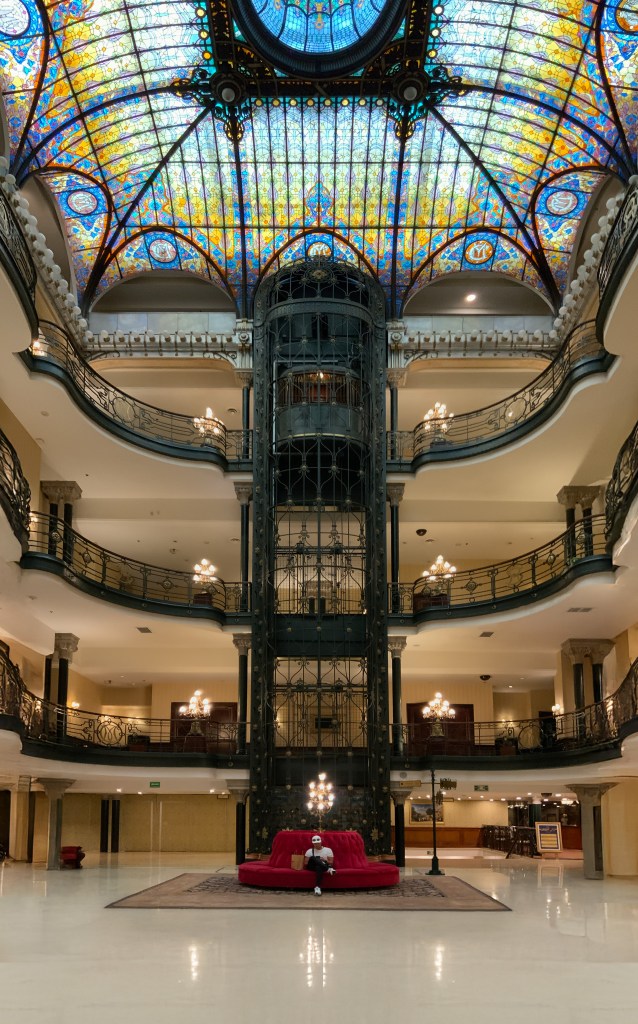
The Gran Hotel Ciudad de México.
Its entrance doesn’t shout. It doesn’t seduce with columns or glass revolutions. It waits—low, wide, shadowed like a velvet curtain half-parted. I pull my shoulders back, tuck in my shirt, and step in like I belong.
Inside, the noise of the city vanishes. Not silenced, exactly—just held at a respectful distance. And then, something pulls me upward. My gaze lifts, involuntarily, as if drawn by gravity in reverse.
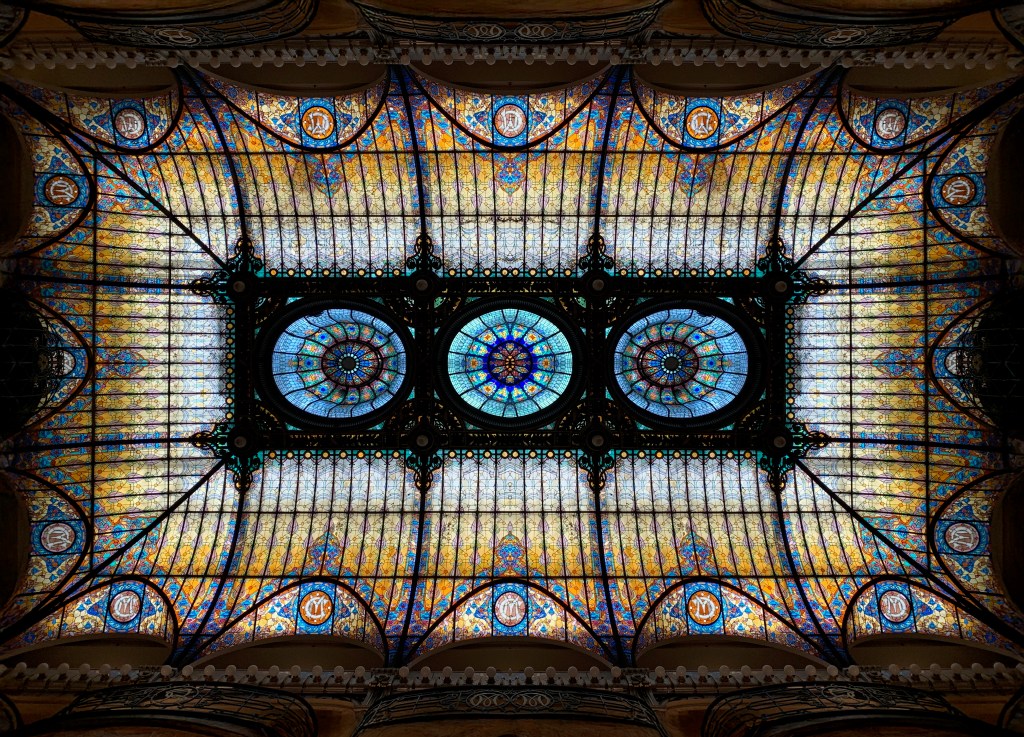
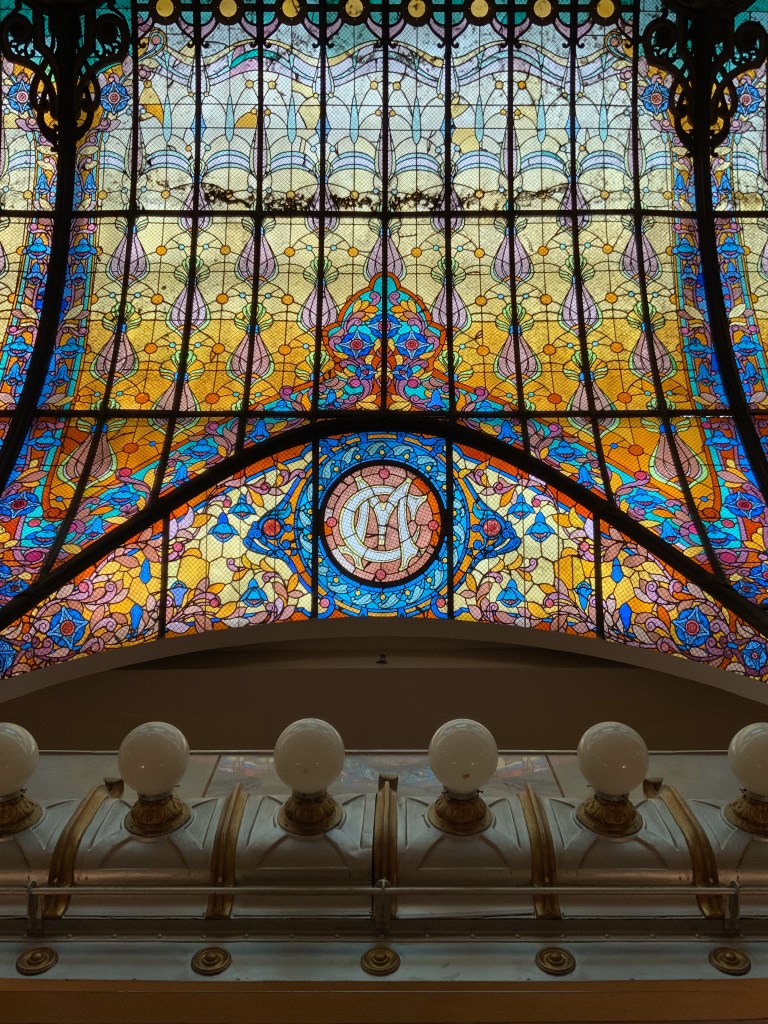
At first: only colour. Not in any order. Just floating, diffused, like stained smoke or memory. Ochres and rose. Soft teals. Lavender bruised at the edges. A hush follows—not formal, not sacred, just… inevitable. The kind of quiet you fall into when staring up through trees. Slowly, it resolves: not a dome, not a skylight, but a canopy of iron and light. Arched like a ribcage. Tiled like a quilt. Suspended—almost impossibly—above everything.
The structure breathes. Iron ribs hold the glass like lace holds skin, flexing with the mood of the sun. This is what turn-of-the-century engineering did best: make strength look gentle. Completed in 1899 as a department store, the building was always ambitious—its verticality not just functional, but theatrical. When it became a hotel in the 1960s, they preserved the bones. The ceiling. The metalwork. And yes—the elevator.

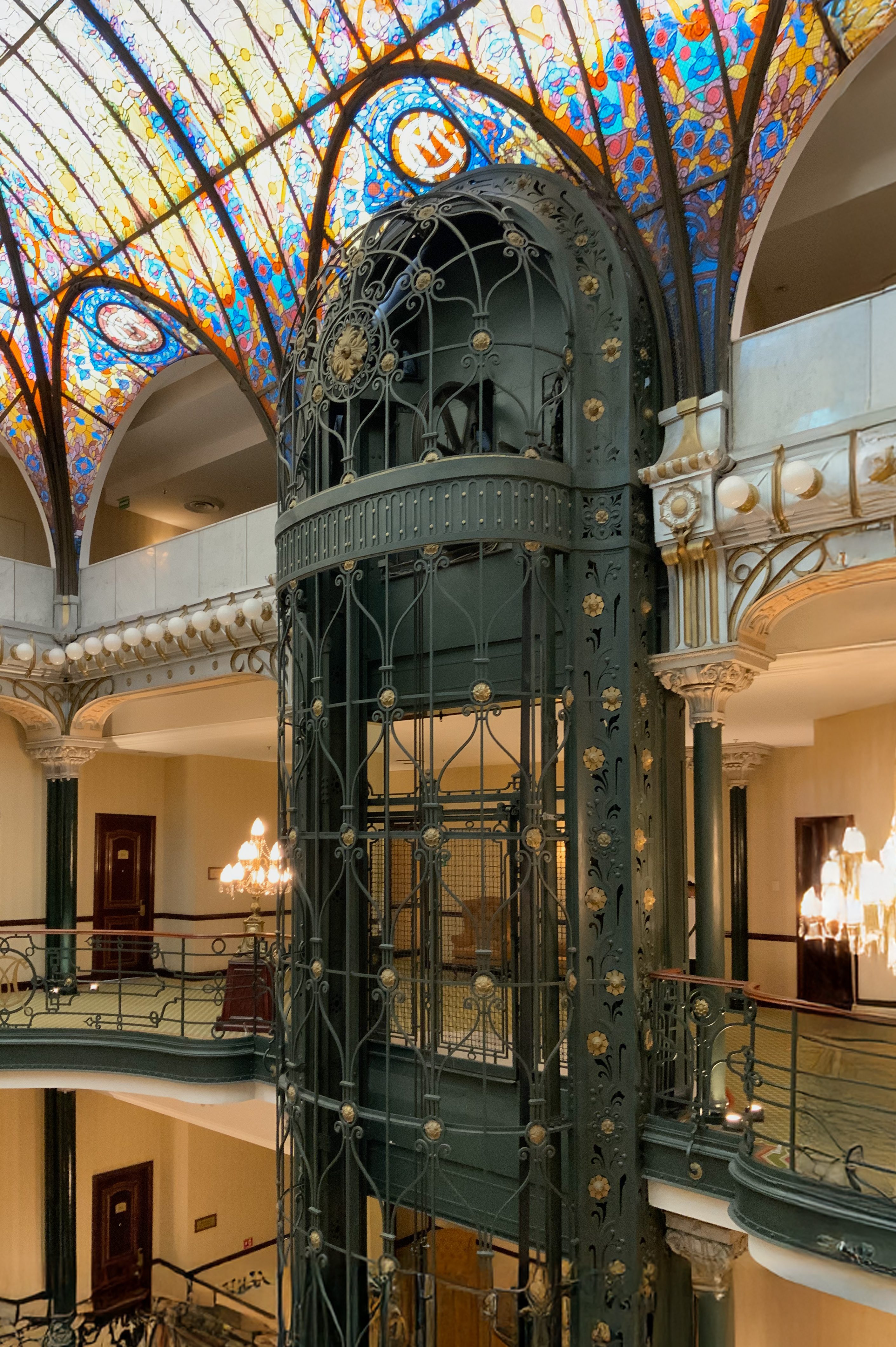
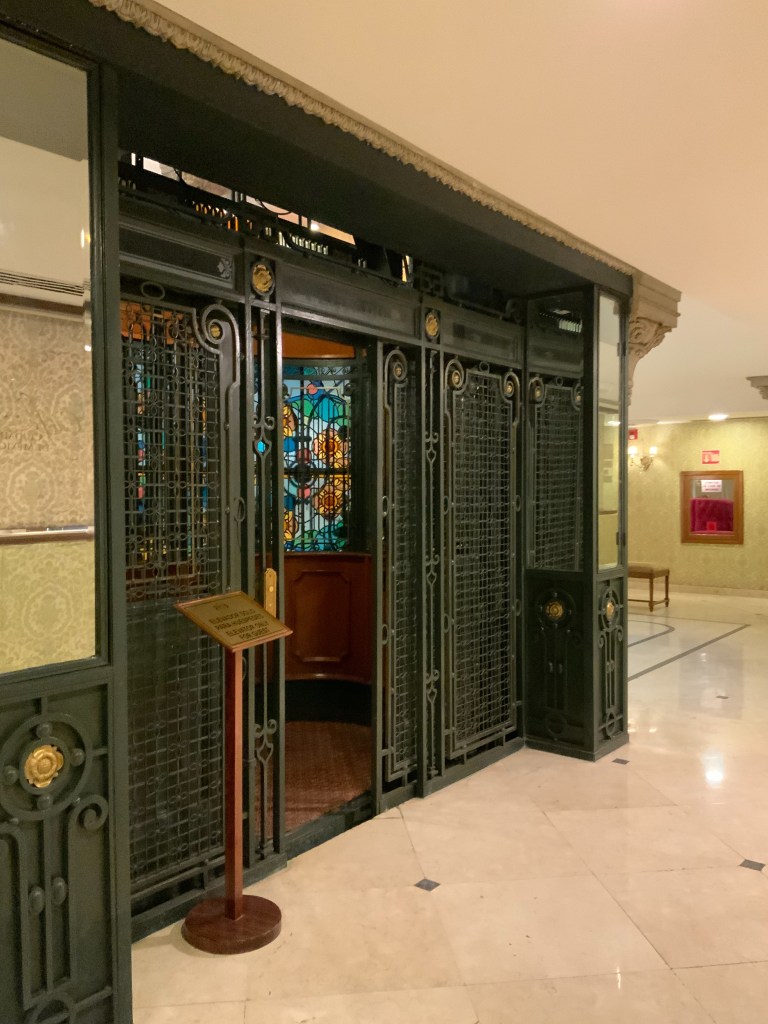
Which is less machine than jewel. Brass and filigree. Art Nouveau dreaming in gilt and wood. I flirt my way into a ride—half joke, half ritual. The operator (yes, there’s still an operator) presses the button with the grace of someone who’s been performing this motion for decades. Tourists come for the ceiling. But it’s the ascent that stays with them.
For a moment, it feels like stepping into early electricity itself—its optimism, its oament. A future we no longer build.
At the top, just beneath the canopy, the spell sharpens. You’re not under it anymore — you’re with it. Up close, the tiles don’t behave. Each one has a wobble, a bubble, a slight tension in the way it catches the light. No two colours land the same way twice. Lavender turns smoke. Teal flickers to emerald. It’s like standing inside a kaleidoscope that’s been taught restraint.
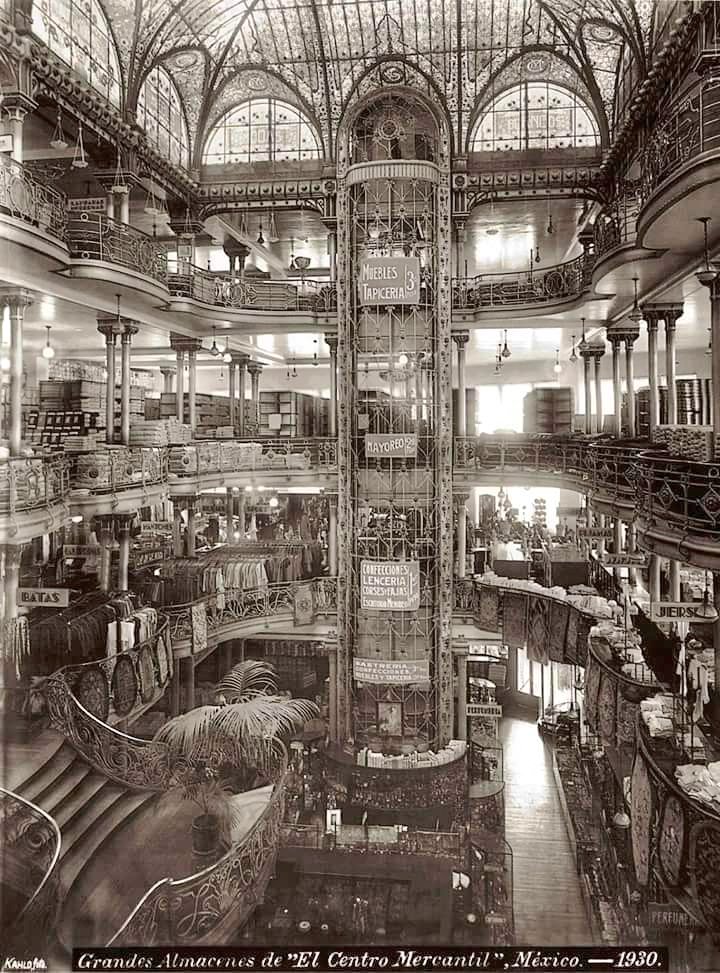
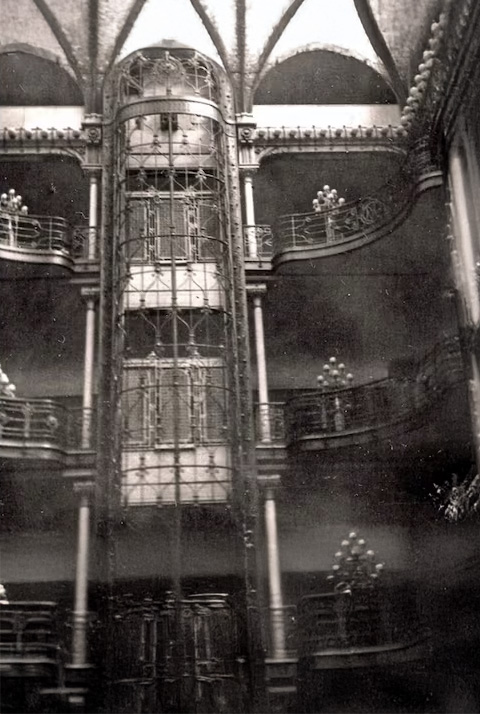
This is where the hotel stops being just beautiful and starts to feel, just special. The glass doesn’t hang. It floats. The iron doesn’t hold it—it cradles it. Unlike a train station, or a warehouse, the steel frame here show’s off how beautiful structure and engineering can be.
It’s not shaped like a hotel because it wasn’t meant to be one. This whole shell—this glorious, glass-topped theatrical atrium, was built as a department store in 1899. One of the first in Mexico City to embrace the spectacle of vertical space. Before it was rooms and guests and chandeliers, it was railings and mezzanines and the slow luxury of looking upward while shopping for French perfume and imported glassware.
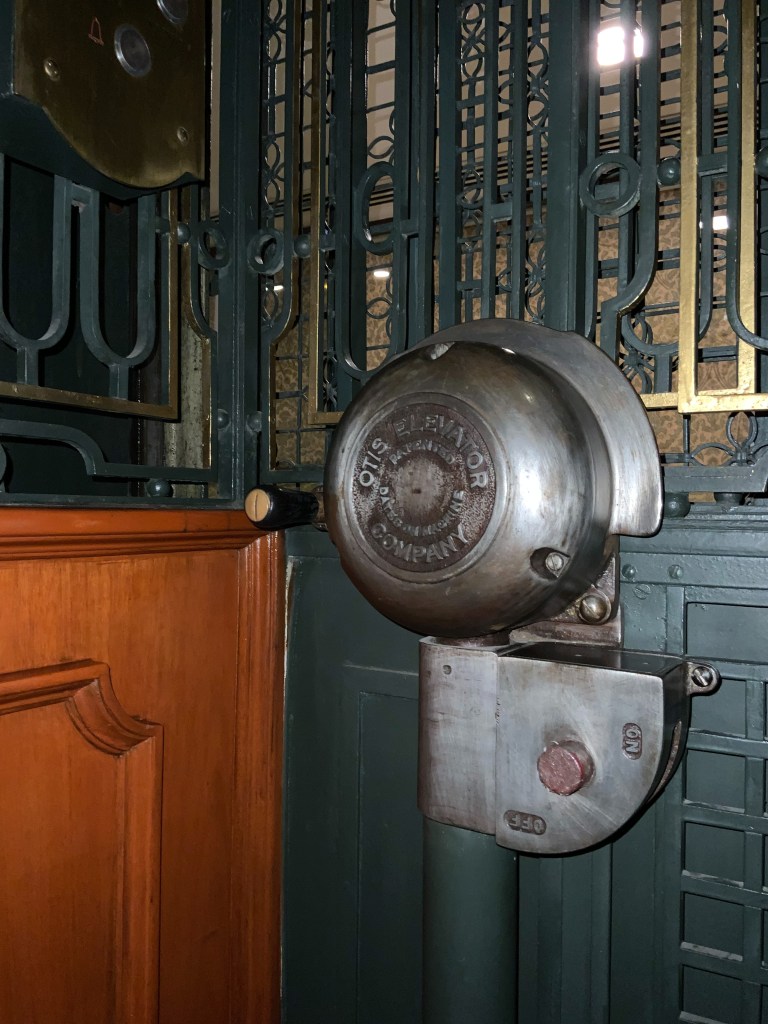

That origin matters. Most grand hotels assert themselves outward—they occupy corners, plazas, boulevards. They show off. This building folds inward. It draws you in and then reveals itself. You enter low and quiet. You rise. You look up. You stop speaking.
I didn’t find this place through maps or museum guides. I followed my instinct, the grove in the urban plan and history. Great cities rewards that kind of search: obsessive, imprecise, half-imagined.

