In Toronto, the Gladstone Hotel and the Broadview Hotel offer two unique hotel experiences that showcase the city’s vibrant and diverse culture. Located in the west and east parts of Queen Street, respectively, both hotels are situated in lively and diverse neighborhoods that feature a range of businesses, restaurants, and cultural attractions. Whether you choose the trendy atmosphere of the west end or the laid-back charm of the east end, these hotels offer a memorable and enriching experience for visitors to Toronto.
The west end of Queen Street, which runs through the neighbourhoods of Parkdale, West Queen West, and Liberty Village, is known for its hip and trendy atmosphere, with a variety of independent boutiques, art galleries, and restaurants. The east end of Queen Street, which runs through the neighbourhoods of Riverside, Leslieville, and the Beach, is known for its laid-back and community-oriented atmosphere, with a mix of independent businesses and larger chain stores.
Overall, Torontonians generally have positive feelings about both the east and west parts of Queen Street, and both areas are popular destinations for locals and tourists alike.
If you’re planning a trip to Toronto and are looking for a hotel with a unique and cultural atmosphere, you may want to consider staying at either the Gladstone Hotel on Queen West or the Broadview Hotel on Queen East. The Gladstone, which was built in 1889, is known for its commitment to the arts and regularly hosts exhibitions and other events featuring the work of local artists.
The Gladstone Hotel and the Broadview Hotel are both historic hotels located in Toronto, Canada, with a focus on supporting local artists and showcasing their work. However, there are also a number of differences between the two hotels.
One key difference between the Gladstone and Broadview hotels is their respective histories and architecture. The Gladstone Hotel was built in 1889 and is designed in the Victorian Romanesque style, while the Broadview Hotel was built in 1893 and has a more Victorian-era charm. Both hotels have undergone renovations and restorations in recent years, but the Gladstone has a longer history and has been a landmark in Toronto for over a century.
Another difference between the two hotels is their focus and programming. The Gladstone Hotel is known for its “Come Up to My Room” exhibitions, which are biennial events featuring immersive installations by local and international artists. The Broadview Hotel, on the other hand, has a more general focus on supporting local artists and regularly hosts exhibitions and other events featuring their work.
Finally, the two hotels also differ in their amenities and services. The Gladstone Hotel has a variety of amenities, including a fitness center, a restaurant and bar, and a rooftop patio with views of the city. The Broadview Hotel also has a fitness center and a restaurant and bar, as well as a rooftop patio with panoramic views of the city. However, the Broadview Hotel also has a focus on sustainability and has implemented a number of initiatives to reduce its environmental impact.
Overall, while both the Gladstone Hotel and the Broadview Hotel are historic hotels with a focus on supporting local artists, they have different histories, programming, and amenities, making them unique and distinct experiences for visitors.
Often referred to as the ‘Architect of the Poor’, Hassan Fathy used a particular interpretation of tradition to propose an alternative modernity
At the age of 78, in a key scene of the documentary movie Il ne suffit pas que Dieu soit avec les pauvres, Hassan Fathy was interviewed at his Ottoman-Mamluk flat, at the foot of the Cairo Citadel. Swathed in a brown cloak, he walked back and forth on the house’s rooftop with the ensemble of Cairo’s buildings and the dome and minarets of the Sultan Hassan Mosque behind him. In the background are the sounds of chaotic traffic and the chants of the muezzins. To the question ‘who are you?’ he answered: ‘I’m an Arab architect who has lost every point of reference in the Arab society, who has lost his arabité. I’m searching for an architecture and an urbanism, searching and trying to find my lost arabité’. In this simple statement Fathy summed up the entire meaning of his work and poetics.
‘We need a revolution, a mud brick revolution – without one we won’t be able to do anything’
Hassan Fathy’s oeuvre can be understood as a continuous search to define an appropriate architecture with respect to the local context, one capable of expressing his arabité. His work poses an opposition to foreign cultural domination and the use of Western architectural models in the Arab region: a trend which was particularly in vogue in Egypt at the beginning of the 20th century. He wrote: ‘In modern Egypt there is no indigenous style. The signature is missing; the houses of rich and poor alike are without character, without an Egyptian accent. The tradition is lost, and we have been cut off from our past ever since Mohammed Ali cut the throat of the last Mameluke.’
Known as ‘the architect of the poor’, Fathy’s name rarely appears in histories of architecture of the 20th century. For a long time, his work was associated with the vernacular and confined to the boundaries of critical regionalism, making the Egyptian master a full member of that ‘multifaceted family of architects’, such as Dimitris Pikionis, Jože Plečnik or Fernand Pouillon, who, due to their heterodox interpretation of modernity, were almost forgotten during their lifetimes. During his long career Fathy designed more than 170 projects, but only the village of New Gourna (1945) achieved real international attention, thanks to the publication,
24 years later, of Fathy’s book Gourna, A Tale of Two Villages, the first time his work became known to a wider architectural community outside Egypt. Fathy was born on 23 March 1900 in Alexandria, Egypt and at the age of eight his family moved to Cairo. His father was a landowner and former senior police officer, who left his job to become a teacher and study law. His mother was of Turkish descent and spent part of her childhood in the countryside, which provided her with the stories she told young Fathy and his brothers of animals, farmers and rural life. He watched this same countryside from the windows of the train as they travelled from Cairo to Alexandria for their summer holidays. Memories of the Egyptian countryside would re-emerge in Fathy’s choice to address his work to the fellaheen (farmers) and in his thinking on rural housing.
Studying and then teaching in Cairo in the 1920s and ’30s, Fathy came into contact with representatives of modern Egyptian art, when the country was still under colonial rule. It was a period in which Egyptian writers, painters and sculptors were beginning to rediscover their Egyptian identity, and a similar impulse can be seen to underlie Fathy’s work as he wrestled with the attempt to find an architecture capable of expressing a true Egyptian and Arab identity.
Fathy discovered Nubian vernacular architecture and the significance of the vault in Egyptian history during a trip to Aswan, visiting archaeological sites with students in 1941. The reference to Nubia was already clear in his project for the Hamed Said house, built a year later in the Cairene suburb of al-Marg, evolving into a paradigm in his architectural language. This house was also one of Fathy’s first attempts to use mud bricks. The idea of building with clay was fostered by the outbreak of the war which had blocked the import of iron and timber. There was a real need to use local materials, which Fathy answered by observing peasants’ houses and by developing an in-depth understanding of the use of mud bricks in the construction of catenary vaults and domes.
The Hamed Said house represented a turning point, a radical change in the architect’s language. The building, in fact, already contained most of the elements that would form Fathy’s design concept – that is, his search for ‘a felt space’ capable to ‘convey an Arab feeling’, which can be found both in the New Gourna village and in most of his following projects.
The story of New Gourna began when the inhabitants of Old Gourna, a village inside the archaeological area of the Valleys of the Kings and Queens, cut out and removed a rock carved from the tomb of a pharaoh. The episode persuaded the Department of Antiquities to move the village a few kilometres from its former site, and Fathy was commissioned for the project in 1945. Old Gourna was only one reference among many for the new settlement, which included buildings of Upper Egypt, palaces, streets and houses of medieval Cairo, Pharaonic architecture and drawings as well as a world consisting of stories, forms and figures that gave substance to Fathy’s architecture. The New Gourna houses gouache can be viewed, in this respect, as a manifesto for the project. The landscape is archaic and constructed with the insertion of a few symbolic elements indicating the idea of the place: Hathor, goddess of fertility, acting in support of the project’s success; Ibis, protecting the housing; the sycamore, representing regeneration; and the sacred mountain of Luxor, the only specific geographic reference.
Source: Rare books and special collections library, American University in Cairo Village of New Gourna in 1948
Source: Aga Khan Trust for Culture / Photo: Gary Otte Gouache of New Gourna houses, 1946
This marked the invention of Fathy’s architectural and poetic language, which, in the case of New Gourna, became also a silent instrument to communicate the idea of an anonymous architecture, one that, as stated by Fathy, has ‘the appearance of having grown out of the landscape that the trees of the district have’. The move was resisted by the inhabitants, who had no desire to leave their old houses or their trading of archaeological finds, and who later decided to flood the new village. Due partly to a lack of support from the government, New Gourna remained incomplete. Fathy’s disillusion was such that he decided to leave Egypt, moving to Athens in 1957: ‘I understood that there was no place for me in Egypt; it was evident that mud brick building aroused active hostility among important people there’. He spent five years with Constantinos Doxiadis, collaborating on housing projects for Pakistan and Iraq, and the research project City of the Future. Despite being in his late 50s, this period was one of the most fruitful of Fathy’s entire career. It was then that he came into contact with the ideas on urbanism of the Modern Movement, and undertook a theoretical systematisation of his own thinking.
Source: Rare books and special collections library, American University in Cairo Axonometric of house unit, Iraq Housing Programme – in the ’50s, Fathy was influenced by the Modern Movement
This is particularly evident in the project of New Baris, his second commission for a small town, that Fathy obtained when he returned to Egypt, a rural settlement that was partly built from 1965. A general lack of economic resources combined with the Six-Day War then interrupted the village’s construction in 1967, which was never resumed. The few buildings actually finished stand today as a modern ruin in the middle of the desert. In New Baris, Fathy’s montage technique became a kind of design rule, deriving from what he learned in Greece about the idea of classes of community which Doxiadis included in the concept of the Dynapolis, or the dynamic city. As in most of Fathy’s projects, the choice of mud bricks as building material recurs.
A low-cost material available on site, this choice also had an ethical and expressive value. Normally, cities and villages were built over time and in stages. Designing a new settlement would require an ability to conform the new to the existing conditions, only possible with local materials – furthermore, Egyptian farmers had always used clay to build their homes. Fathy considered mud brick to be the most appropriate material, for what it symbolically expressed and its resonance with the context. According to Fathy, the use of mud leads to a result which is ‘bound to be natural … most basically of all, in terms of its texture and colour. It’s the same mud, the same colour, as the environment – that’s one aspect of good faith’.
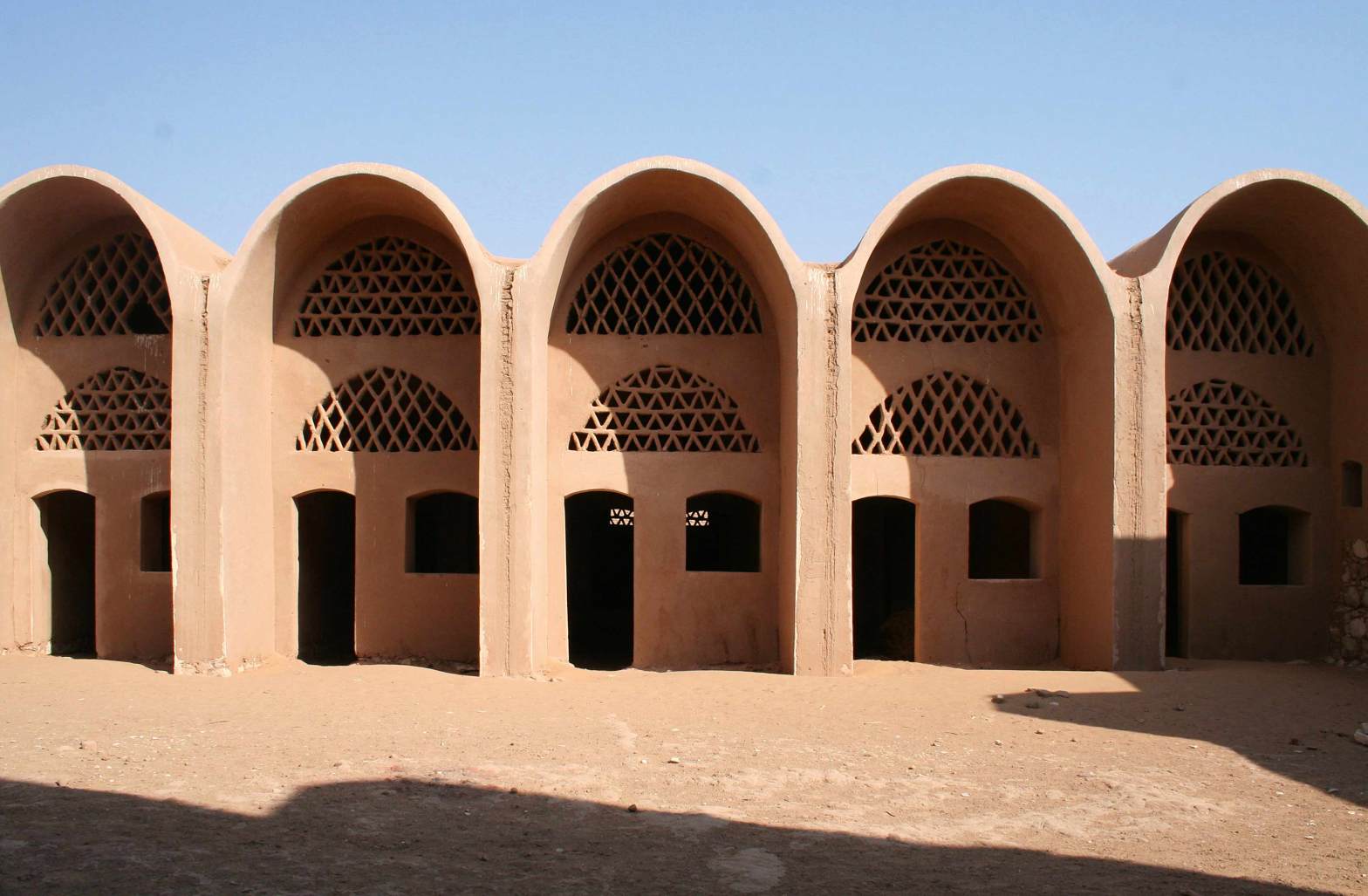
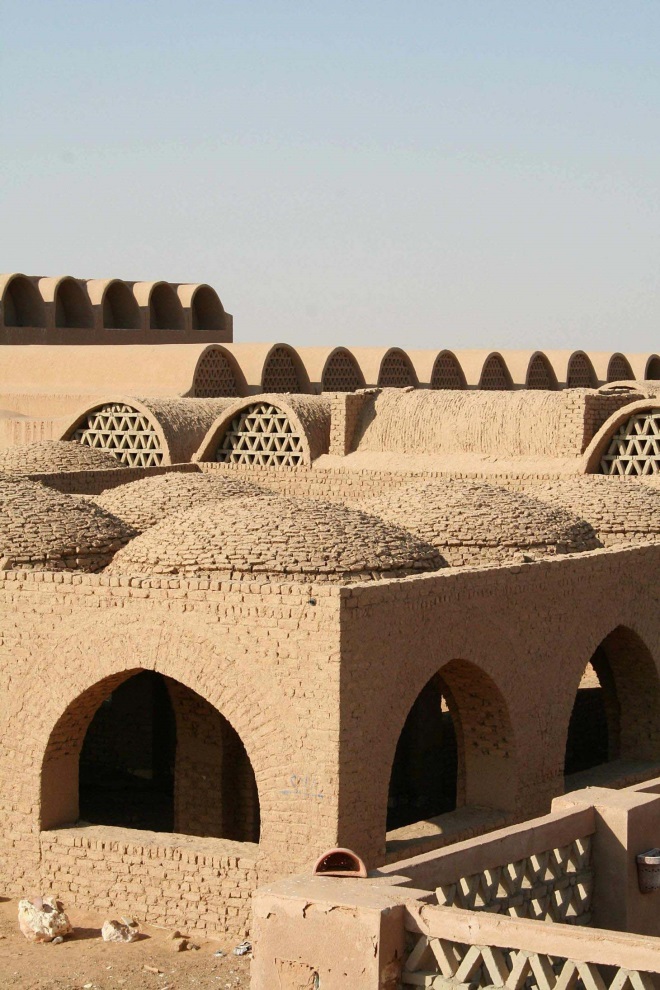
Source: Viola Bertini Fathy’s New Baris public buildings, 1967, with museum in foreground and market vaults to rear
Although the building material is the same, New Baris, when compared with New Gourna, shows a greater architectural mastery in the use of traditional elements which were transposed from the Egyptian or Arab tradition and then reassembled into a new architectural language. At New Gourna, most of the public buildings were a direct quote of pieces of ancient or vernacular architecture, while at New Baris they became the result of a creative work on the tradition itself, not a mimicry but its reinvention.
In the ’70s, Fathy built several stone private villas outside Cairo, purchased by wealthy Egyptian families. Paradoxically, the architect who dedicated all his life to building for the poor was more successful among the upper classes. Perhaps this is due to the wealthier classes’ recognition of the cultural value of Fathy’s work, often not welcomed by the greater public who, chasing the myth of the West, of progress and modernity, barely accepted the idea of living in traditional houses built with mud brick. It was Fathy himself who commented: ‘What defence can the feeble peasant culture put up against the clamorous attack of Western industry?’.
Source: Viola Bertini South-west side of New Baris market
Although the building material is the same, New Baris, when compared with New Gourna, shows a greater architectural mastery in the use of traditional elements which were transposed from the Egyptian or Arab tradition and then reassembled into a new architectural language. At New Gourna, most of the public buildings were a direct quote of pieces of ancient or vernacular architecture, while at New Baris they became the result of a creative work on the tradition itself, not a mimicry but its reinvention.
In the ’70s, Fathy built several stone private villas outside Cairo, purchased by wealthy Egyptian families. Paradoxically, the architect who dedicated all his life to building for the poor was more successful among the upper classes. Perhaps this is due to the wealthier classes’ recognition of the cultural value of Fathy’s work, often not welcomed by the greater public who, chasing the myth of the West, of progress and modernity, barely accepted the idea of living in traditional houses built with mud brick. It was Fathy himself who commented: ‘What defence can the feeble peasant culture put up against the clamorous attack of Western industry?’.
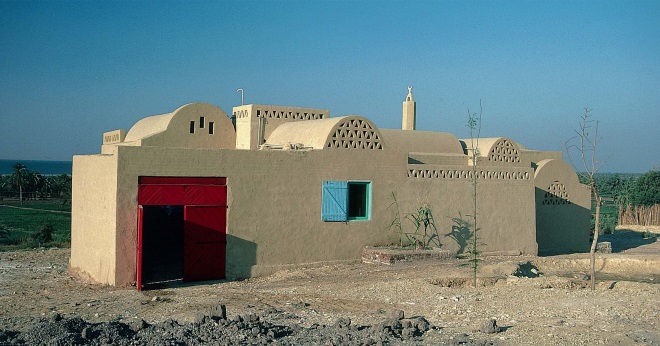
Source: Salma Samar Damluji The rear of Andreoli Residence in Fayyum 1985 with its red garage door
These stone houses can be considered as the manifestation of the research into the traditional Arab house he began in the 1930s. While the use of vaults and domes was originally due to Fathy’s choice of mud bricks as his main construction material, at this point in his career the employment of these forms was so assimilated into his architecture that he used them in different contexts and with different materials. A final demonstration of this approach can be found in his last settlement project, that for the Islamic Foundation of Dar al-Islam in New Mexico, opened 1982, where, although the village wasn’t in the Arab region, he used the same language and materials that had become an integral part of his poetics.
Two of Fathy’s most famous publications Architecture for the Poor and Natural Energy and Vernacular Architecture
For many years Fathy’s projects have been described as Postmodern vernacular, and only recently has he been rediscovered as a master who proposed a different idea of modernity: inventive work with tradition, carried out with the aim of expressing a lost arabité. Fathy left a small number of disciples who are continuing his struggle to avoid the use of Western models in Arab architectural culture. Here, in fact, little has changed since Fathy inaugurated his research on tradition, while his way of making architecture has been gradually reduced to a style, becoming a status symbol for the upper class. But his research hasn’t been lost: his book on Gourna has been translated in more than 20 languages, and in the long term, proved a valuable lesson in architecture for generations to come.
Key works
Hamed Said house, al-Marg, Cairo, 1942 Village of New Gourna, Luxor, 1945-48 Garagos Village ceramics factory, Qina, 1950 Fāris school, Fāris, 1956 Village of New Baris, Kharga Oasis, 1965-67 Fathy house in Sidi, Krier, 1971 Akil Sami house, Dahshur, 1979 Dar al-Islam project, New Mexico, 1980 Andreoli Residence, Fayyum, 1984
Have you ever come across a building with curved doorway designs or graceful floral motifs surrounding a facade of a window? If you did, then you were probably looking at Egyptian Art Nouveau.
Art Nouveau, which literally means, “New Art” in French, is a design style that emerged during the later 19th and early 20th century. Its popularity spread across Europe and North America, reaching through Mexico and to South America, and of course into the new Republic of Turkey and the occupied Egyptian territory.
Art Nouveau arose as a reaction to the 19th century dominating traditional neoclassical and academic styles, especially with the increased focus on industrialization at the time.
Artists and architects advocating this movement wanted to emphasize the importance of getting back to craftsmanship and having art incorporated back into everyday life in order to make beautiful things available.
The aesthetic was quite revolutionary and new, it came as a message of a new artistic style for the approaching 20th century.
This art movement included fine artists, illustrators, glass and jewellery designers, as well as furniture designers, for the first time, interior designers were emerging alongside architects and decorative artists.
The Art Nouveau movement began in France, and spread through Europe. In some places the style was known by different names, and slightly varied in its looks from one place to another. Terms such as Jugendstil in Germany, Stile Liberty in Italy, Sezessionstil in Austria, Modernisms in Spain, and Tiffany style in the US, are some local names of this very artistic style.
Gaudi’s famous Casa Batllo in Barcelona, and Wagners ceramic tile work on top of Majolikahaus’s main veneer in Vienna are two amazing examples of how architects shaped this style. Many other examples cn still be seen in places like Brussels in Belgium; Prague in Czech Republic, and other cities across Europe. A vivid illustration of how stunning Art Nouveau interior architecture looks like could be seen at New Amsterdam Theatre in New York City. The list, in fact, could go on and on.
But how does Art Nouveau Architecture look like?
In a nutshell, the easiest way to identify an art nouveau building is by their graceful curving lines either on the facade of the structure, or even in its interiors. Some of these motifs seem almost alive like a whiplash curve; implying sophisticated curvy patterns of twisting asymmetrical lines with lots of natural forms and structures, particularly flowing lines and forms resembling the stems and blossoms of plants, leaves and flowers, as well as geometric patterns such as squares and rectangles.
Egypt, being the hub for the latest artistic trends at the that time, had its share of this beautiful architectural projects, particularly in the early 20th century. Neighbourhoods such as Al Helmeyya Al Gedeeda, Sayeda Zeinab, and Sakakini in Cairo, still have some of the best examples of Egyptian Art Nouveau structures. However its not just in Cairo, other cities, such as Tanta and Mansoura, have their share of Art Nouveau buildings.
Exploring some of the best examples of the remaining Art Nouveau projects in Egypt, graceful balconies and wooden rooms extending from lavish facades, doorways and doors.
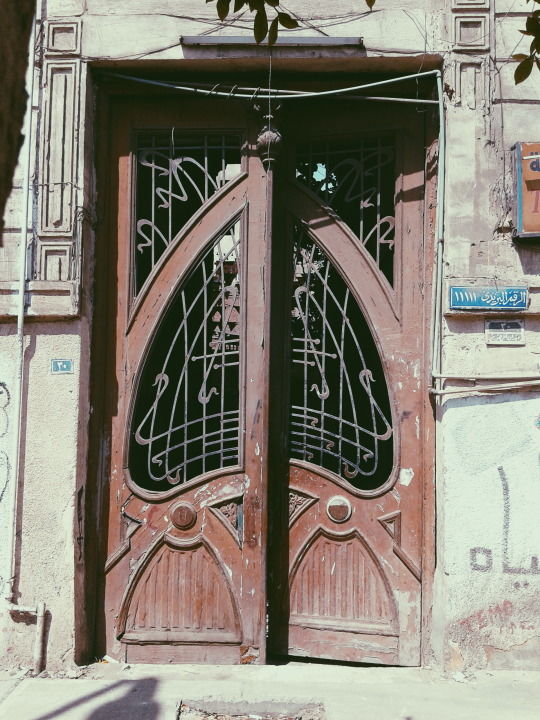
Sakakini door,
4 buildings in Helmeya
Window in Cab Elwazeer
Building in Mansoura,
Building in Tanta
Building in Talaat Harb
Building in Sayeda Zeinab
Notably the Manial Palace style stands as the east living proof of the integration of Art Nouveauand Rococo with the many traditional architectural styles encompassing the Ottoman Moorish and Persian Designs found in Egypt.
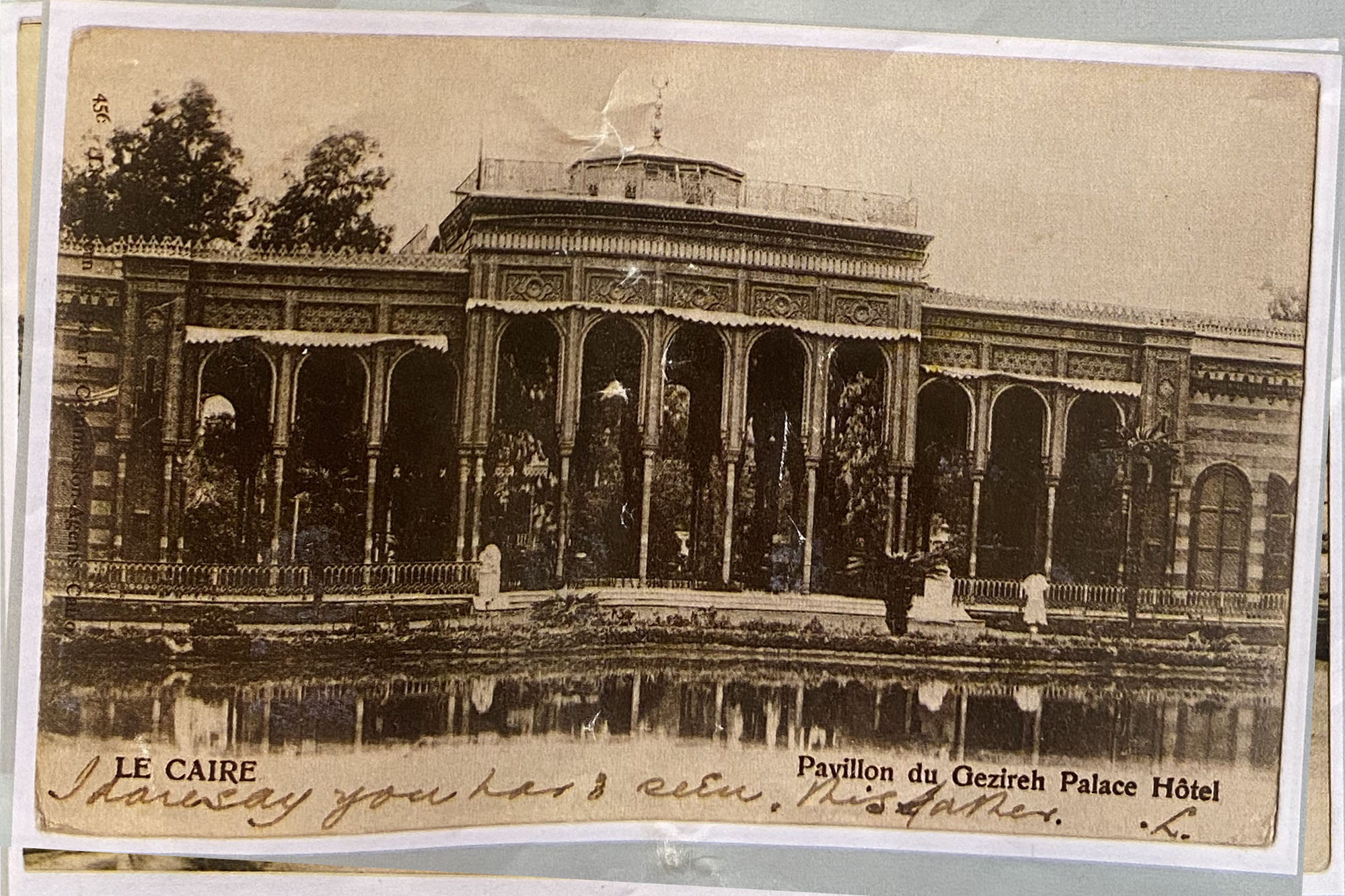
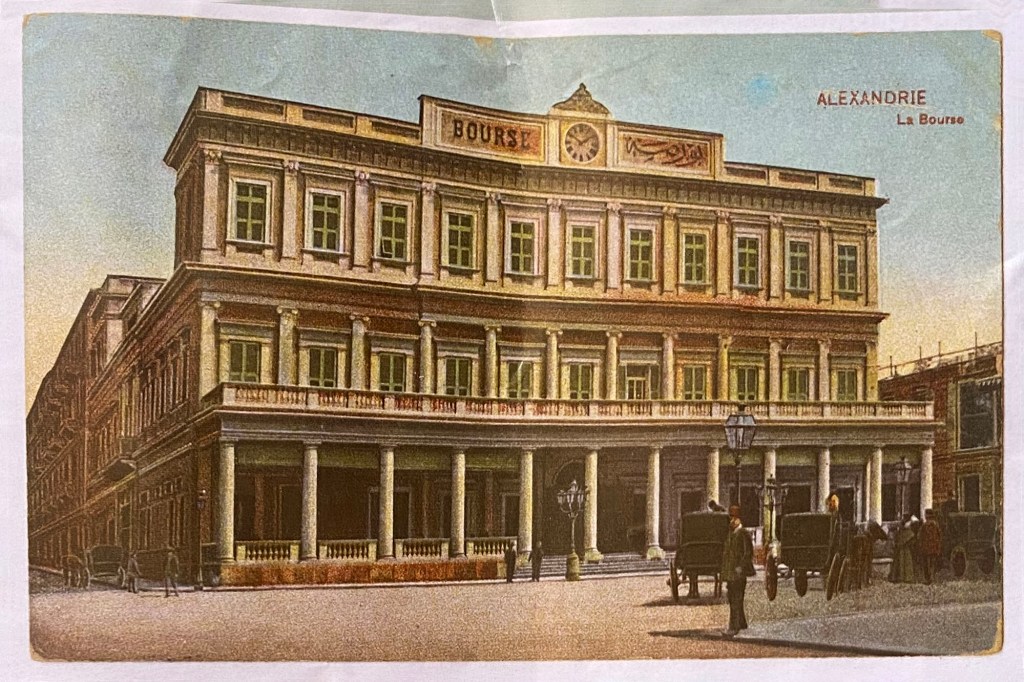
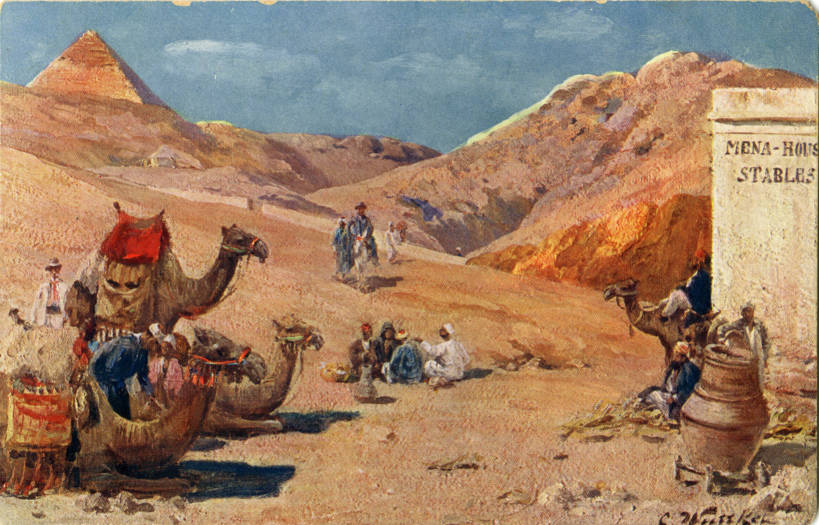
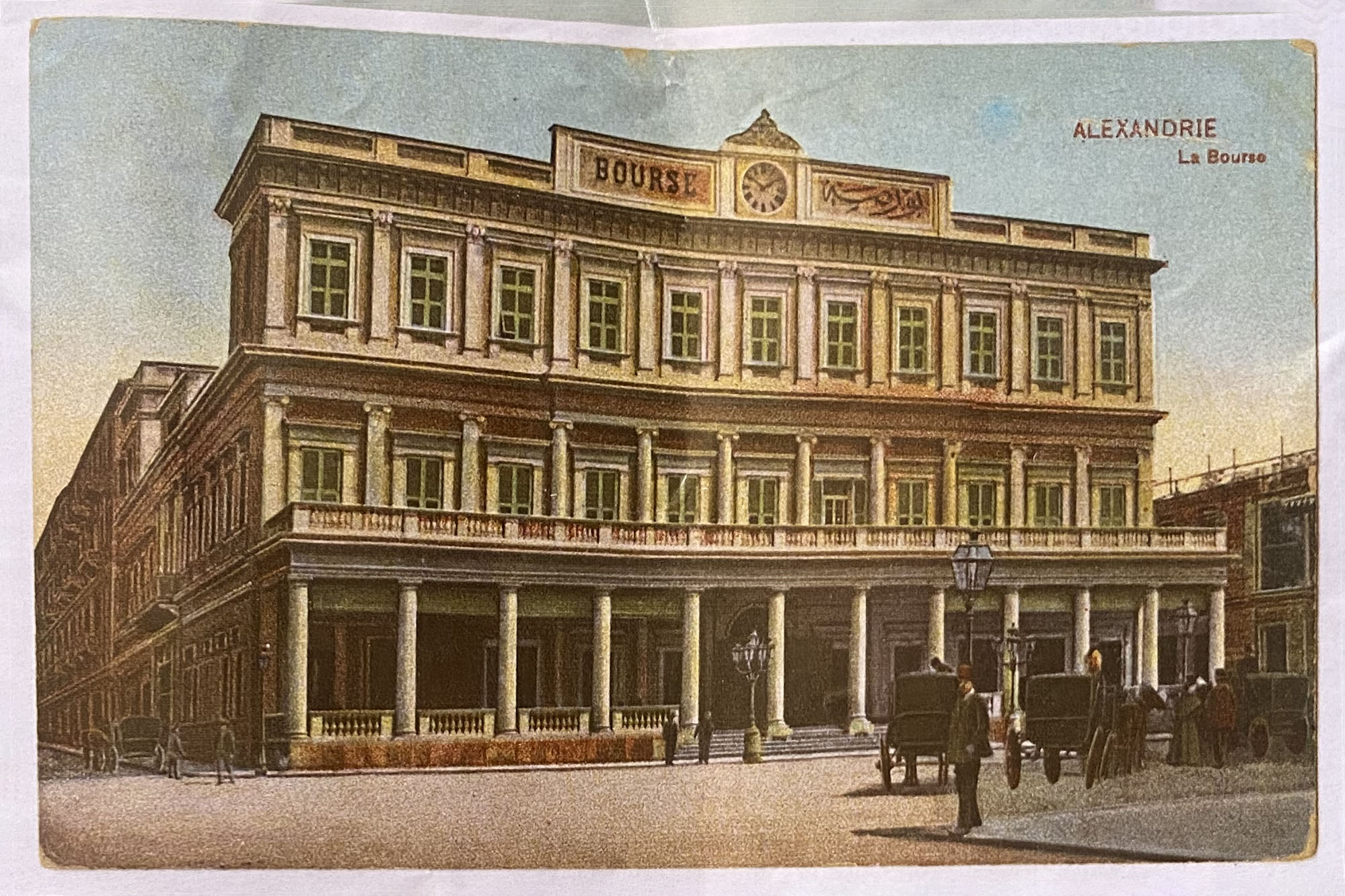
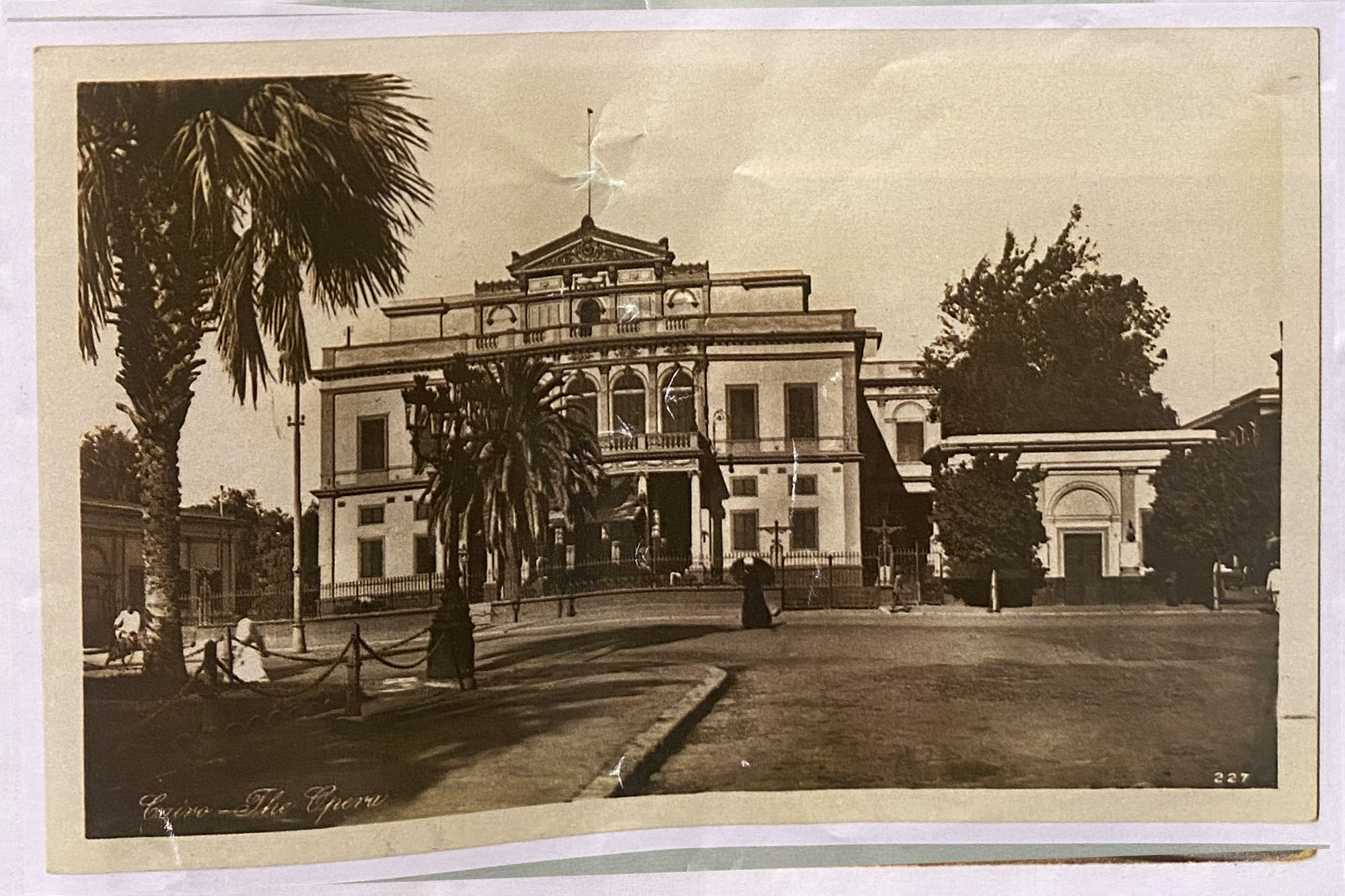
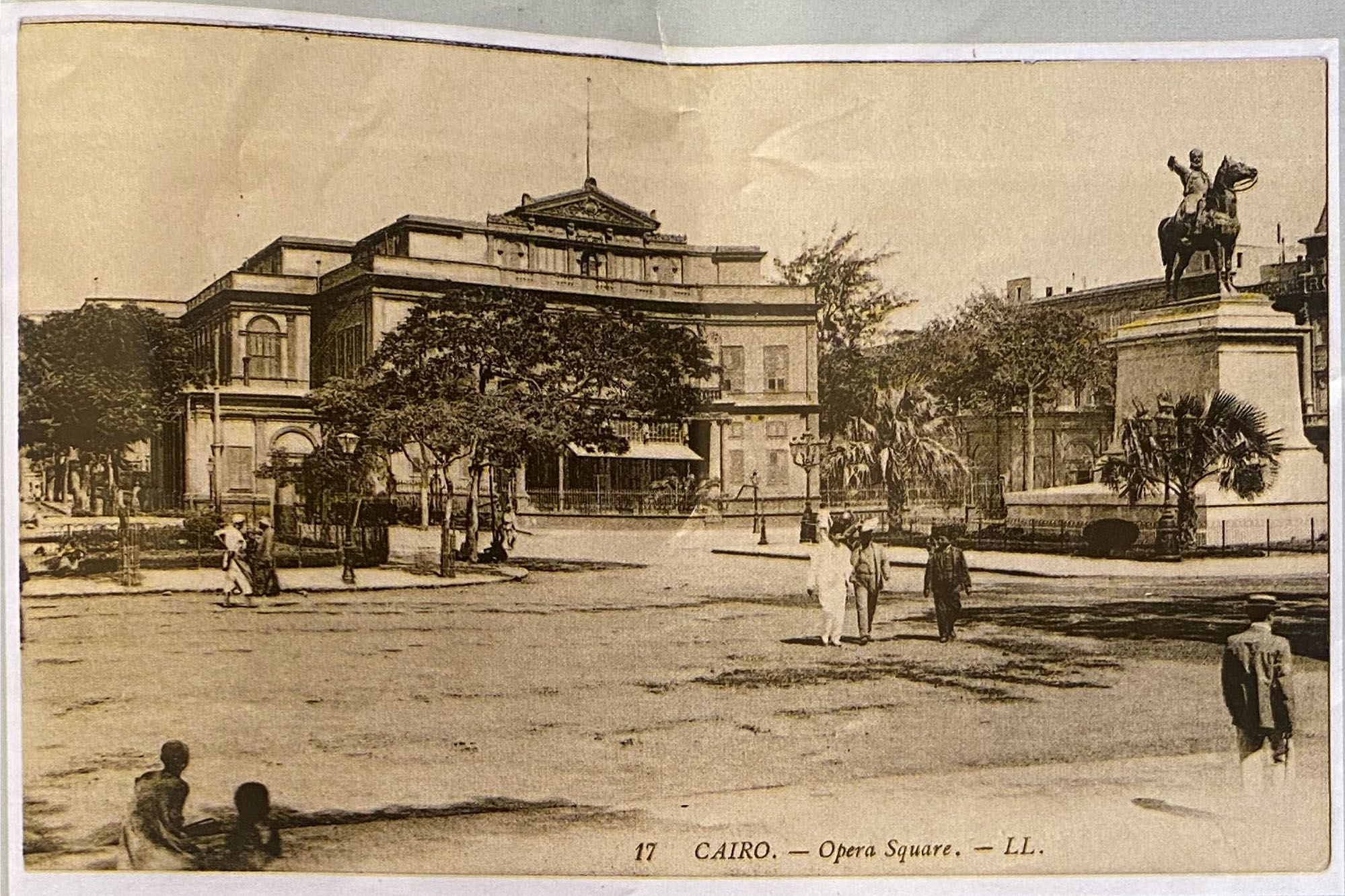
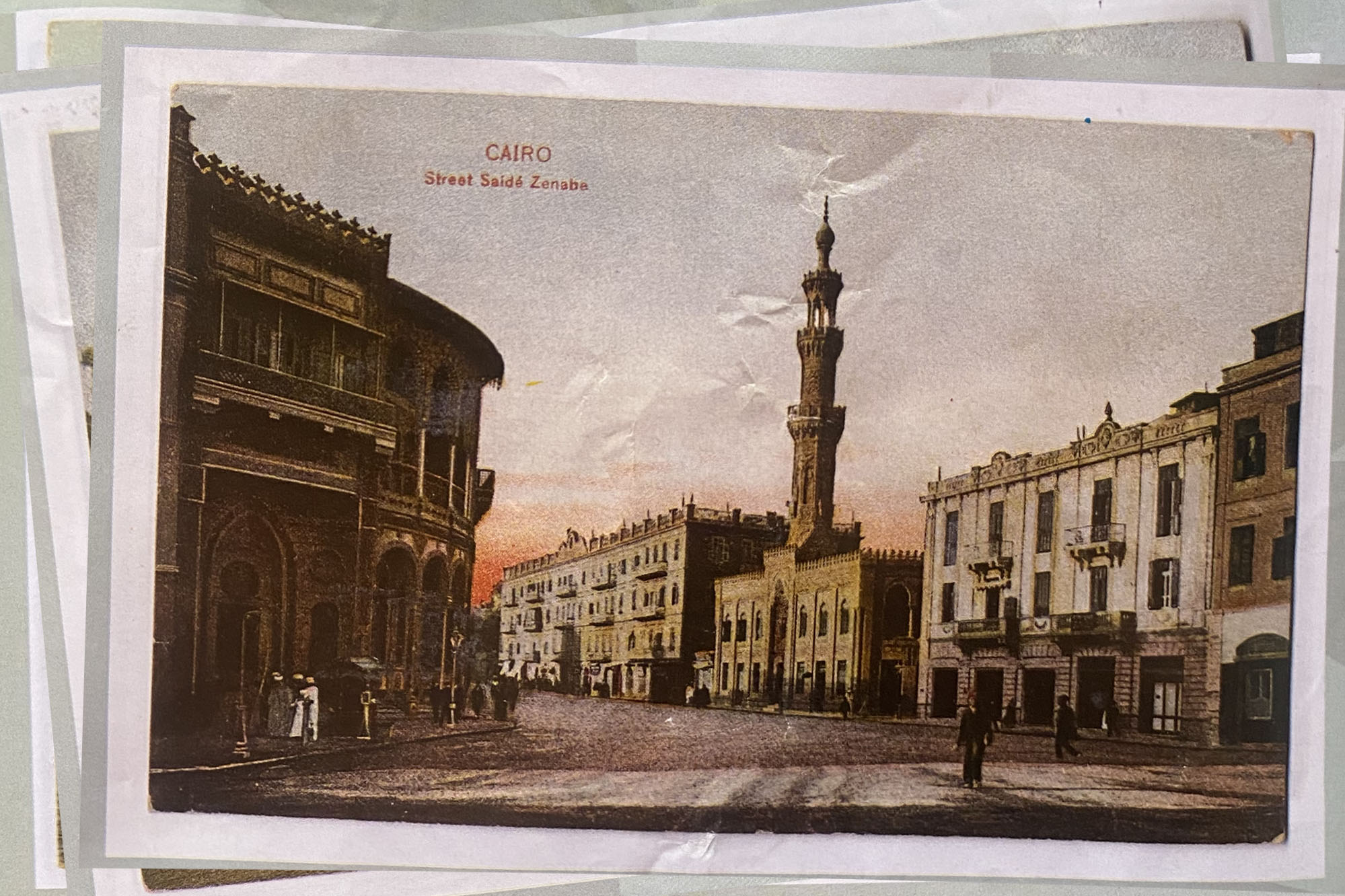
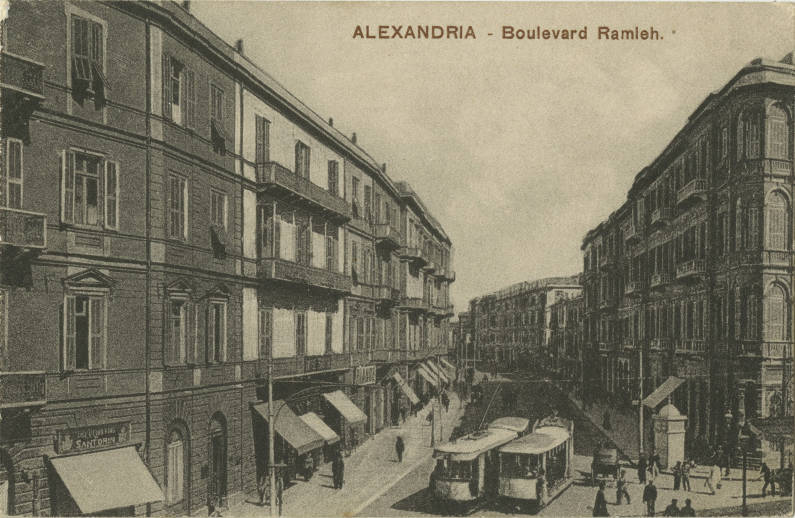
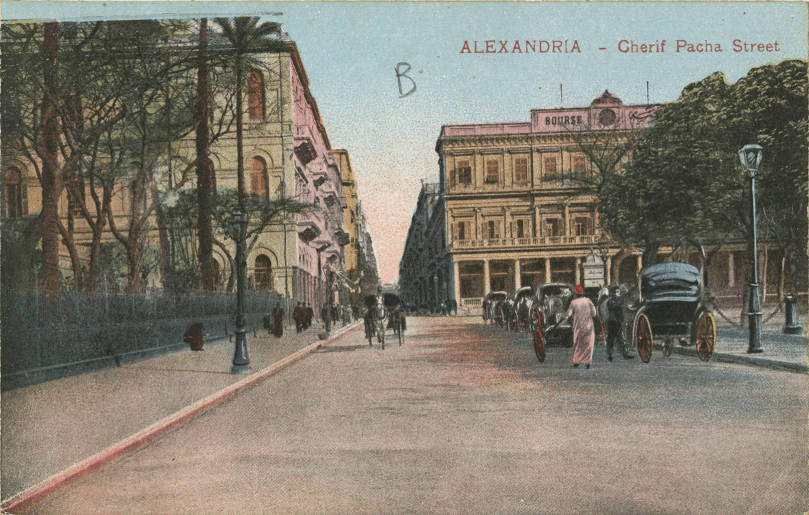
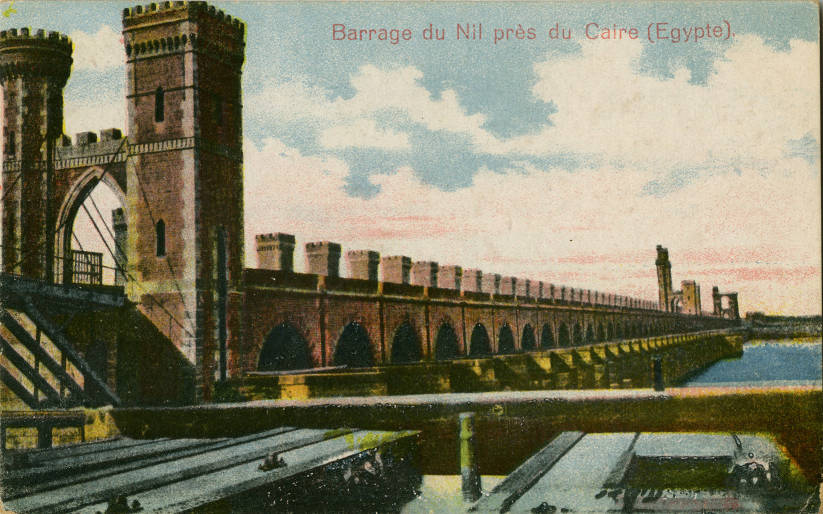
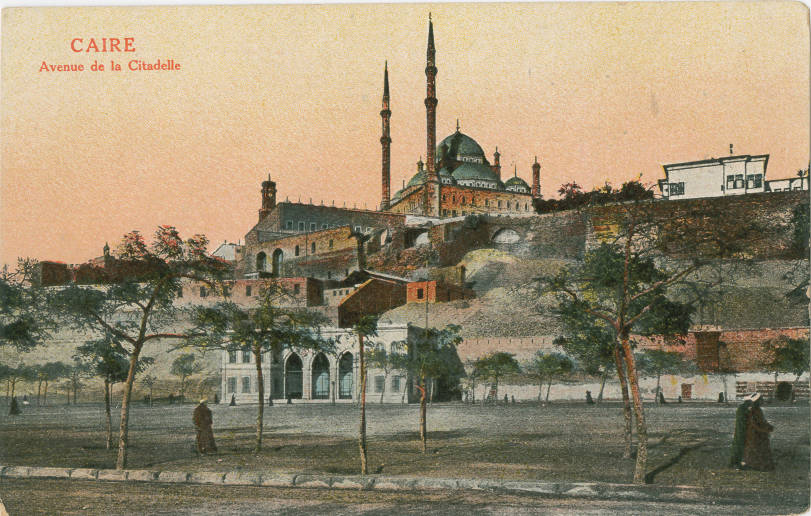
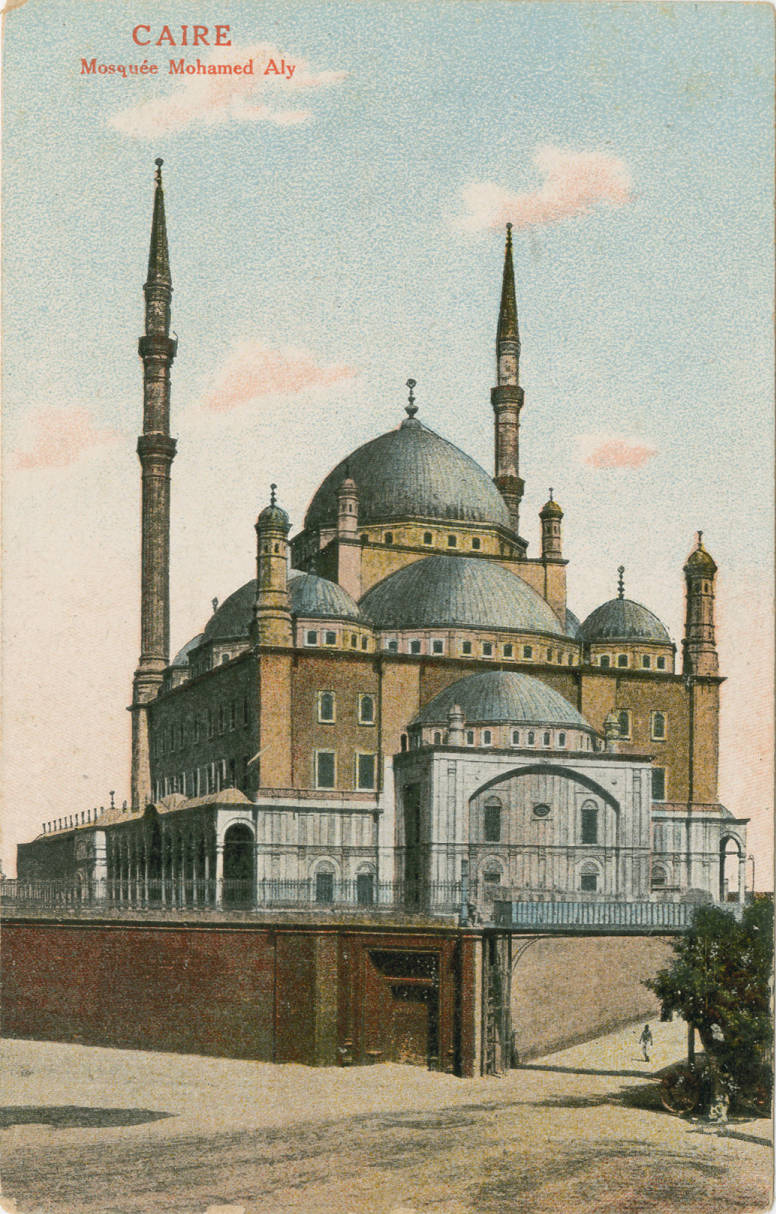
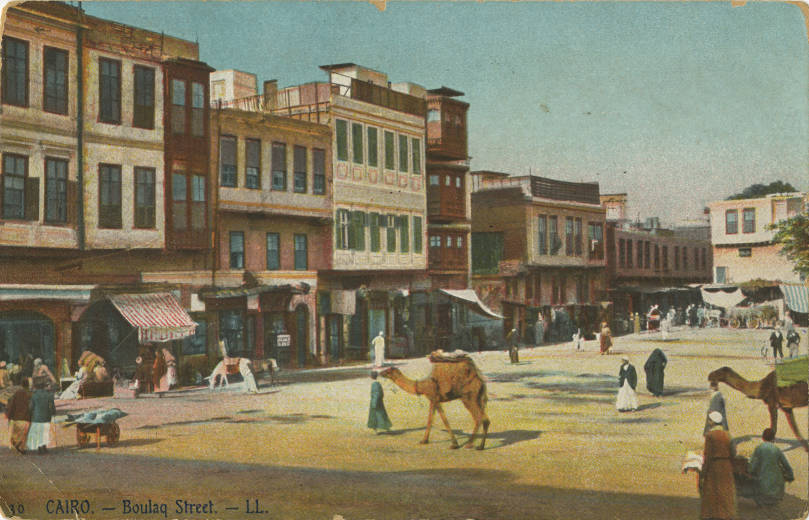
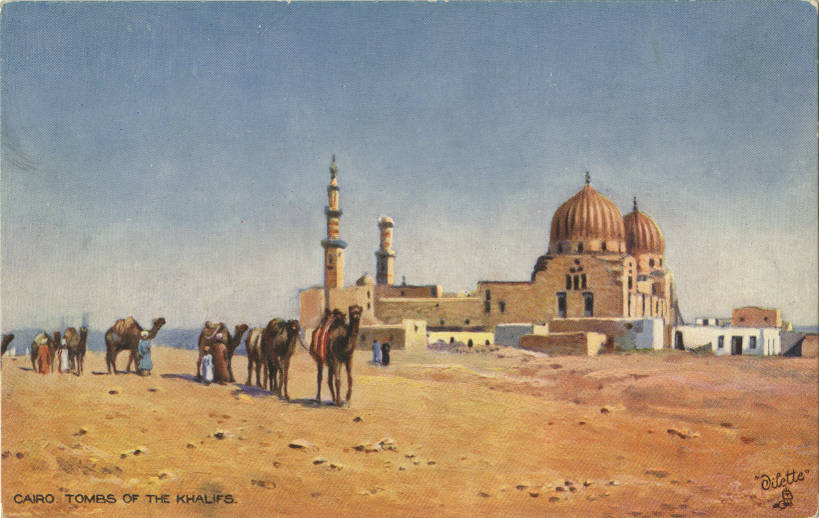
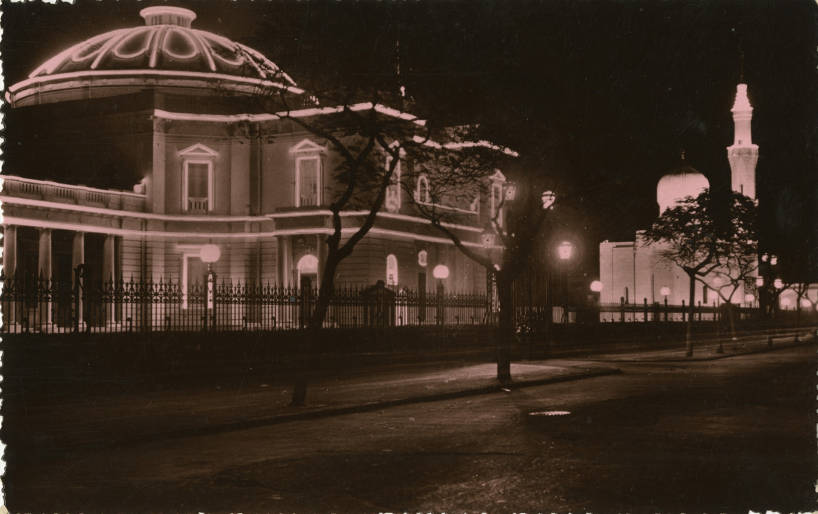
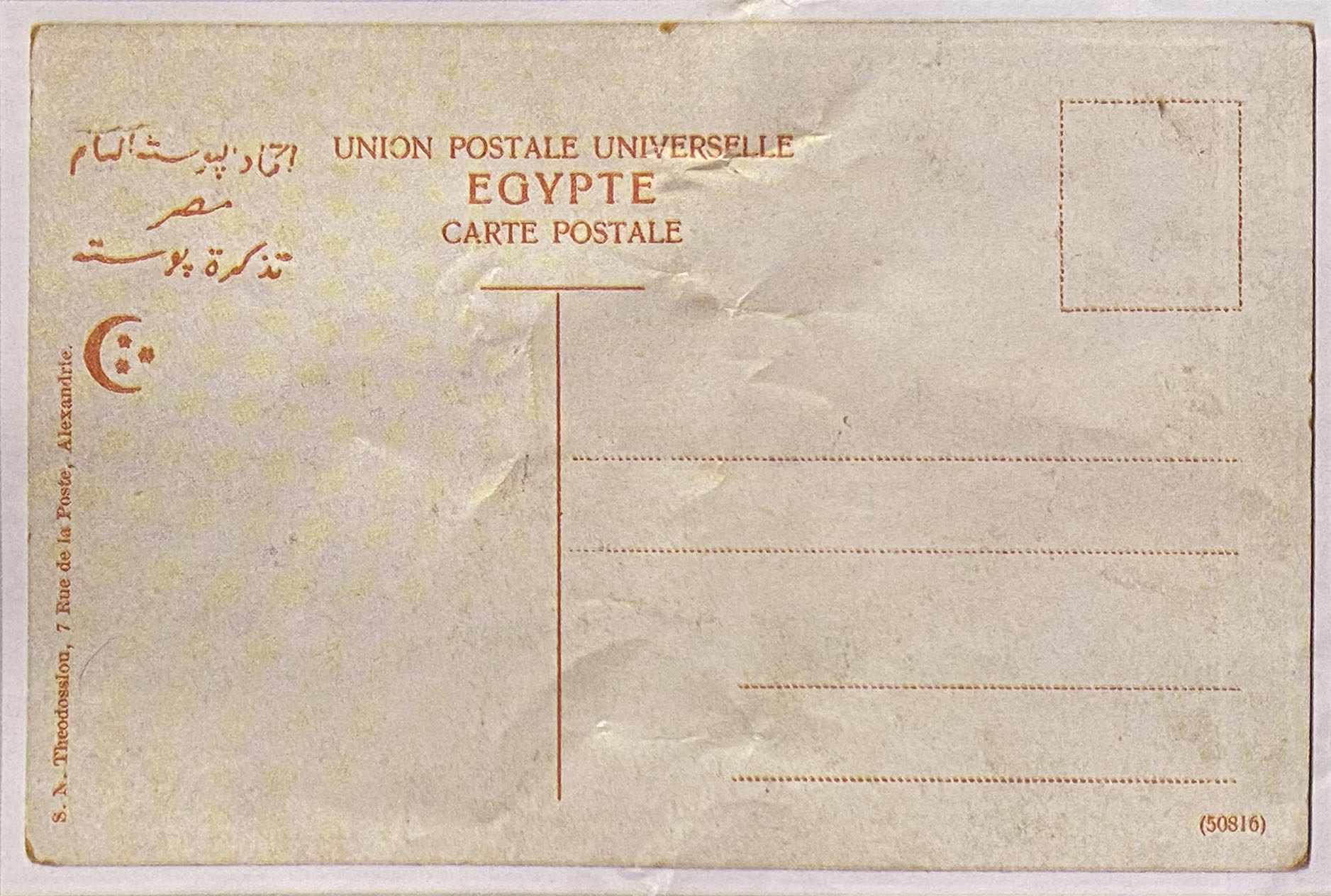
During the first quarter of the twentieth century, the product of postcards went through a commercial boom in Egypt due to the heavy tourist traffic and the prosperous business atmosphere that took place in Egypt. At the time it witnessed an active modernization phase.
Benefitting from the accumulated and diversified rich production of the nineteenth century photographs, several entrepreneurial companies in Europe and others recently founding in Cairo, Alexandria, and Port Said catered o the tourist industry, trafficking in the Suez Canal Zone (Port Said, Suez, Ismallia) which turned to be a very lucrative business.
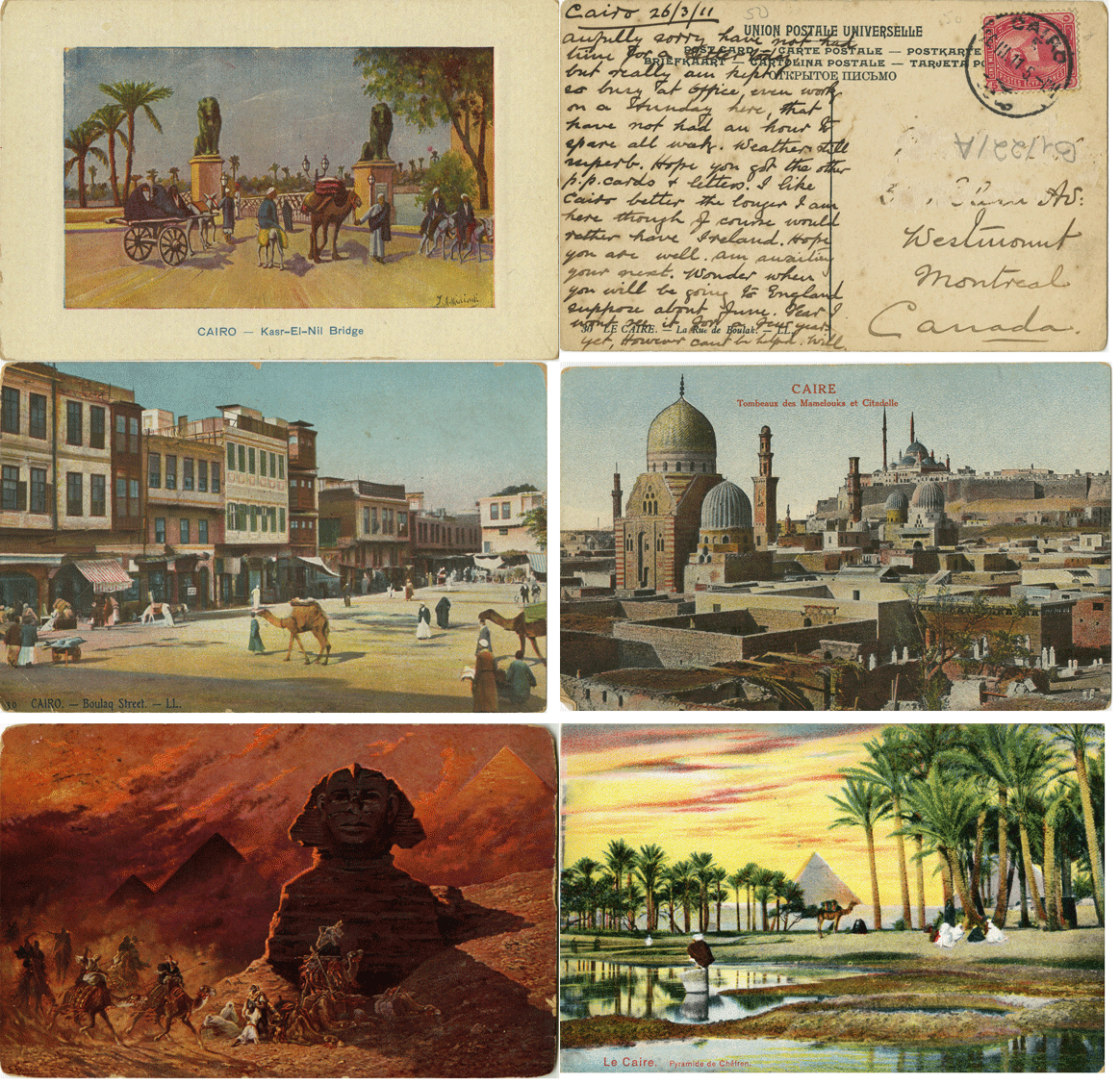
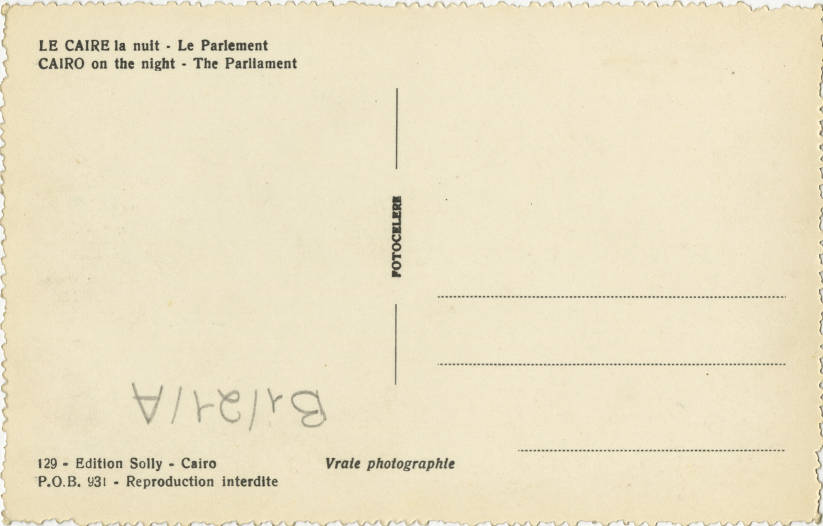
Each publishing house labelled it products with its own logo or initials either on the front of the card next to the legend line or at the back of the card. Another interesting characteristic of the postcards of this period is the appearance, on the top back of the cards, of the Union Postale Universelle (UPU) title and a red crescent with three stars symbolizing the Egyptian flag at the turn of the century. Those assured the sender that the card was according to the standards of the UPU which was better guarantee of its safe arrival to the destination.
One of the leading and most prolific companies in that domain was Leon and Levy, whose initials “LL” were often erroneously mistaken as Lehnert and Landrock. In fact they were those of two partners Leon and Levy who had themselves started their career as photographers two decades earlier. On the other hand, other major companies such as Rudman, Lichstern and Harare, Cairo Postcard Trust, etc… were rather publishers who commissioned photographers or bought a selection of their images with the purpose of turning them into postcards.
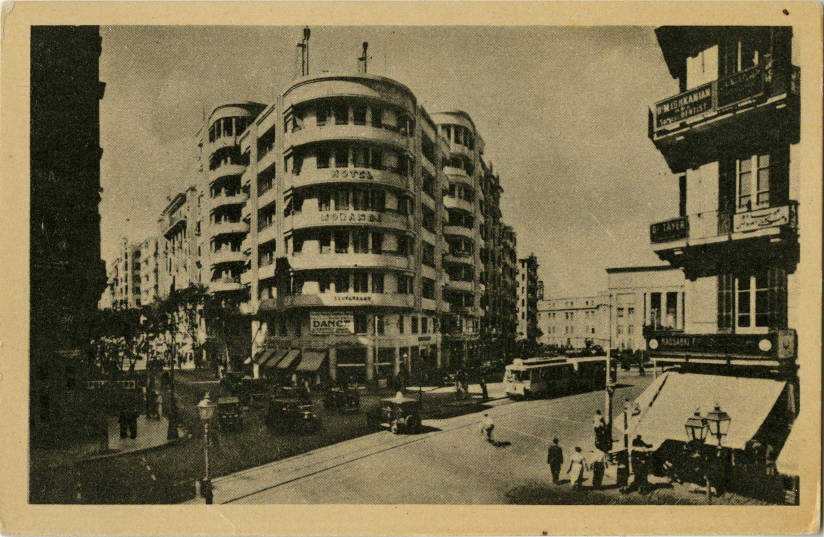
The topics of the Postcards of the time varied widely. Although Egyptomania and monuments were quote a popular topic and abundantly printed, there was also a wide segment of the buyers interested in the modern urbanization of its major cities at the dan of the nineteenth century, specially, but not limited to Cairo, Alexandria, Port Said and the Suez Canal Cities.
Amon the most popular postcards are typically those which captured a souvenir of the tourists itinerary, including the train stations through which they travelled, the hotels where they stayed, and glimpses of the main streets of the cities.
The repertoire includes the Cairo Railway Station known as Mahattit Masr, the second oldest railways station or the Fleming station in Alexandria, as well as the Bacos line or that of Ramleh district in Alexandria’s remarkable downtown district.
Several leading hotels belonging to the George Nungovitch Co. become the best sellers in the postcards of the era. Both the legendary Shepherd’s which was renewed several times and finally burnt in the riots of 26 January 1952 and the Mens House are considered the most nostalgic in the world of Cairene hospitality. Those were followed by the Continental Hotel, currently being torn down, which had an even better location directly overlooking the Azbakiya Gardens.
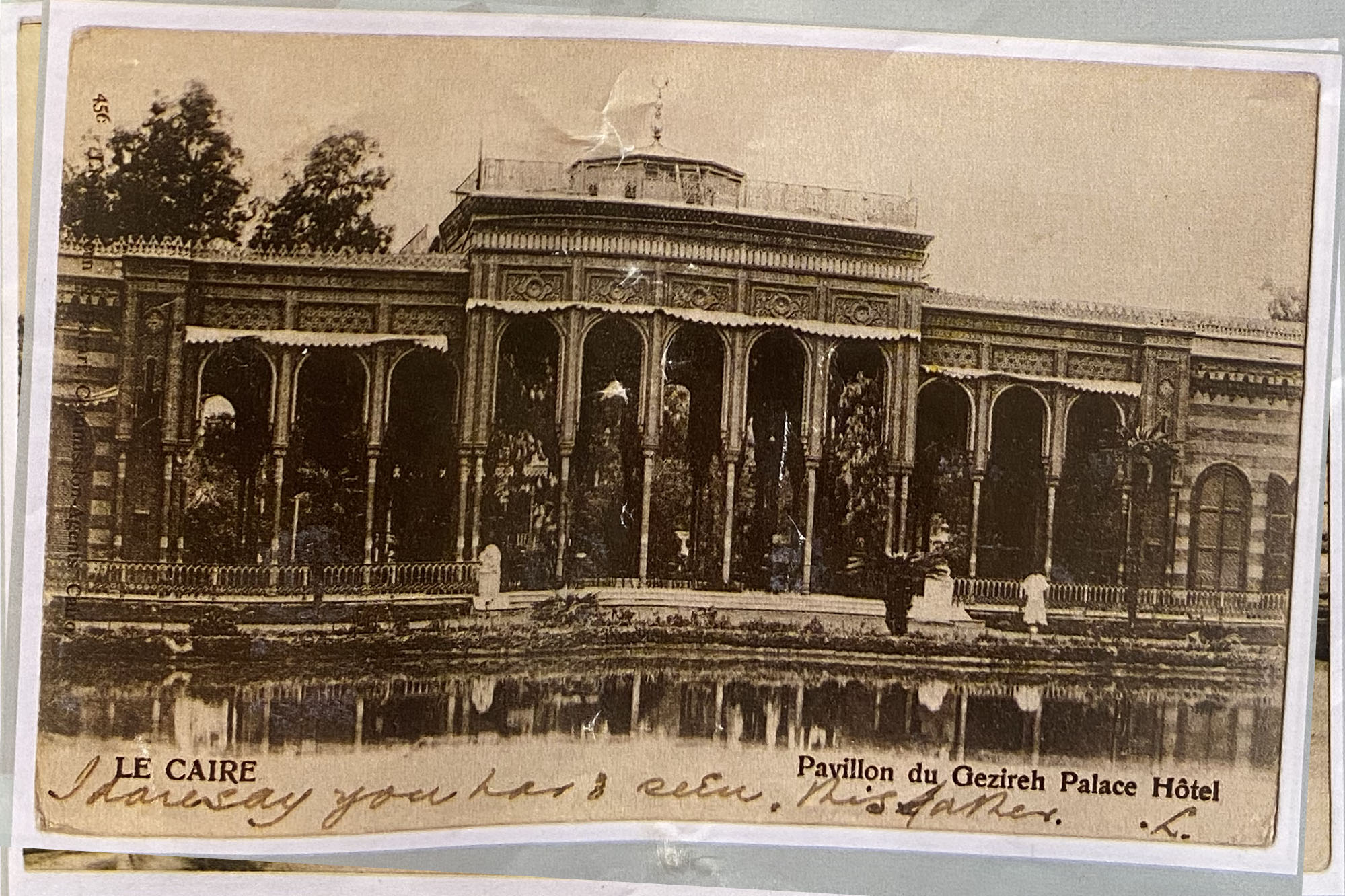
Although occupying a Nile front location, both the Gezira Hotel (now the Marriott) and the Semiramis Hotel are less featured, the steel structure of the Gezira pavilion seemed to catch more attention.
All the above, in addition to the San Stefano Hotel of Alexandria had their own post office inside the hotel which sold stamps and franked the letters with an authorized seal from the Government postal administration.
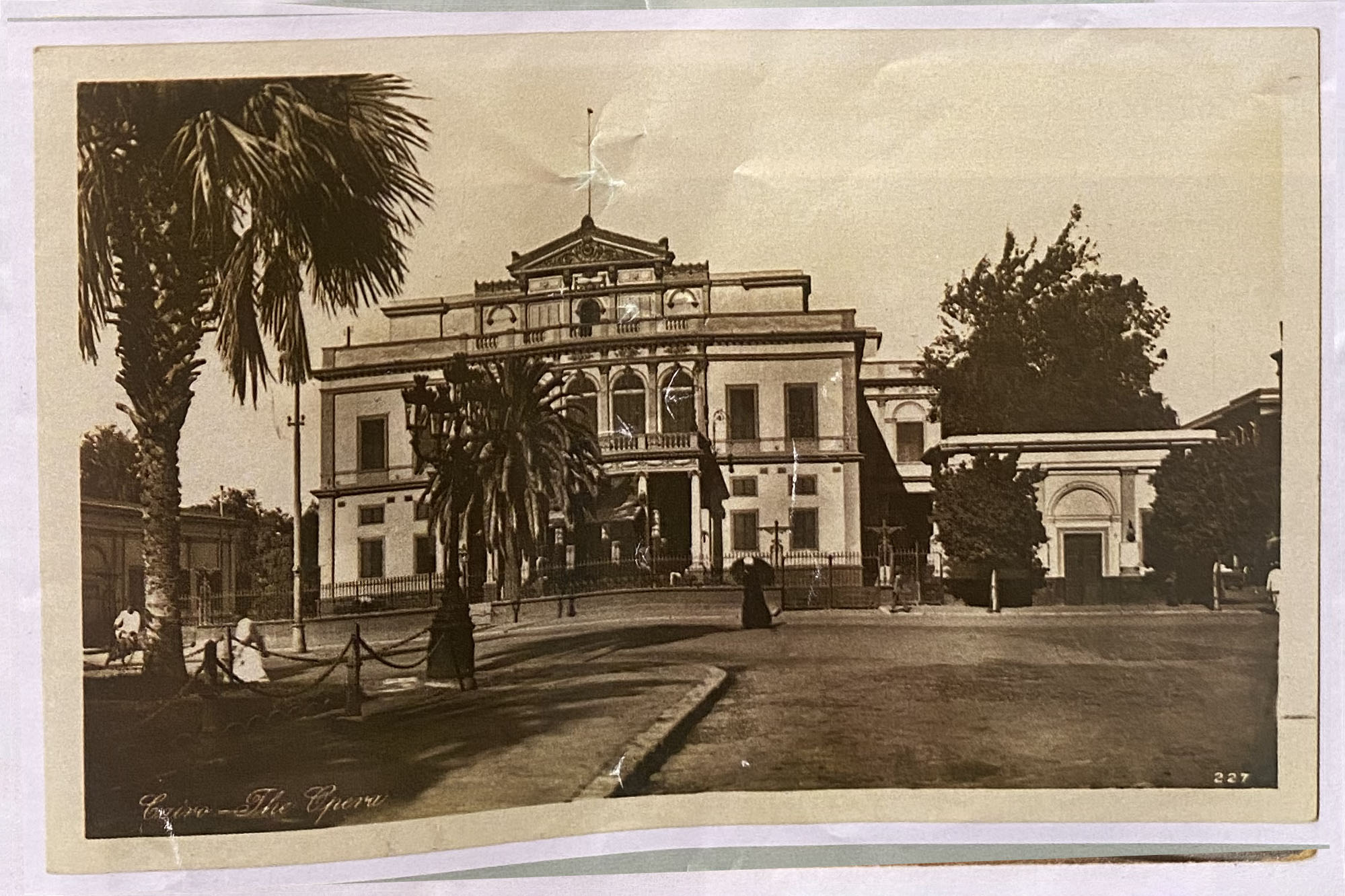
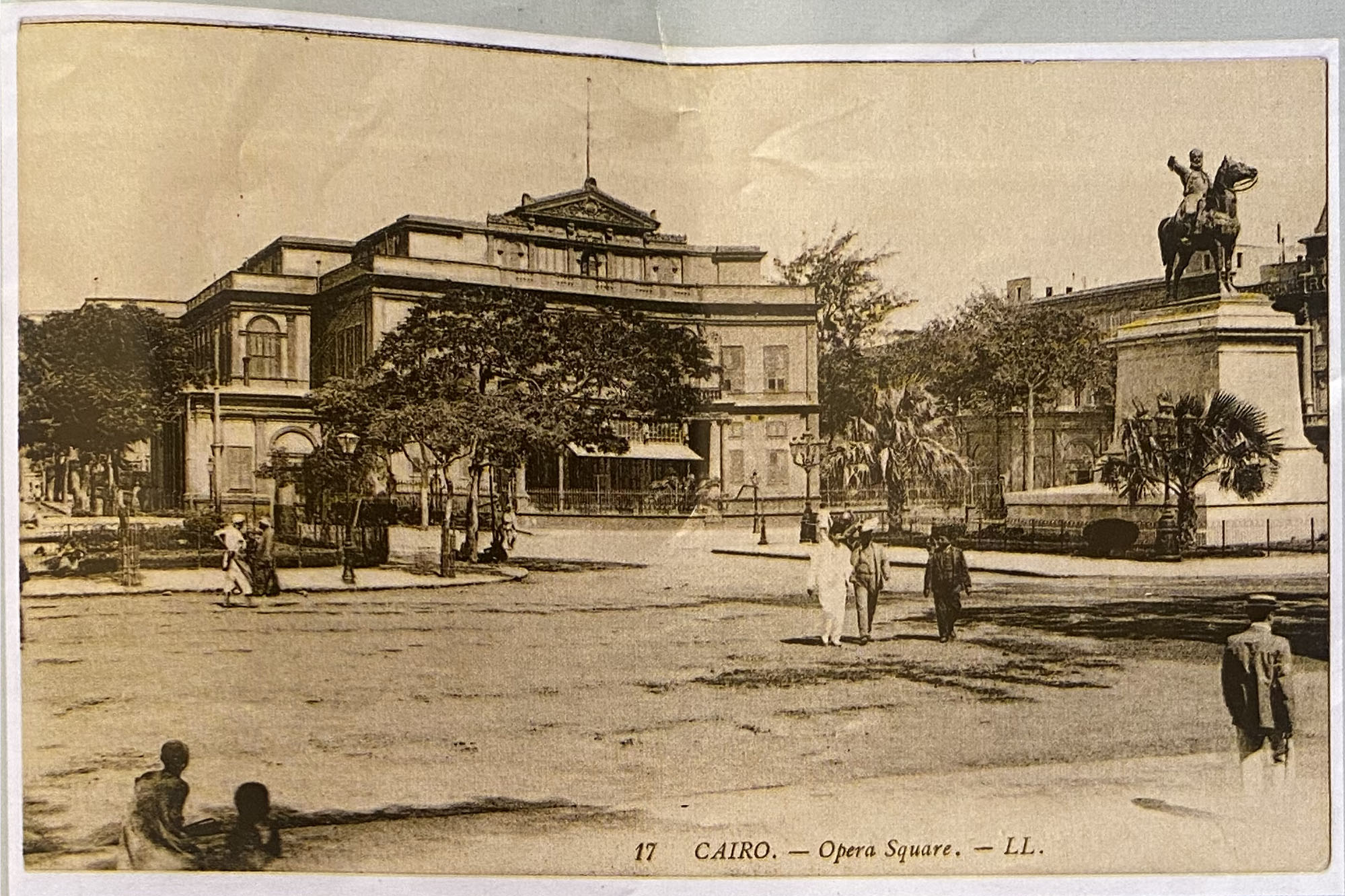
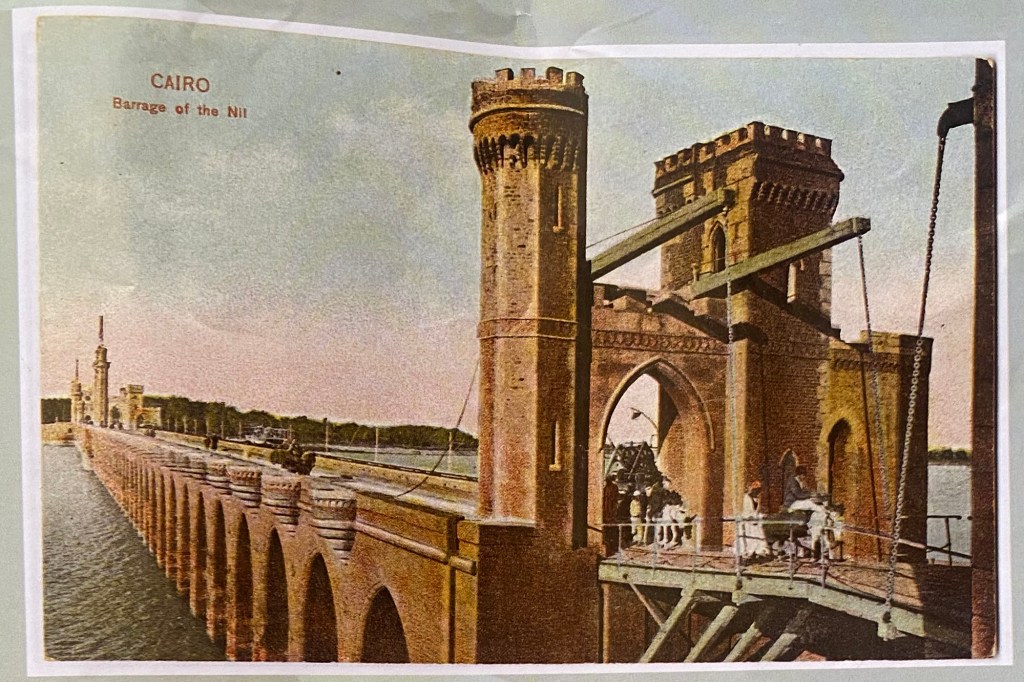
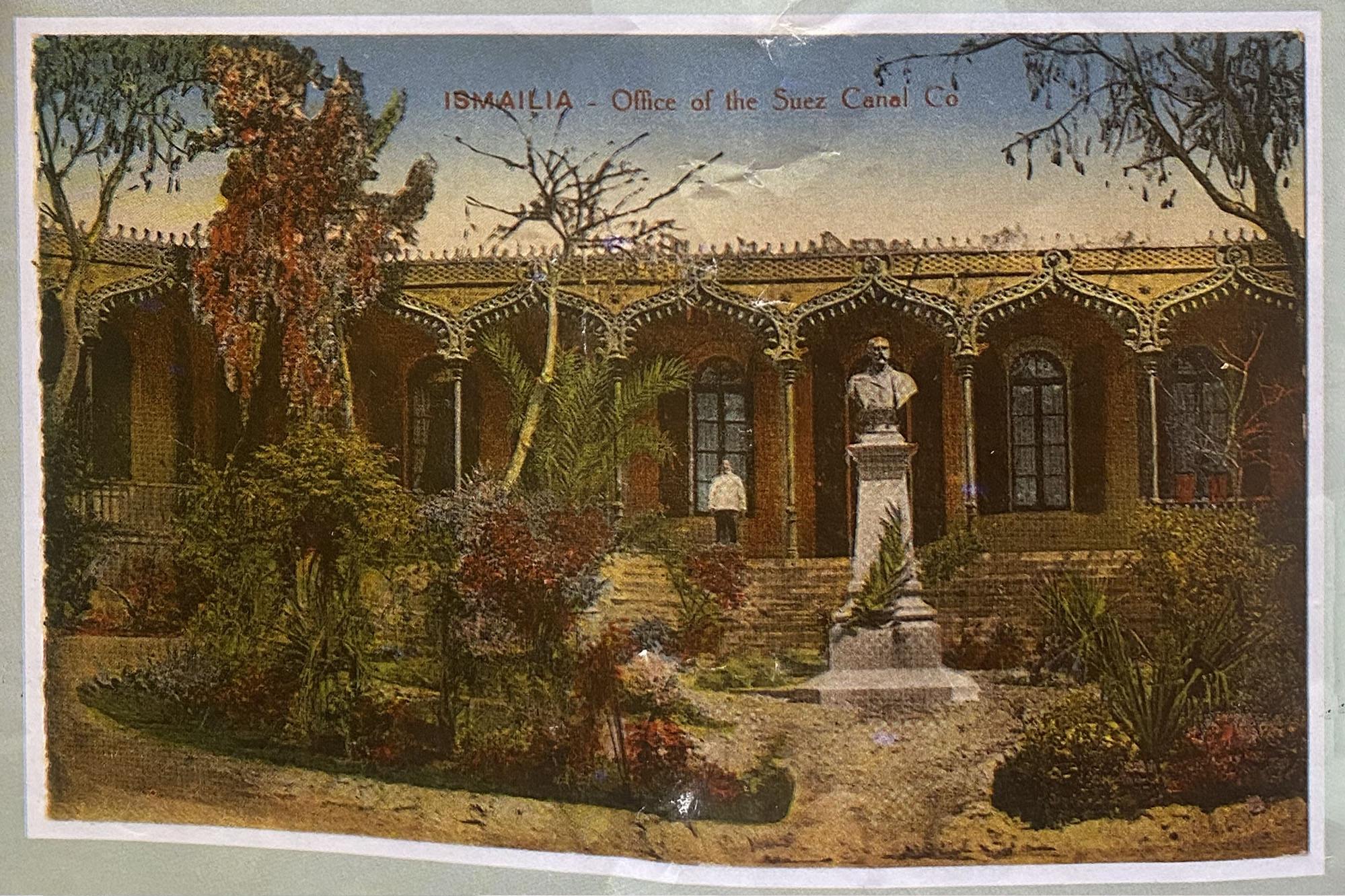
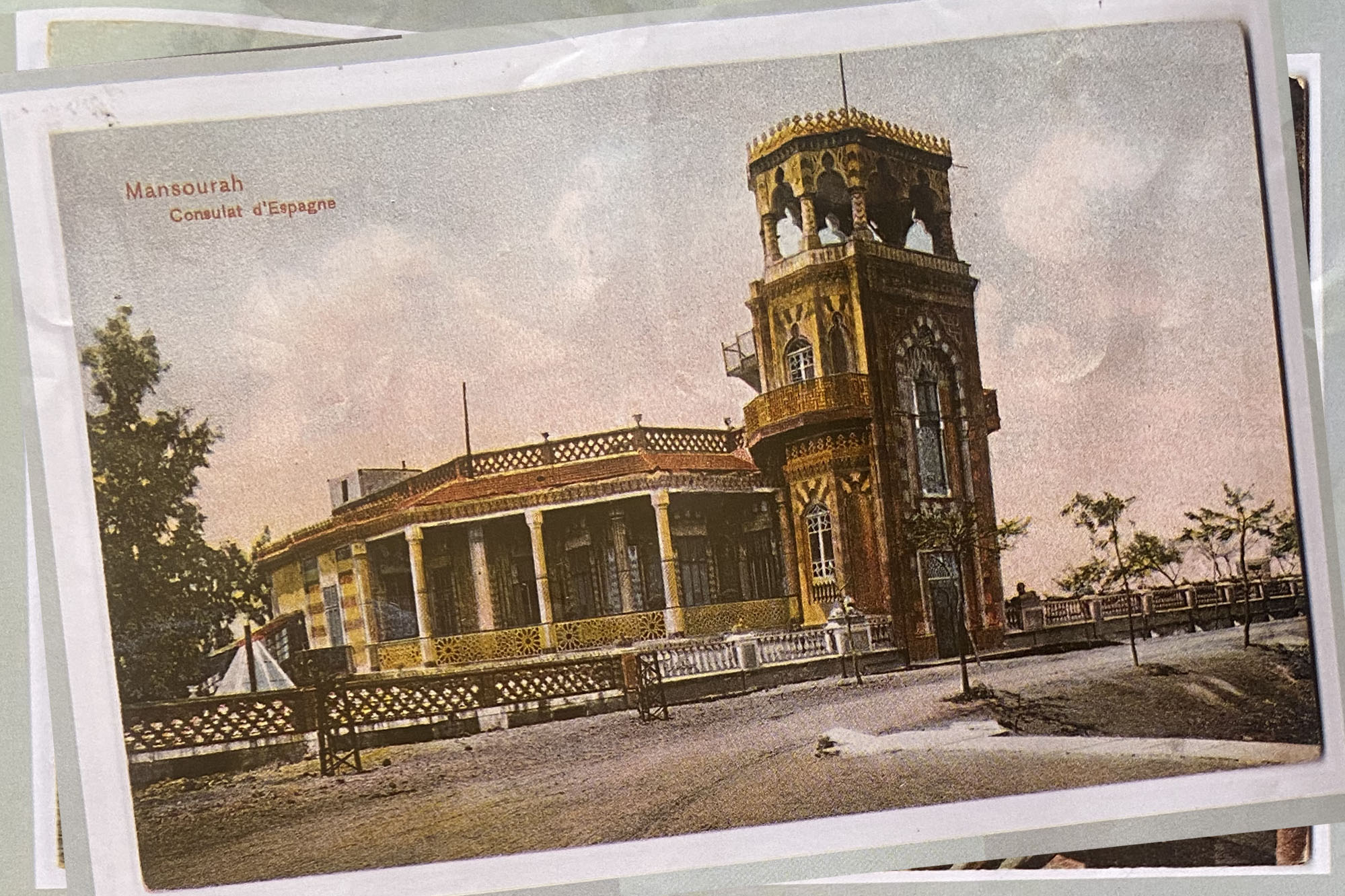
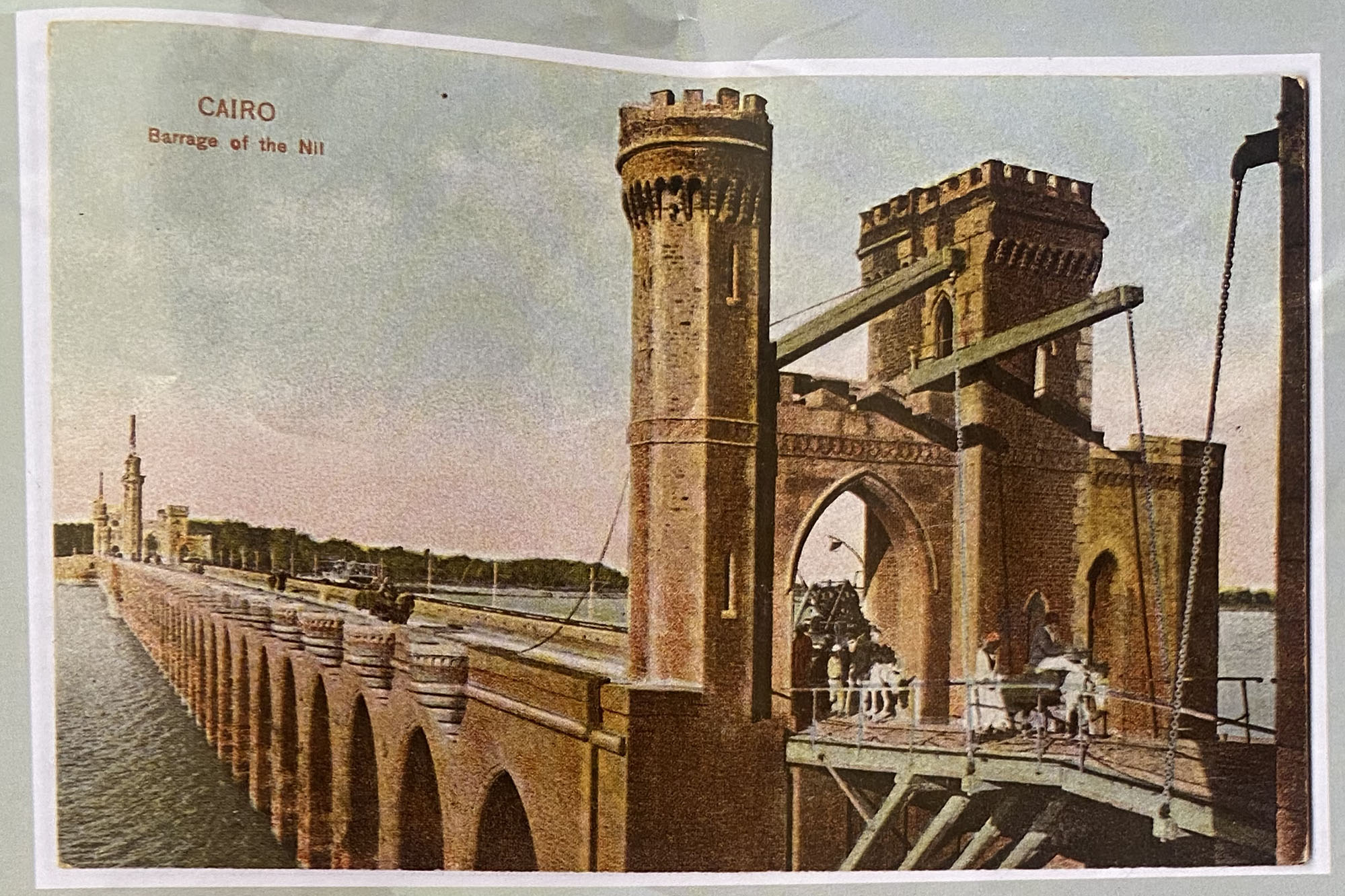
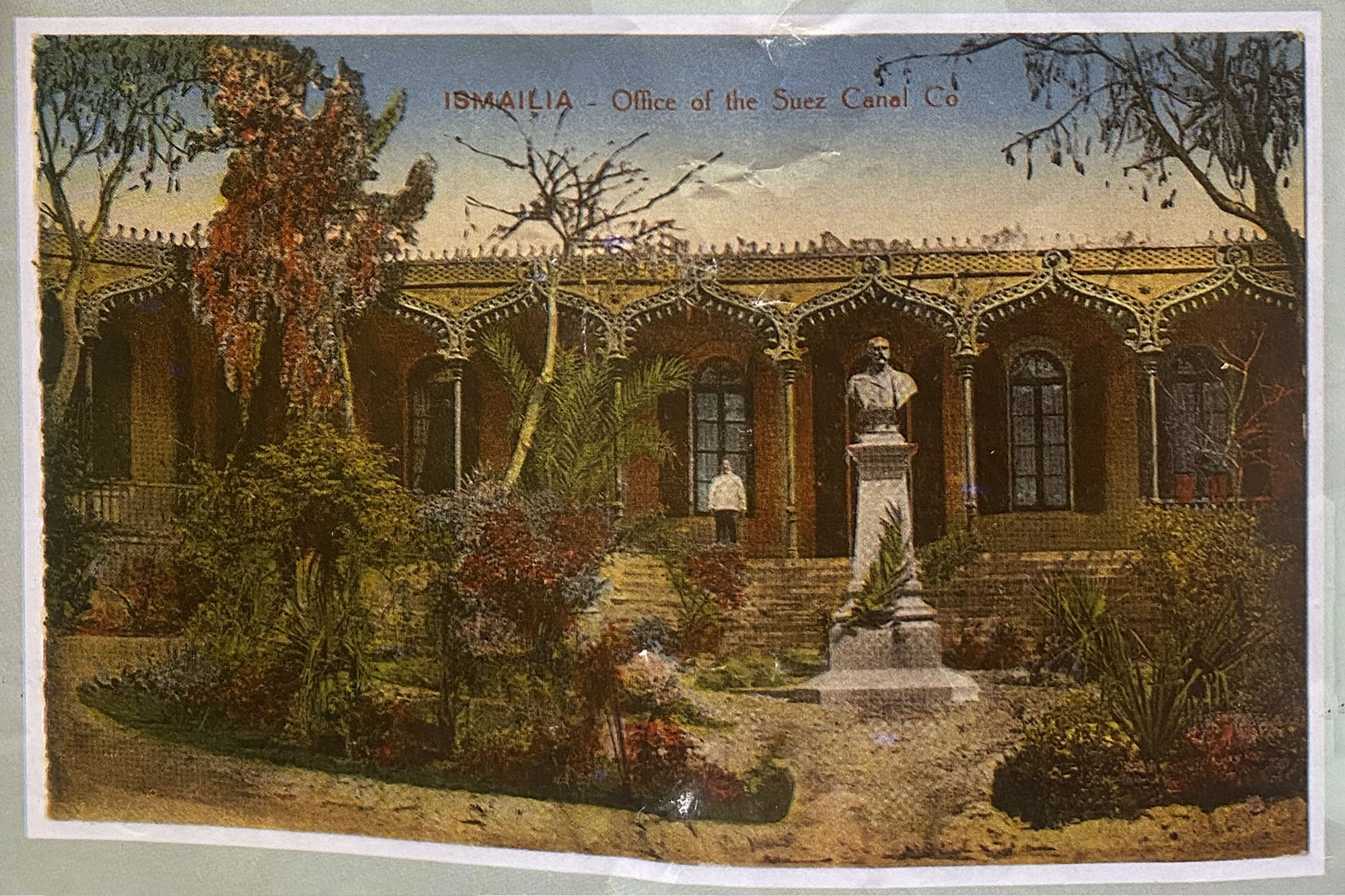
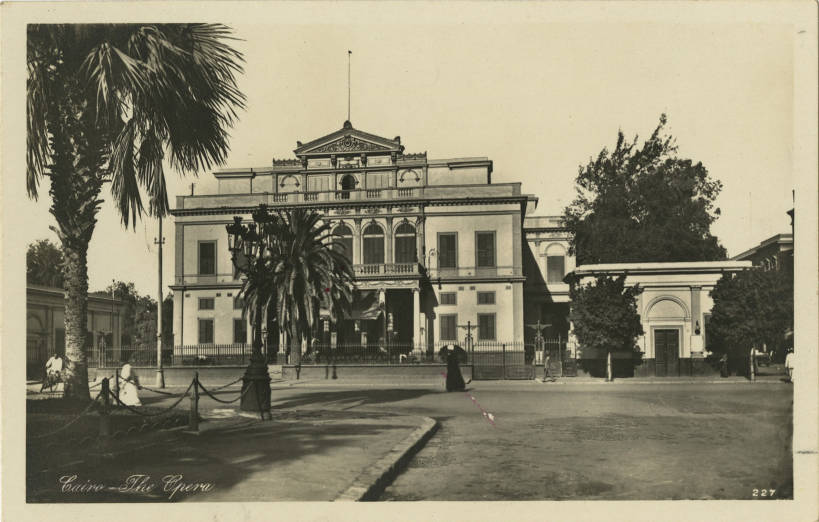
Other landmarks and street scenes include the neo Mamlik house of the Spanish consul to Mansurah, the Barrages to the north of Cairo, the Suez Canal administration building in Port Said flanked by the commemorative statue of Ferdinad Delesseps, its creator and the Khedivial Opera House which late became the Royal Opera House and finally burnt down in 1952.
The selection featured here is a glimpse that portrays the colourful near past of Egypt in its cosmopolitan age.
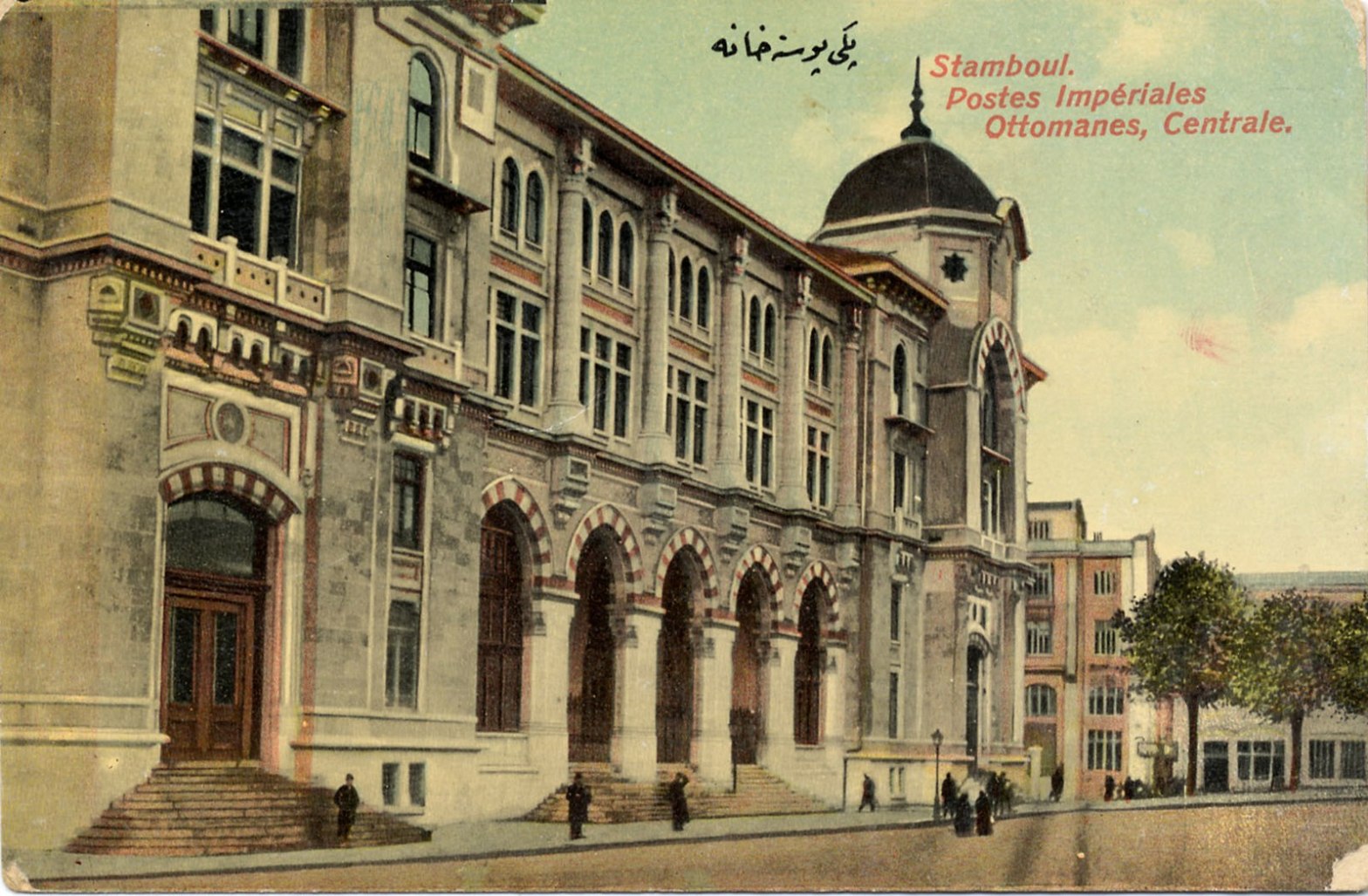
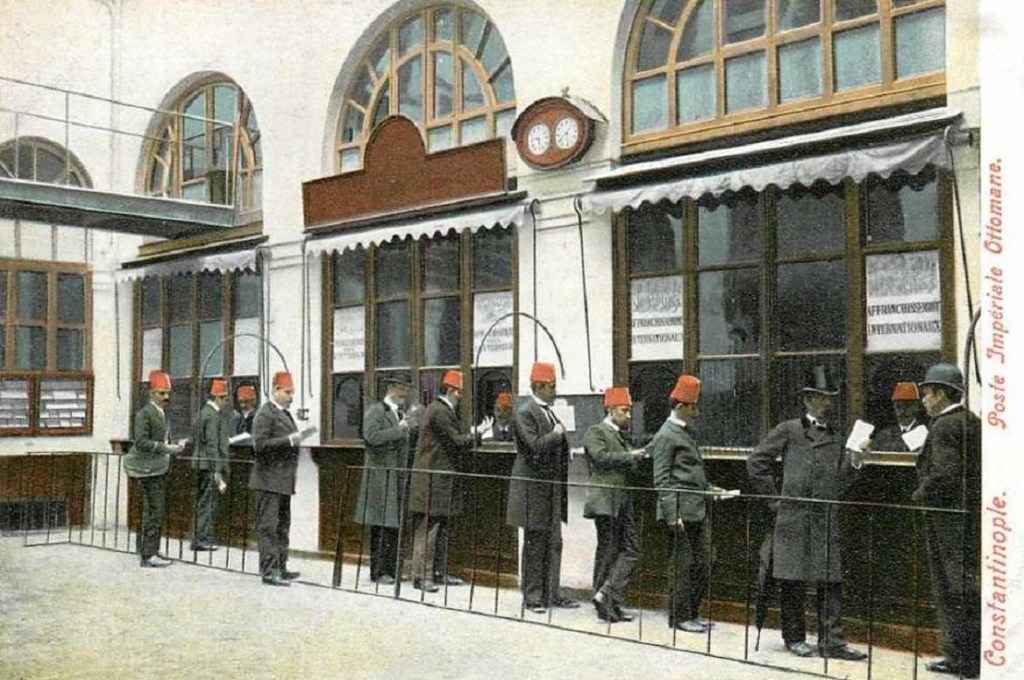
In the historical peninsula, a city heritage shines right in the middle of the famous route from Sultanhamam Street to Mahmutpasa at one end and from Ankara Street to Babiali at the other end; Sirkeci Grand Post Office building. This work, which is located at the most vivid and crowded part of the city, has become one of the motifs that make the city of Istanbul in over a hundred years. The Grand Post Office, which named the street it is located on, successfully reflects the spirits of the last Ottoman and early Republic periods with its story, architecture and the the PTT museum within itself.
After the developments in the telephraph and communication system in the 1800s, the need for a new and central post office emerged. Sultan Abdulhamid II, who built many buildings meeting the needs of the age throughout the empire, wanted to reinforce the communication services too. Thus, the decision to unite the Psthâne-imire (post Office) and Telgrafhâne-i mire (Telegraph Office), which provide service as separate units, was made and a post office building that would gather these services under the same roof.
Ottoman Post Office. Istanbul. 1909.
The Grand Post Office, of which was designed and construction started in 1905 under the management of Architect Veat Tok, is also regarded as a matter of dignity against the foreign post renters in Istanbul. The building meets this mission more than enough with the functioning and innovative architecture. Vedat Tok, who was a well educated and talented architect, completed the construction of the building in the short time of merely four years despite many financial and bureaucratic difficulties emerging within the Ottoman Empire.
The building was put into service as the “Post and Telegraphic Office” in 1909, then was later named as the “New Post Office” in 1930, and in the following years, was renamed the “Grand Post Office”.
Architect Vedat Tek.
Vedat Tek | Architectural Genius
The name that comes to mind first when talking about the Grand Post Office is undoubtedly Architect Vedat Tek. Tek had completed other notable buildings is Istanbul such as Kastamonu Government House, Izmit Clock Tower, Defter-i Hakanî (Land Registry and Cadastre Building), Thessaloniki Bank in Eminönü, the Aviation Martyrs’ Monument in Fatih, and the first Peoples Party Gathering-Place (the monumental building used as the Second Parliament Building) in Ankara. These works significantly contributed to the new Turkish Republic identity at an important era of transition.
Vedat Tek, who had knowledge of Western architecture with the education he received abroad, was an extraordinary architect who managed to integrate Ottoman architectural elements into modern buildings. This transitional period in Turkish architectural style is best manifested in the design and construction of the Grand Post Office, a masterful synthesis with its open space plan and technological equipment within, along with authentic elements of the Ottoman identity throughout.
An Architectural Masterpiece: Harmony of Modern and Traditional
When you stand in the marble covered entrance landing of the building, you see five huge arches and towers rise above, and you witness the rise of the building in all its monumentality. Alternating stone arches adorned with turquoise and blue glazed tile panels, marble columns extending along the second and third floors, wooden joinery windows with three sections, stalactites on column headings, all contribute to the traditional Ottoman Style. The writing just above the arch in the middle that welcomes you says “Post and Telegraph Office” in the old alphabet. This old writing invites us to the historical show inside rather than the post office building.
The great hall inspired by Western architecture where the entrance opens is a big innovation for architecture with its geometrical form and coloured high glass ceiling. Rumi and palmettes, classical Ottoman Period ornamental motifs were elegantly crafted on the doors opening to the hall. With these aspects, the architectural approach of Vedat Tok becomes one of the best examples of reaching innovation with traditional elements. At a time, when tradition and modernity are in competition with each other, you can see the harmonious unity of this contrasting eras, resulting in a truly transitional structure. The building is a sample of the Ottoman’s efforts to modernize, while still embracing the traditional elements from the last century and beyond; thus, it is a perfect period piece, as well as showpiece for Vedat Tek.
Telephone & Radio
The Grand Office is the place where the first telephone central was established in 1909. Also, the first radio broadcast in Istanbul was made in this building in 1927. The first broadcast that were made in the basement of the post office were listened to by the public through speakers placed on the building door, since no one else at that time had a radio to receive the transmission. The broadcasts lasted until 1936 when the building temporarily was converted to a courthouse.
Witnessing the History of Turkey
The Grand Post Office is not only an architectural masterpiece, but is also a cultural and historical landmark that played a pivotal role in the founding of the Republic of Turkey. While the Post Office is still actively used as a PTT post office, a part of the building has been transformed into a museum. Important objects and documents that capture the history of communication in Turkey are exhibited in recreations from the revolution. The room of Hamdi Bey, the Grand Posts manager during the invasion of Istanbul by Occupying Forces, and whom sent a telegram to Ankara alerting Gazi Mustafa Kemal of the invasion. It has been noted that the telegraph reporting the invasion of Istanbul to Mustafa Kemal Pasha was one of the historical moments that changes the course of the War of Independence. The table and chair remind intact in the room, along with a portrait of Hamdi Bey who greets the free citizens of a independent, secular Turkey.
The Grand Post Office is undoubtedly one of the most important buildings in Istanbul with its architectural significance, interior equipment and technologies, as of course witnessing the most important years of Turkeys foundation. If you ever go to Sirkeci, sincerely greet this monument. If you have time, visit the museum, and listen to the good news about Ottoman victors in Crimea, the telegraph clicks between Istanbul and Ankara from Hamdi Bey, and the first radio broadcast from the Grand Post Office. The oldest public building in the city, as well as Nation, awaits you in all its glory.
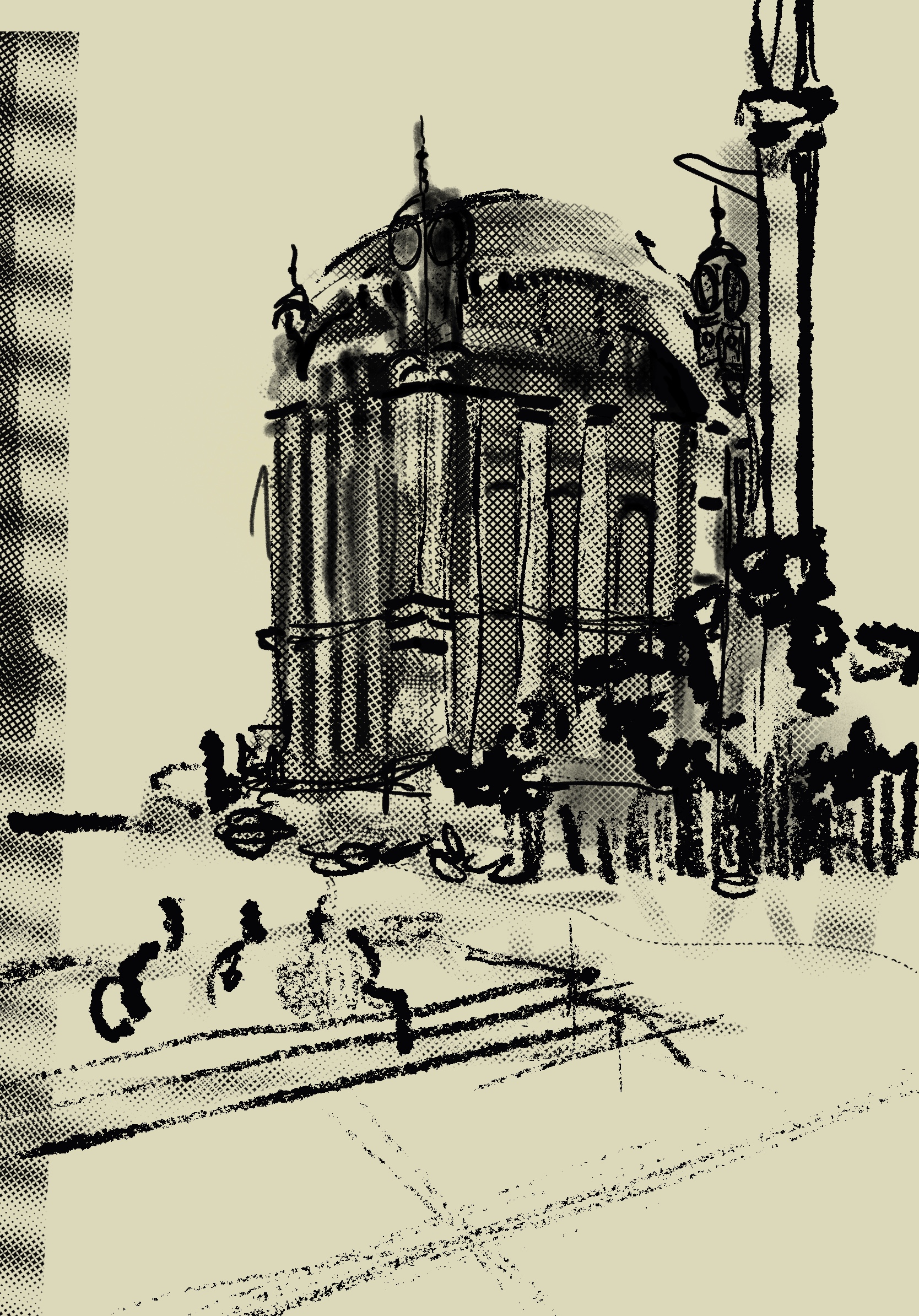
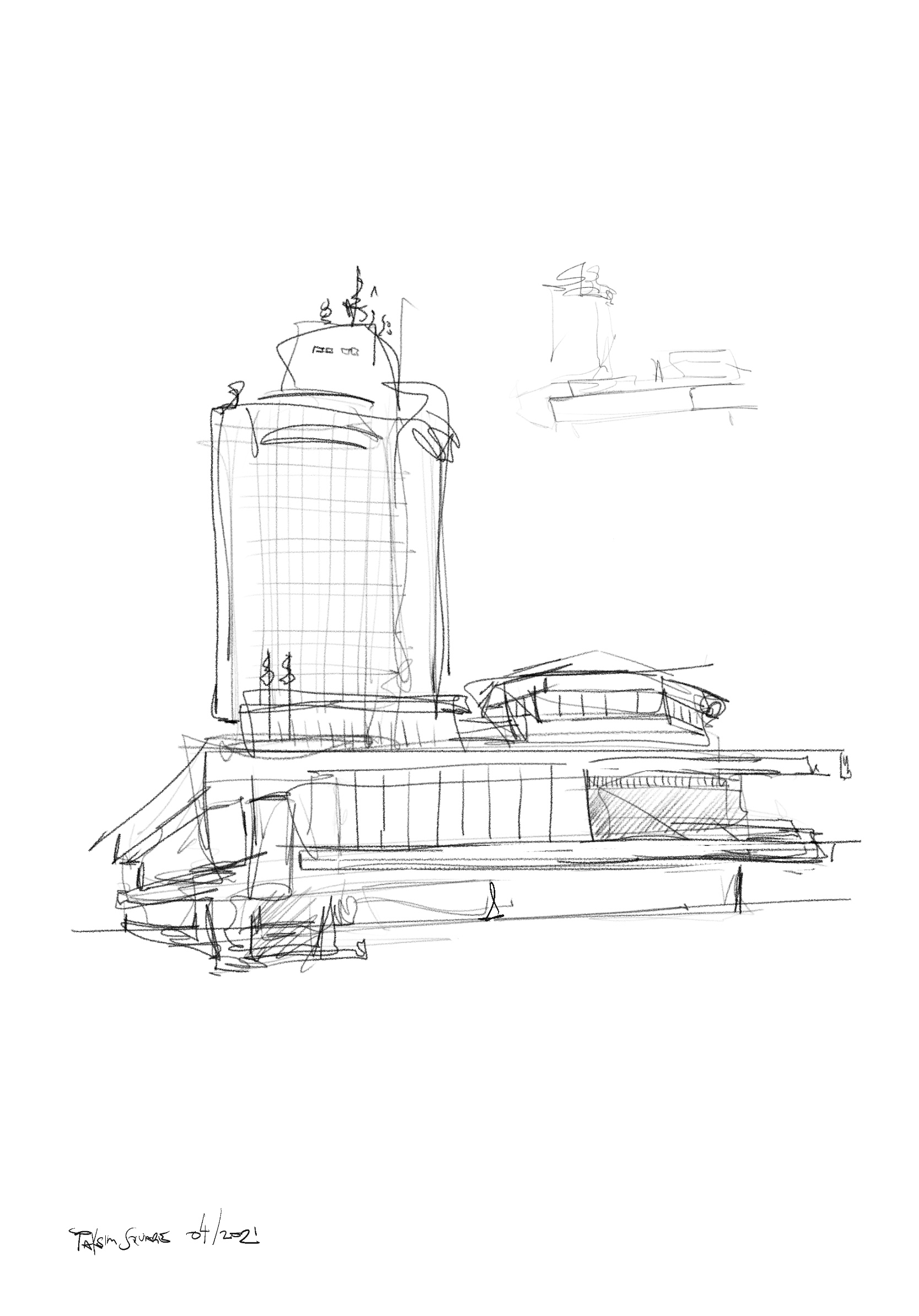
Turkish President Recep Tayyip Erdogan has inaugurated a mosque in Taksim Square, Istanbul after decades of court battles public debate, and protests over building a large religious symbol in the heart of the city.
The imposing Art Deco Style Mosque features a 30-meter (98-feet) high dome and combines the Ottoman and contemporary arch. Designed by Belgium-Turkish Architect Şefik Birkiye, the same Architect who designed Erdogan’s Presidential Palace in Ankara, Turkeys Capital.
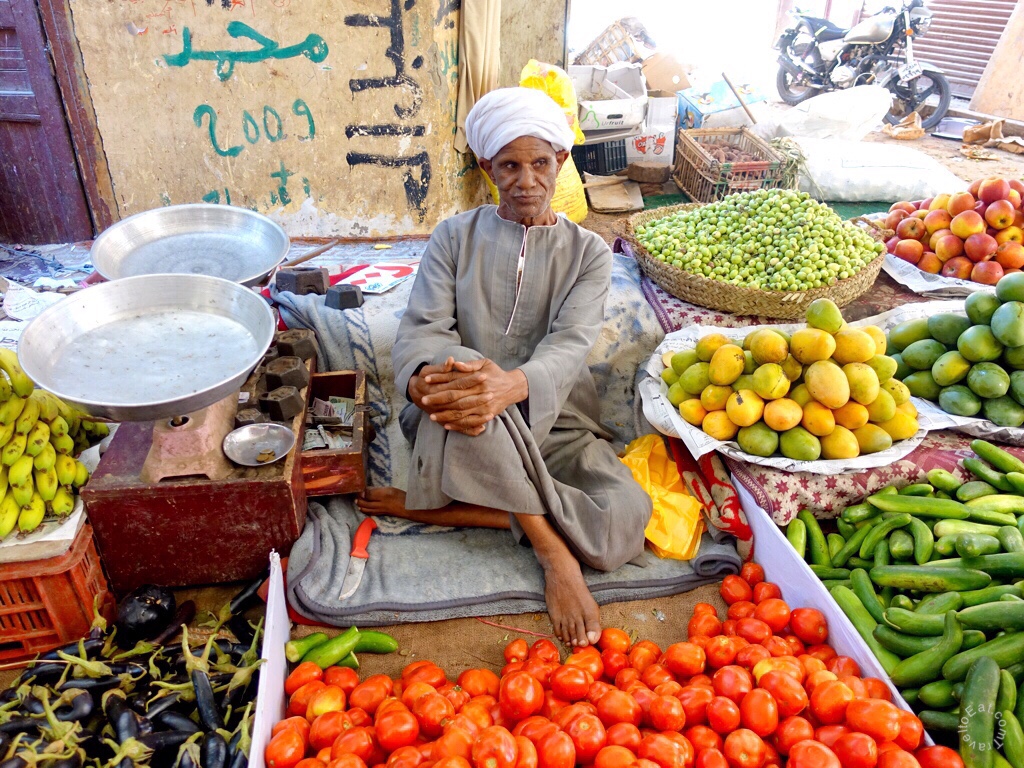
Egyptian street food is one of the most popular places to buy meats, fruits, nuts vegetables, and so much more. With small carts scattered all over the busy streets of Alexandria and Cairo, selling traditional local food such as foul, falafel sandwiches and koshari, it’s a must for anybody travelling to Egypt to visit.
While an important part of the street life, the uncovered markets are beginning to evolve into trendy street stalls/kiosks selling a much wider variety of products and to different target consumers. Fortunately we were able to find this authentic Egyptian Souk Market right in Alexandria.
We start our walk on the Eastern side of the Corniche, a waterfront Promenade running along the eastern harbour of Alexandria, Egypt. Facing the mediterranean sea, Alexandria Corniche is a very important place where you can see the wonder and beauty of the Egyptian people. Locals as well as tourists frequent it in summer and winter to enjoy the beautiful view of the Mediterranean Sea.
The western end starts by the Citadel of Qaitbay (built in place of the Lighthouse of Alexandria), and runs for over ten miles. Stretching from Ras El-Teen in Al-Gomrok neighbourhood to Montazah Palace in Al-Montazah neighbourhood, it doubles as the most important traffic artery of the city, bustling with buses, car horns, horse drawn carriages, and even some Tuk Tuks.
Along the walk of the Mediterranean coast, we walk by swimmable beaches, fisherman, and expansive views of the historical harbour. As we walk, you can get an impression of the relaxed atmosphere and lifestyle, as well as the amazing architecture and urban life that captivated so many people to settle in Alexandria during the Nineteenth and early twentieth centuries.
Most travel guides will say, the most fabulous thing that you can do when you have an Alexandria tour is walking on Corniche.
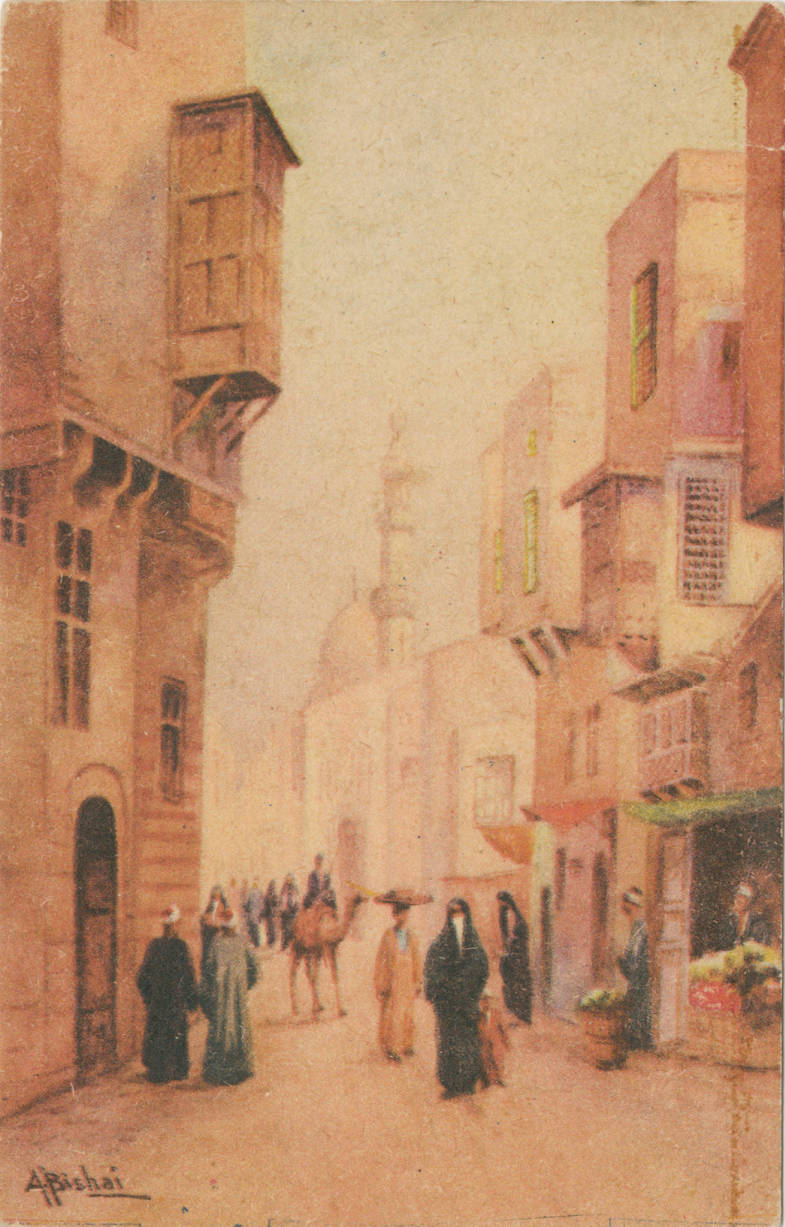
Enjoy exotic settings, reminiscent of ancient times gone by a variety of unique cafes and restaurants, fully positioned for visitors to appreciate the most dramatic views of Cairo.
Citadel View Alain Le Notre Citadel View Studio Misr Ayyubid Café Azhar Lakeside Café
More about The Cultural Heritage of Al-Darb Al-Ahmar & Historic Cairo – Egypt
Al-Darb al-Ahmar area, one of the most vibrant and lively parts of Historic Cairo, is very rich in cultural heritage and has a number of magnificent and valuable historic buildings, significant architecture and traditional handicrafts. The Aga Khan Trust for Culture is engaged in a serious process of heritage conservation and restoration of these gemstones, as well as the rehabilitation and development of the area.
Bab al-Mahruq (one of the important gates of the Historic Wall) provides easy and direct access to al-Darb alAhmar district and a pleasant square (Aslam square) that houses Aslam al-Silahdar Mosque* (14th century) and a gallery* selling handicrafts produced by local and traditional craftsmen in the community. Bab Zuwayla (the famous gate of Cairo), the Qijmas al-Ishaqi Mosque, the Maridani Mosque, the Umm al-Sultan Sha‘ban Madrasa and Mosque*, the house of al-Razzaz, the Mosque and Mausoleum of Khayer Bek*, the Aqsunqur-Blue Mosque*, the Alinaq Palace* and the Tarabay Mausoleum* are among many of the authentic gemstones of al-Darb al-Ahmar district dating back to the Mamluk and Ottoman periods.SHOW LESS





















 NOMAD SKETCHBOOK