
Urban Alchemy: Transforming Spaces, Layering Stories
There’s a quiet kind of magic in watching a city reinvent itself. Factories become art studios, railway yards sprout breweries and playgrounds, and once-forgotten churches glow again as homes filled with life. These transformations aren’t just clever design tricks — they’re proof that cities, like living organisms, have the power to adapt, to fold history into the future without erasing it. As an urban enthusiast, I find myself constantly drawn to these moments of reinvention. They remind me that a city’s beauty isn’t just in its skyline, but in its ability to evolve, reuse, and surprise us.
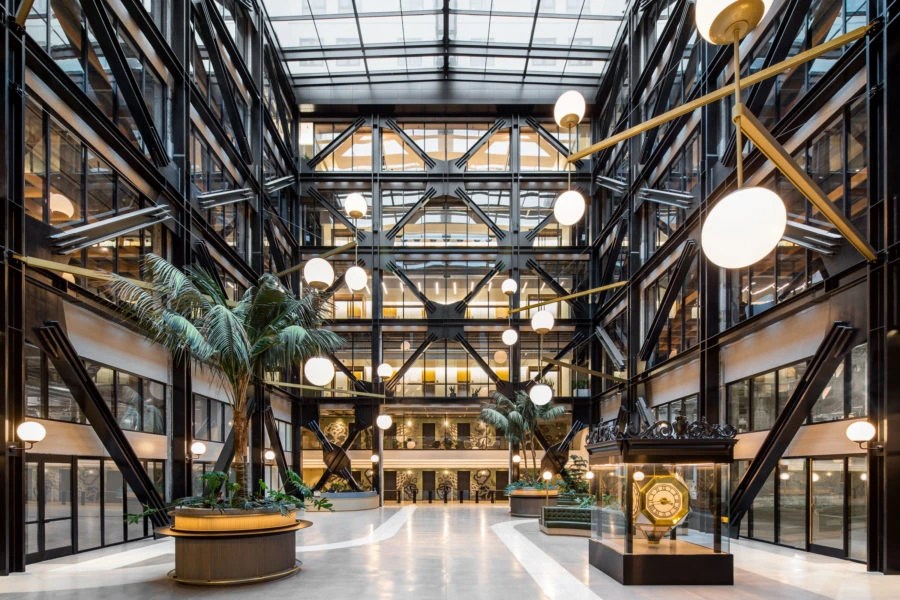

This fascination naturally leads me to the concept of adaptive reuse: the art of breathing new life into old forms. But the excitement doesn’t stop at buildings. Lately, I’ve been equally captivated by how we’re rethinking the spaces in between — the railways, highways, river channels, flood planes, and underpasses that shape the daily rhythm of urban life. Cities like Seoul, Toronto, Tokyo, and New York are transforming these overlooked fragments of infrastructure into parks, gathering spaces, and cultural hubs. These projects are more than beautification — they’re a celebration of possibility, showing how the ordinary can become extraordinary when we choose to see it differently.
Adaptive Reuse: Breathing New Life Into Old Forms
Adaptive reuse is perhaps one of the clearest expressions of a city’s resilience and imagination. What I love about it is that it doesn’t chase novelty for its own sake — it respects the bones of a place while giving it entirely new energy. Look at London’s Battersea Power Station: once a massive industrial powerhouse, it now hums with shops, homes, and riverside walkways, its iconic chimneys still anchoring the skyline. Or Vienna’s Gasometers, those enormous brick gas tanks, now wrapped around lively residential and entertainment spaces, where echoes of their industrial past add character rather than weight. These former industrial giants, with their generous proportions and raw materials, seem almost purpose-built for new creative lives. Today, they house studios, cultural venues, and public spaces, turning what were once production lines into cultural lifelines.
Stadiums, terminals, and civic structures are especially fascinating. These buildings were designed to carry the weight of thousands, to serve as stages for collective experience — and they still do, just in new forms. Take Arenas de Barcelona: once a bullring echoing with the roar of the crowd, it’s now a bustling mall and cultural destination, complete with a rooftop promenade that offers a new way to see the city. Or Hamburg’s Elbphilharmonie, where a utilitarian warehouse has been crowned with a crystalline concert hall, becoming both a world-class cultural venue and a new icon for the city. Even sacred spaces like decommissioned churches continue to find second lives, transformed into luminous residential projects or cultural landmarks. There’s something deeply moving about these adaptations — they preserve the scale and spirit of the original structures while weaving them into everyday life, reminding us that great design bridges history with the present.
Five of my favourite Adaptive Reuse Projects
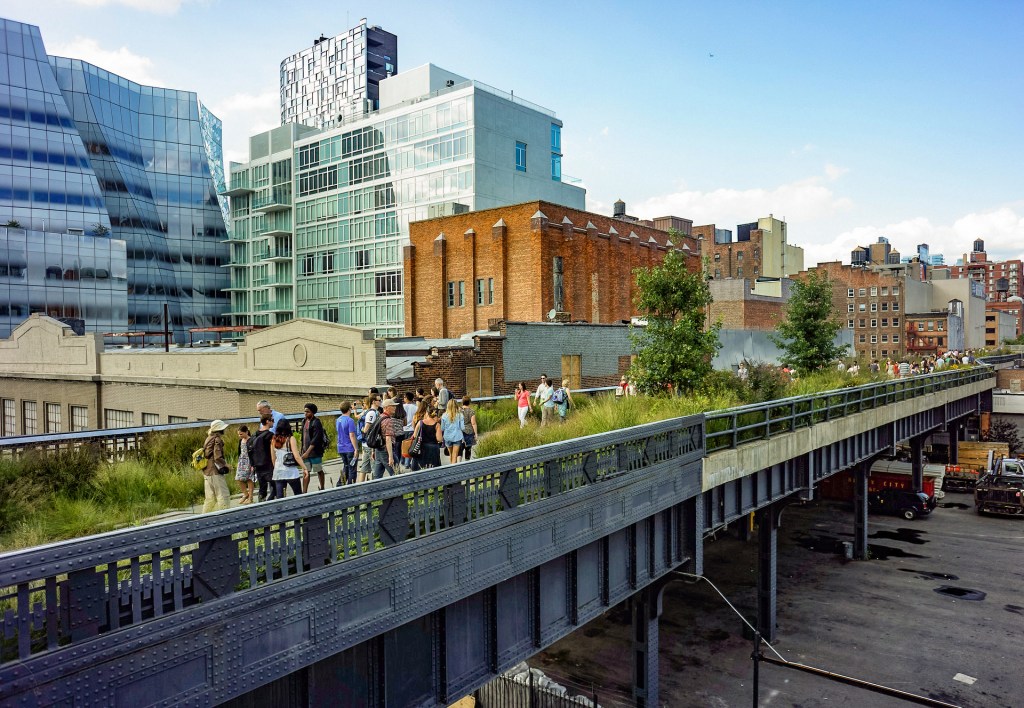
1. The High Line — New York City, USA
2. Tate Modern Power Station — London, UK
3. Zeitz MOCAA — Cape Town, South Africa
4. Gasometers Mixed Used Development — Vienna, Austria
5. Arenas de Barcelona Mall — Barcelona, Spain
Infrastructure Beautification: Finding Joy in the In-Between
But cities don’t live by buildings alone. In fact, some of the most exciting transformations happen in the connective tissue of urban life — the infrastructure that moves us, shapes us, and often goes unnoticed. Infrastructure beautification is about turning these often-overlooked spaces into places of genuine beauty and human experience. Sometimes, this means rethinking what infrastructure is for in the first place.
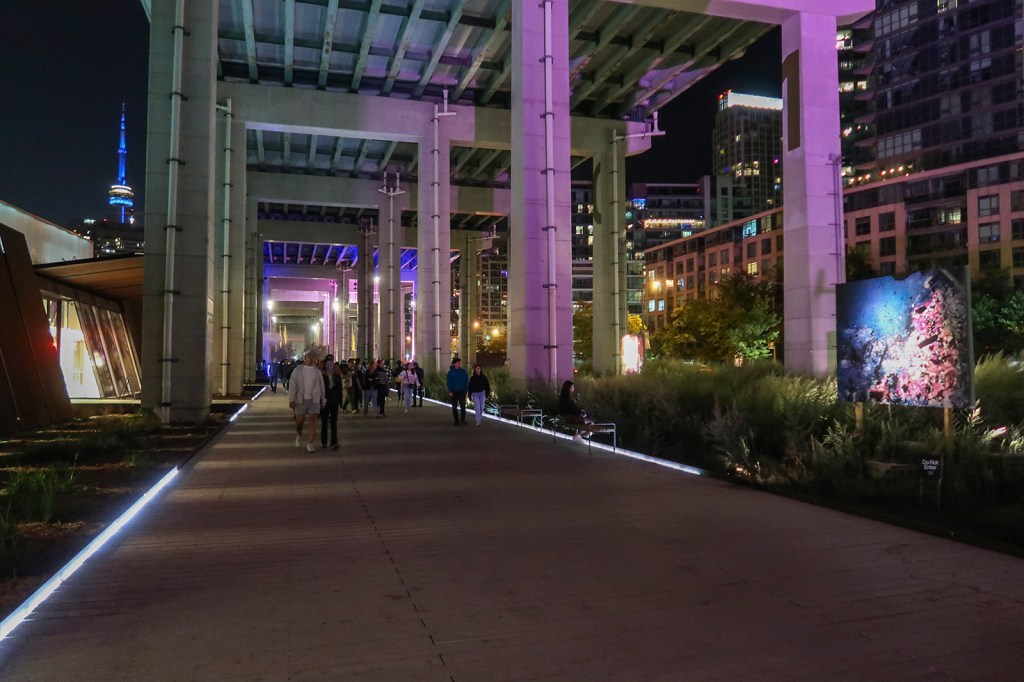
Take Toronto’s CIBC Square Park, for example, built over an active rail corridor. What could have been an eyesore is now a green, elevated space that connects neighbourhoods and gives people a place to pause above the rush of trains below. In Seoul, the Cheonggyecheon stream restoration is a masterpiece of urban healing — a concrete flood channel stripped away to reveal a natural waterway, returning life and leisure to the heart of the city. Elsewhere, airports are evolving into destination spaces, not just points of departure. Elevated highways are being reimagined as parks, and underpasses — once dark, neglected voids — are being claimed for culture and community. Toronto’s Bentway is a brilliant example, while Tokyo’s lively restaurant and bar districts tucked beneath train lines prove that no space is too awkward for great urbanism.
The High Line in New York is perhaps the most celebrated hybrid of adaptive reuse and infrastructure beautification. A relic of industrial rail transport now serves as an elevated park and cultural destination, seamlessly blending nature, art, and history. Similarly, Los Angeles is rethinking its flood control channels as potential public spaces, exploring ways to transform concrete chasms into vital community corridors.

Patterns and Reflections: Reading the City Differently
What connects all of these examples, I think, is a shared impulse: to see potential where others see limits. Adaptive reuse and infrastructure beautification both start with a simple but powerful question — what if this space could be more? In both cases, we’re not starting from scratch, but rather working with what already exists, peeling back the layers of time to reveal new opportunities. There’s a respect for history here, but also a quiet optimism about the future. These projects prove that we don’t have to choose between preservation and progress. In the best cases, we get both.
It’s also about reclaiming spaces for people. When we transform infrastructure into places of culture and connection, we shift the narrative from efficiency to experience. The old logic of design prioritized movement — getting from point A to point B as fast as possible. But these interventions invite us to slow down, to linger, to enjoy the journey itself. Parks over railways, restaurants under train lines, rivers restored to life — they all create moments of surprise and delight in the in-between spaces of the city.
As I continue to collect these examples, I see them less as isolated projects and more as part of a growing global inventory of urban ingenuity. Each one is a reminder to keep looking closely at the overlooked, to stay curious about what lies beneath the obvious. I hope this informal inventory sparks the same curiosity in you. And if you come across a great example in your own city, I’d love to hear about it — this is, after all, an ongoing conversation.
 NOMAD SKETCHBOOK