A River Rediscovered
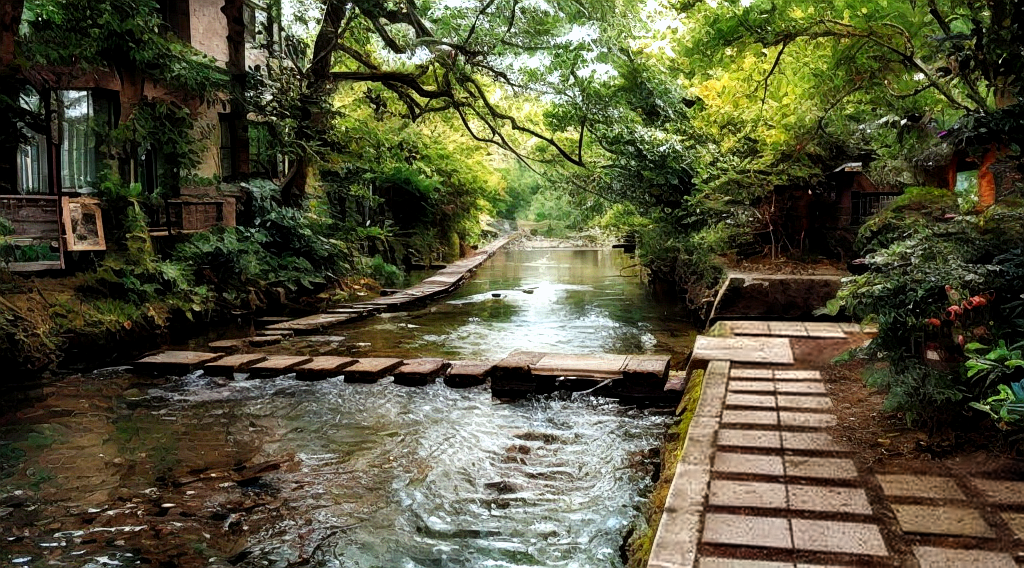
At its core, the Genbe River walk is an act of urban rediscovery, an effort to peel back the layers of concrete and asphalt that typically define Japanese cityscapes, revealing the natural landscape underneath. Unlike traditional urban rivers that are often relegated to underground canals or lined with rigid concrete embankments, Genbe is a celebration of organic flow, where the river is respected, not controlled.
Instead of forcing nature into a rigid urban grid, this walkway was designed to work with the river, allowing its winding paths, small stepping stones, and gentle slopes to guide pedestrians as if they were meandering through a forest trail, not a city center. The stone walkways appear almost incidental, as if the city simply adapted to what was already there rather than imposing an artificial order.
Architecture That Listens to Nature
One of the most striking aspects of the Genbe River walk is its sensitivity to the landscape. The design choices reflect an understanding that architecture should complement rather than dominate nature. Instead of towering structures or imposing bridges, the walk is punctuated with subtle, human-scaled interventions:
- Floating wooden decks extend gently over the water, offering spaces for quiet contemplation.
- Stepping stones encourage engagement with the river, making walking through the space a tactile and playful experience.
- Moss-covered stone walls merge human-made structures with the surrounding greenery.
- Low bridges and shaded pathways frame the scenery rather than overshadow it, creating an intimate connection with the river.
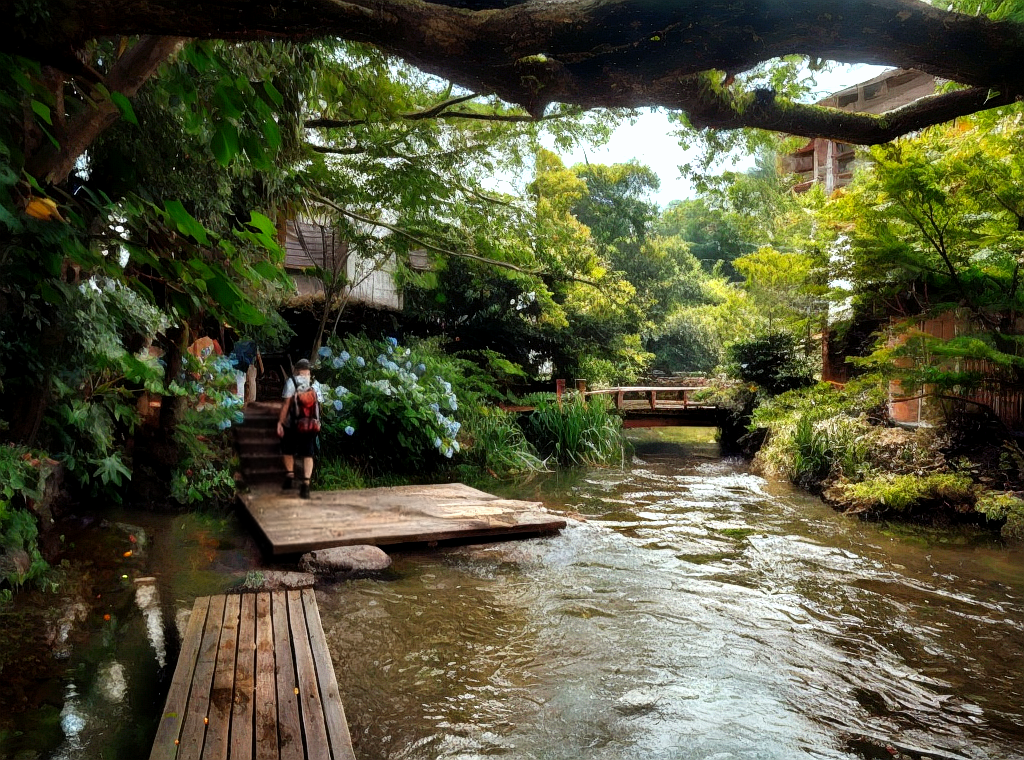

This is more than just a pedestrian route—it’s a multi-sensory space, designed to make people feel the presence of water, hear its movement, see its clarity, and experience it as a living entity rather than a backdrop. The materials used—natural wood, local stone, and organic plantings—enhance the feeling that this is a space that was revealed rather than constructed.
A Parallel to Seoul’s Cheonggyecheon Restoration
The Genbe River walk draws intriguing comparisons to Seoul’s Cheonggyecheon River project, another urban intervention that reintroduced a river into the city’s landscape. Both projects share a common goal: to reclaim a natural waterway from urban encroachment and give it back to the people. However, their approaches diverge in interesting ways.
- Cheonggyecheon was a large-scale excavation, removing a multi-lane highway to make space for a grand urban park. It was a bold, top-down transformation.
- Genbe River, in contrast, feels delicate and intimate, as if the city simply made space for nature rather than reshaping it. Its charm lies in its humility, its ability to blend seamlessly with the existing landscape rather than redefine it.
Both projects, however, reflect a growing urban design philosophy that prioritizes ecological restoration, pedestrian accessibility, and public space over car-centric planning.
A Model for Future Cities
The Genbe River walk offers a compelling template for rethinking urban space. Instead of viewing nature as something separate from the city, it asks:
- What if rivers were not obstacles but guiding pathways?
- What if walking routes followed the rhythm of the land rather than a rigid grid?
- What if urban spaces were designed to reveal rather than impose?
As cities worldwide grapple with overcrowding, climate change, and the need for more public green spaces, projects like the Genbe River walk remind us that the best urban design is not always about building more, but about uncovering what was already there.
This is architecture as reverence, an approach that doesn’t just use nature as an aesthetic tool but treats it as a collaborator in the design process. It’s a love letter to water, stone, and movement—and a rare, poetic intervention in an era of relentless urban expansion.
As we move forward, how can more cities take inspiration from this kind of attentive, sensitive urban planning? Have you encountered other urban spaces that celebrate nature in a similar way?
 NOMAD SKETCHBOOK