
Discover Alexandria’s vibrant markets, rich history, and stunning coastal beauty.
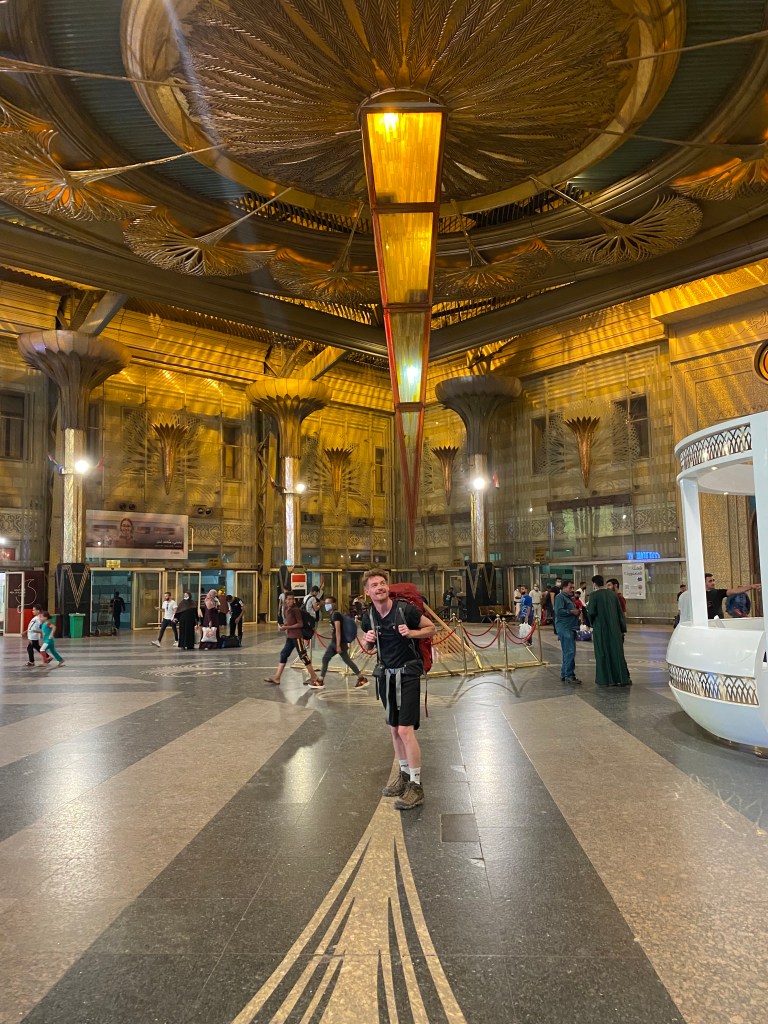
The journey begins at Ramses Train Station in Cairo, where the platforms are as chaotic as the streets outside, voices rising over the screech of steel and the rush of travellers moving in every direction. The train pulls away, racing along the Nile rushing along beside us. Cutting through desert plains, the sun casting long shadows across rebar crowned villages and endless fields of lush green farmlands. Hours pass, the landscape shifts, and then—finally—the sea emerges. Alexandria.

Many backpackers I met had dismissed Alexandria. “Not much to see, just a quick stop,” a buddy who ran the hostel told me one night back in Cairo. But I’ve never been one to rush through a place. I booked a week in a hostel overlooking the water, drawn by the city’s reputation as a gateway between worlds—the old and the new, the Egypt and Greece. Alexandria wasn’t Cairo. The architecture stood prouder, the air carried salt instead of sand, and the streets hummed with a different kind of rhythm.
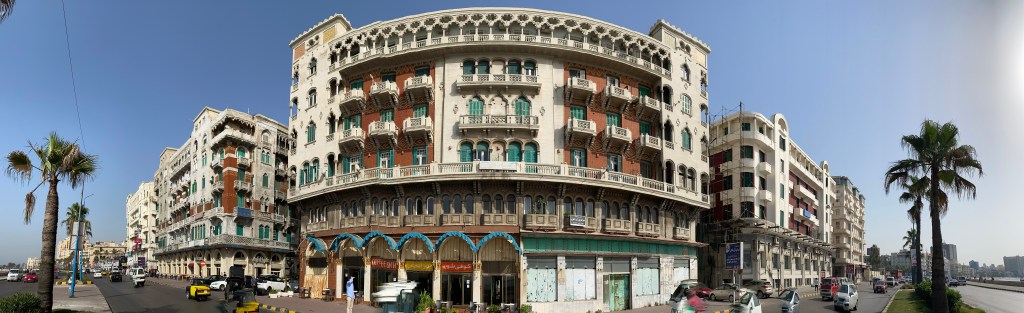
From the moment I stepped outside, I was hooked. The ochre glow of fading facades, the intricate ironwork of aging balconies, the way the golden afternoon light slanted against the weathered stone of colonial-era buildings—everything felt drenched in a grand, masculine nostalgia. The streets were alive, but not chaotic. Black-and-yellow taxis wove between trams, men crowded into cafés, deep in conversation, their voices thick with smoke and the weight of long histories.
A Walk Through Alexandria’s Heart
I started at the Navy Monument, a towering sentinel over the city, a reminder of Alexandria’s long command of the Mediterranean. From there, the streets pulled me forward, lined with weathered buildings that bore the scars of time yet stood defiant against the sea air.
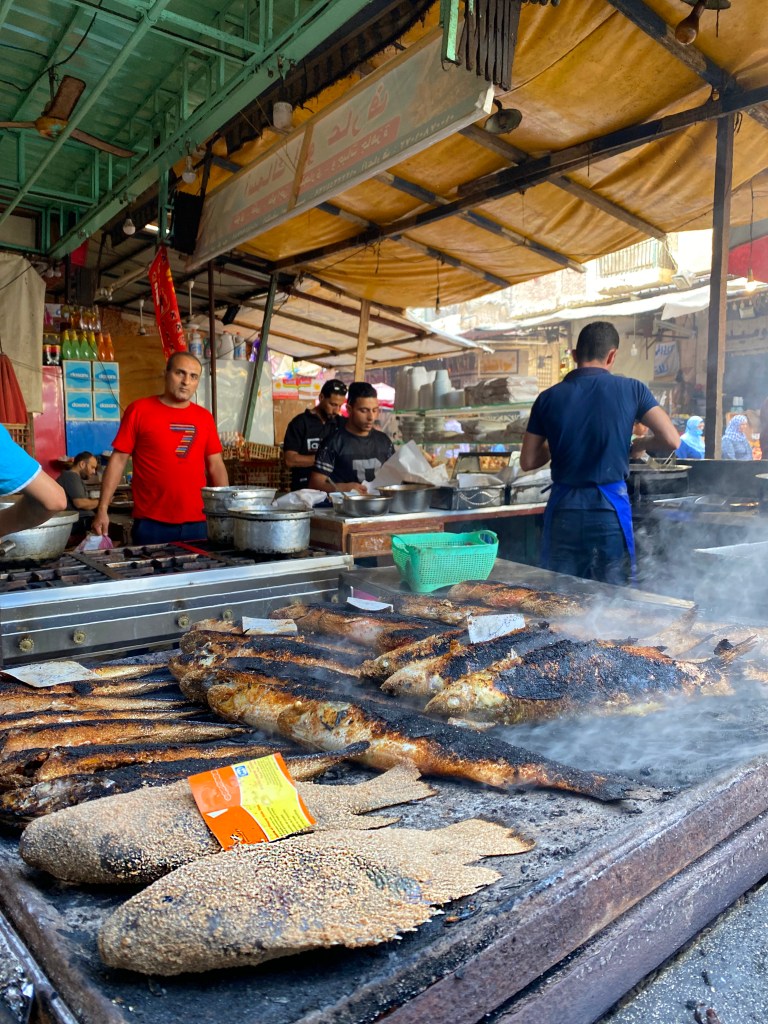
At Nobar Souq, the market engulfed me. The air was thick with spice, sweat, and the metallic scent of fresh fish. Stalls overflowed with sun-dried dates, pyramids of saffron and cumin, and copper trays stacked with pastries dripping in honey. Vendors shouted over each other in the art of the deal, their hands moving fast, their expressions sharp but warm. The market wasn’t just commerce—it was ritual, tradition, and survival wrapped into one relentless energy.
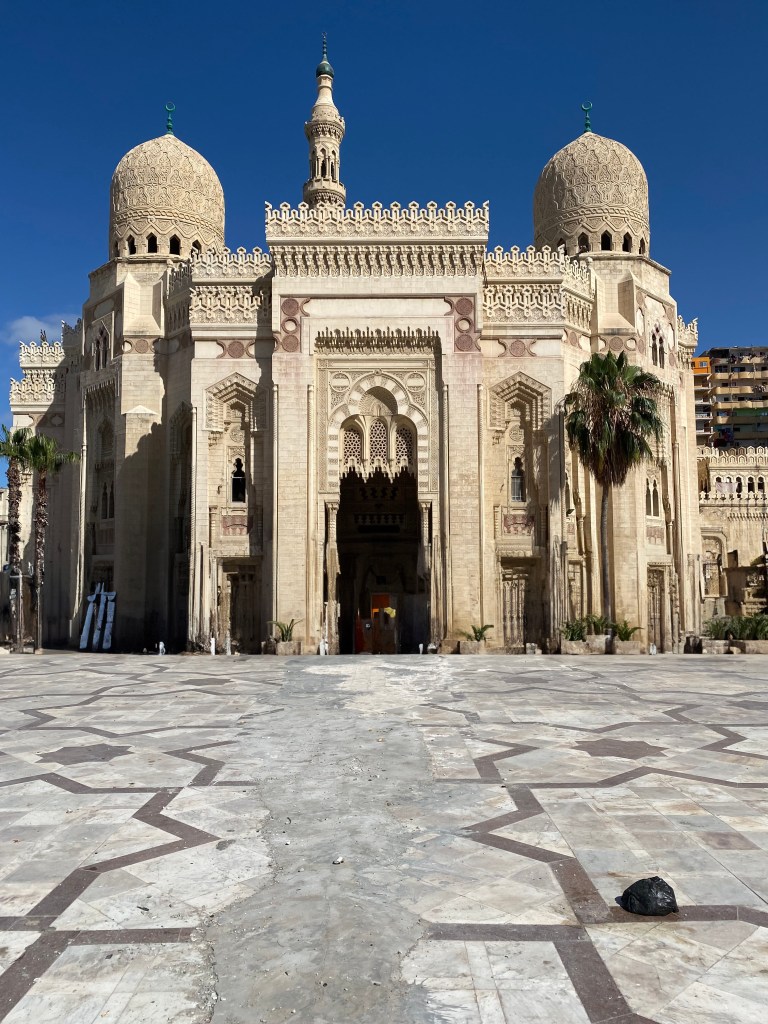
Pushing further into the city, I arrived at Sidi Morsi Abu al-Abbas Mosque. Even from the outside, the place commanded presence—towering domes, sweeping arches, intricate carvings that seemed to whisper of a time when craftsmen built for eternity. I didn’t step inside, but I didn’t need to. The mosque’s grandeur extended beyond its walls, spilling into the surrounding streets, where time felt slower, heavier, more deliberate.

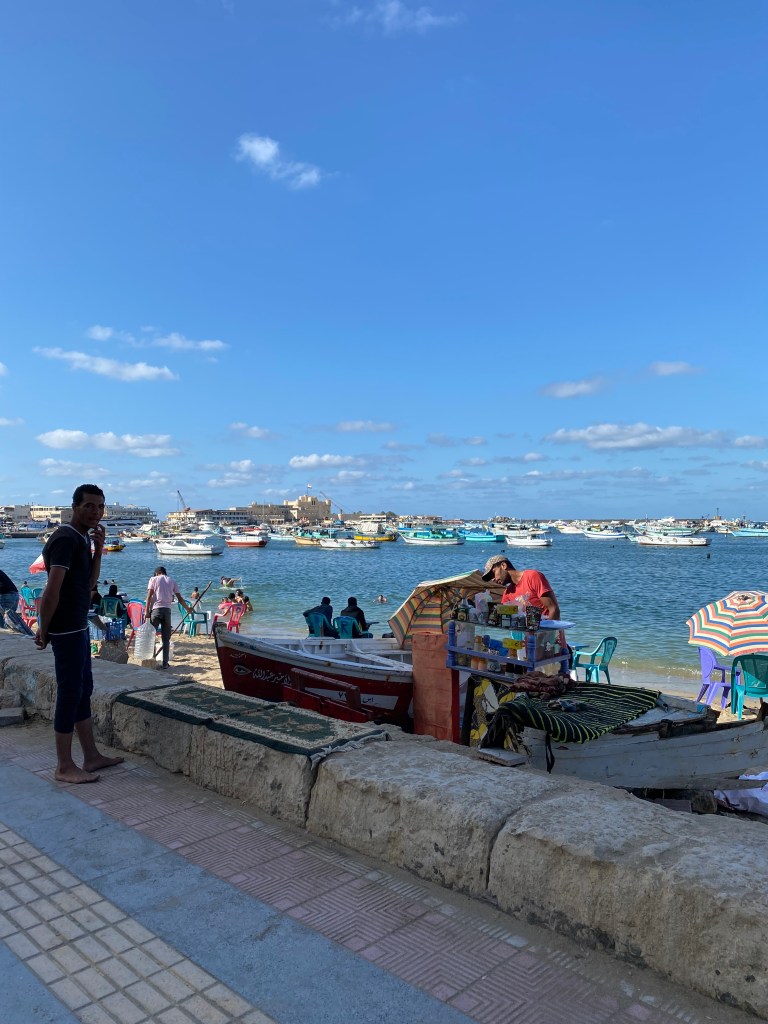
The Corniche: Where the City Meets the Infinite
Here, Alexandria felt eternal. The ghosts of emperors, poets, and revolutionaries seemed to walk these streets, their stories woven into the stones, carried by the breeze that drifted through the city like an old song.
Then, the city opened up. The Corniche stretched ahead, endless, a sweeping arc where Alexandria met the sea. Palm trees bent in the wind, fishermen stood silent, casting their lines, and the sky burned gold as the Mediterranean swallowed the sun.
As night fell, the cafés filled again, their neon signs flickering in the dark. The scent of grilled fish and spiced tea curled into the air. I sat back, watching the city move, knowing that this place, with its grandeur, grit, and undeniable presence, was not a city to pass through quickly. It was a city to feel, to absorb, to let sink into your bones.
This wasn’t Cairo. This was Alexandria—the last true Mediterranean city of the old world.


 NOMAD SKETCHBOOK