
Hidden Gems: Preserving the Beauty of China’s Lesser-Known Water Villages
China’s water towns, nestled primarily in the Jiangnan region south of the Yangtze River, have an illustrious history that dates back over a thousand years. These towns, such as Zhouzhuang, Wuzhen, and Tongli, emerged during the Spring and Autumn Period (770-476 BC) and flourished throughout the Ming (1368-1644) and Qing (1644-1912) dynasties, serving as bustling hubs of trade, culture, and daily life. Their intricate networks of canals and waterways, crisscrossed by stone bridges and lined with white-washed buildings, draw comparisons to other great canal cities like Amsterdam and Venice.
These European counterparts also thrived on their strategic water routes, facilitating commerce and cultural exchange. Similarly, China’s water towns became centres of economic and social activity, their canals serving as vital arteries that connected these towns to the broader world, fostering a unique blend of local tradition and outside influence that endures to this day.
Despite their historical significance, China’s water towns experienced a slow decline with the advent of modern transportation and urbanization in the 20th century. The waterways that once bustled with activity became quieter as commerce moved to more accessible cities. However, a remarkable digital renaissance is breathing new life into these ancient towns.


Social media platforms like WeChat, Weibo, and Douyin (TikTok) have played pivotal roles in reviving interest in these picturesque locales. Influencers and travel bloggers share captivating images and stories, highlighting the serene beauty and rich cultural heritage of the water towns. This digital exposure has sparked a surge in domestic tourism, drawing visitors eager to experience the tranquil canals, historic architecture, and traditional crafts firsthand. The renewed attention has not only boosted local economies but also encouraged preservation efforts, ensuring that these towns remain vibrant, living museums of China’s past for future generations to explore and appreciate.
In recent years, the architectural revival of China’s water towns has prominently featured the concept of adaptive reuse. This approach involves repurposing existing historic structures for modern uses while retaining their cultural and architectural integrity. As these ancient villages face the challenges of urbanization and modernization, adaptive reuse offers a sustainable solution that bridges the past and present.
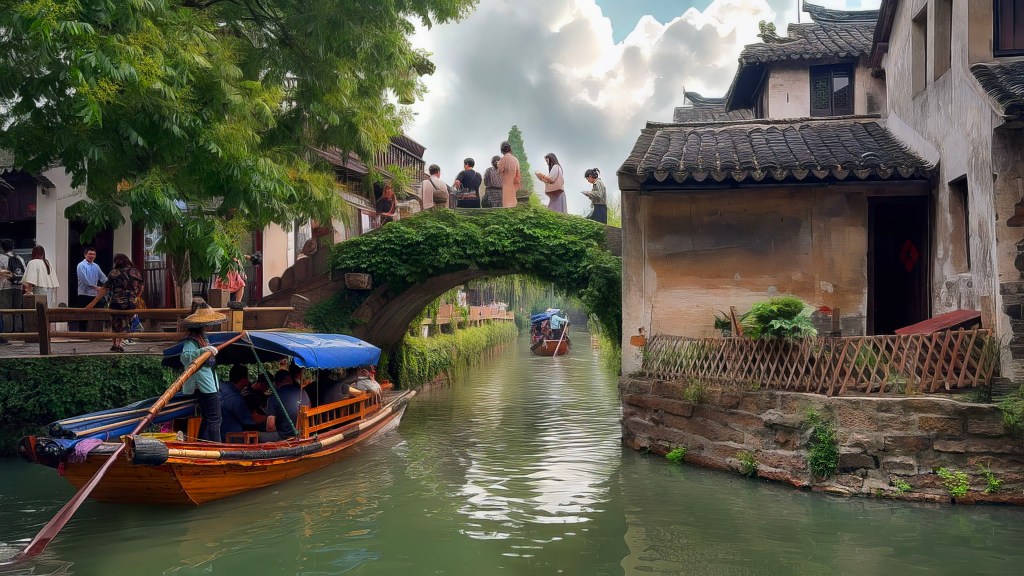
Many water towns have embraced adaptive reuse to transform traditional buildings into contemporary spaces that serve current needs. Historic homes and warehouses are often converted into boutique hotels, cozy Airbnbs, and charming restaurants, providing modern amenities while preserving their classic aesthetics. For example, centuries-old residences with their distinctive white-washed walls and black-tiled roofs are refurbished to meet contemporary standards of comfort and functionality, yet their original architectural elements remain intact.
Moreover, these traditional buildings are finding new life as vibrant Chinese costume shops and makeup studios, offering visitors a unique opportunity to experience local culture through traditional attire and crafts. This creative reuse not only revitalizes the buildings but also injects new energy into the towns, making them hubs of cultural and commercial activity. The careful integration of modern design elements, such as glass windows and energy-efficient systems, with traditional architecture ensures that these towns remain functional and relevant in today’s world. This balance between preservation and modernization allows the water towns to thrive as living heritage sites, attracting visitors and supporting local economies while safeguarding their rich historical legacy for future generations.


As we traverse the winding canals and historic alleys of China’s water towns, it becomes clear that these ancient villages are not just relics of the past but vibrant, evolving entities. The delicate balance of preserving historical charm while embracing modern adaptability ensures that these towns continue to enchant visitors and support local economies. Through adaptive reuse and the digital renaissance, China’s water towns have not only survived the test of time but have also reinvigorated their cultural and architectural legacies for a new generation of explorers and dreamers.
Looking ahead, the future of China’s water towns seems both promising and dynamic. As these villages continue to evolve through adaptive reuse and digital engagement, they stand as testaments to the enduring value of blending heritage with innovation. By preserving their unique architectural and cultural essence while adapting to contemporary needs, these towns will remain vital cultural landmarks, offering timeless beauty and enriching experiences for generations to come.
 NOMAD SKETCHBOOK