Key Takeaways from His Teachings and Works | Timeless Wisdom for Aspiring Designers
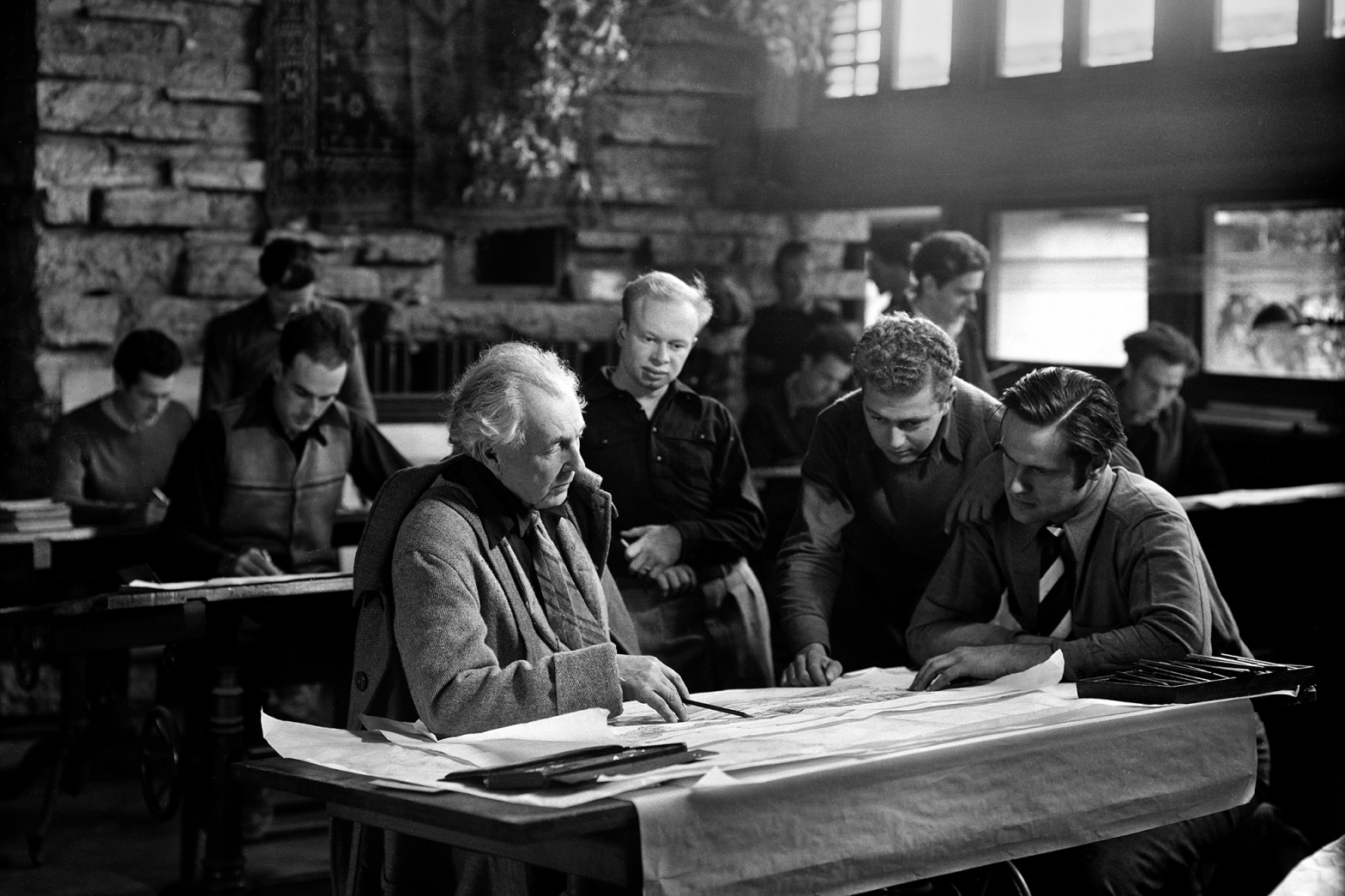
Today, I find myself reflecting on the profound influence Frank Lloyd Wright has had on my life. It all began in my first year of high school, back in September 2000, when I was introduced to Wright’s masterpiece, Falling Water, in my AutoCAD class. Tasked with researching a building and creating a series of plans using the software, I found myself drawn to this architectural marvel.
With just a few images, I was captivated. The building’s harmony with nature, its bold cantilevers, and the innovative use of materials sparked a fascination that has only grown over the years. In the years that followed I dove deep into Wright’s work, studying his construction methods, the stories of his on-site work, and his legendary live work studio practices.
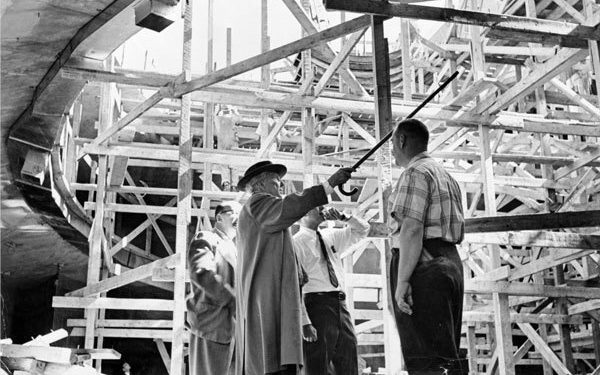
As my understanding of Wright’s work grew, so did my desire to experience his architecture firsthand. I began to travel, seeking out his buildings, each visit became a modern day pilgrimage to the physical manifestations of his architectural philosophy.
Today, I revisited a list of advice Wright once gave to young architects. His words resonate with me as much today as they did when I first encountered them:
- Forget the architecture of the world except as something good in their way and in their time.
- Do none of you go into architecture to get a living unless you love architecture as a principle at work, for its own sake – prepared to be as true to it as to your mother, your comrade, or yourself.
- Beware of the architectural school except as the exponent of engineering.
- Go into the field where you can see the machines and methods at work that make the modern buildings, or stay in construction direct and simple until you can work naturally into building-design from the nature of construction.
- Immediately begin to form the habit of thinking “Why” concerning any effects that please or displease you.
- Take nothing for granted as beautiful or ugly, but take every building to pieces, and challenge every feature. Learn to distinguish the curious from the beautiful.
- Get the habit of analysis, analysis will in time enable syntheses to become you habit of mind.
- “Think in simples” as my old master (Louis H. Sullivan) used to say, meaning to reduce the whole to its parts in simplest terms, getting back to first principles. Do this in order to proceed from generals to particulars and never confuse or confound them or yourself be confounded by them.
- Abandon as poison the American idea of the “quick turnover.” To get into practice “half-baked” is to sell out your birthright as an architect for a mess of pottage, or to die pretending to be an architect.
- Take time to prepare. Ten years’ preparation for preliminaries to architectural practice is little enough for any architect who would rise “above the belt” in true architectural appreciation or practice.
- Then go as far away as possible from home to build your fist buildings. The physician can bury his mistakes-but the architect can only advise his client to plant vines.
- Regard it as just as desirable to build a chicken-house as to build a cathedral. The size of the project means little in art, beyond the money-matter. It is the quality of character that really counts. Character may be large in the little or little in the large.
- Enter no architectural competition under any circumstances except as a novice. No competition ever gave to the world anything worth having in architecture. The jury itself is a picked average. The first thing done by the jury is to go through all the designs and throw out the best and the worst ones so, as an average, it can average upon an average. The net result of any competition is an average by the average of averages.
- Beware of the shopper for plans. The man who will not grubstake you in prospecting for ideas in his behalf will prove a faithless client.
These words, a reflection of Wright’s philosophy, serve as a guiding light in my architectural journey. They remind me of the importance of understanding the nature of construction, of thinking critically, and of maintaining integrity in my work. As I continue to explore Wright’s legacy, I am reminded of the power of building to inspire, challenge, and transform.

The quote “Do none of field where you can see the machines and methods at work that make the modern buildings, or stay in construction direct and simple until you can work naturally into building-design from the nature of construction” Wright emphasizes the importance of gaining practical experience and understanding the processes involved in constructing modern buildings.
Wright suggests that aspiring architects should immerse themselves in the field, where they can witness firsthand the machines and methods used in the construction industry. By doing so, they can develop a deep understanding of the technical aspects of building and how they influence design.
Alternatively, Wright advises staying involved in construction directly, working on projects that are straightforward and uncomplicated. This hands-on experience allows architects to develop a natural understanding of building design, rooted in the practicalities and constraints of construction.
In essence, Wright encourages architects to have a strong foundation in the realities of construction before delving into the complexities of architectural design. By gaining practical knowledge and experience, architects can create designs that are not only aesthetically pleasing but also functional and feasible in the context of construction.
 NOMAD SKETCHBOOK