A Snapshot of the Cubist Revolution with Picasso’s Still Life with Chair Caning
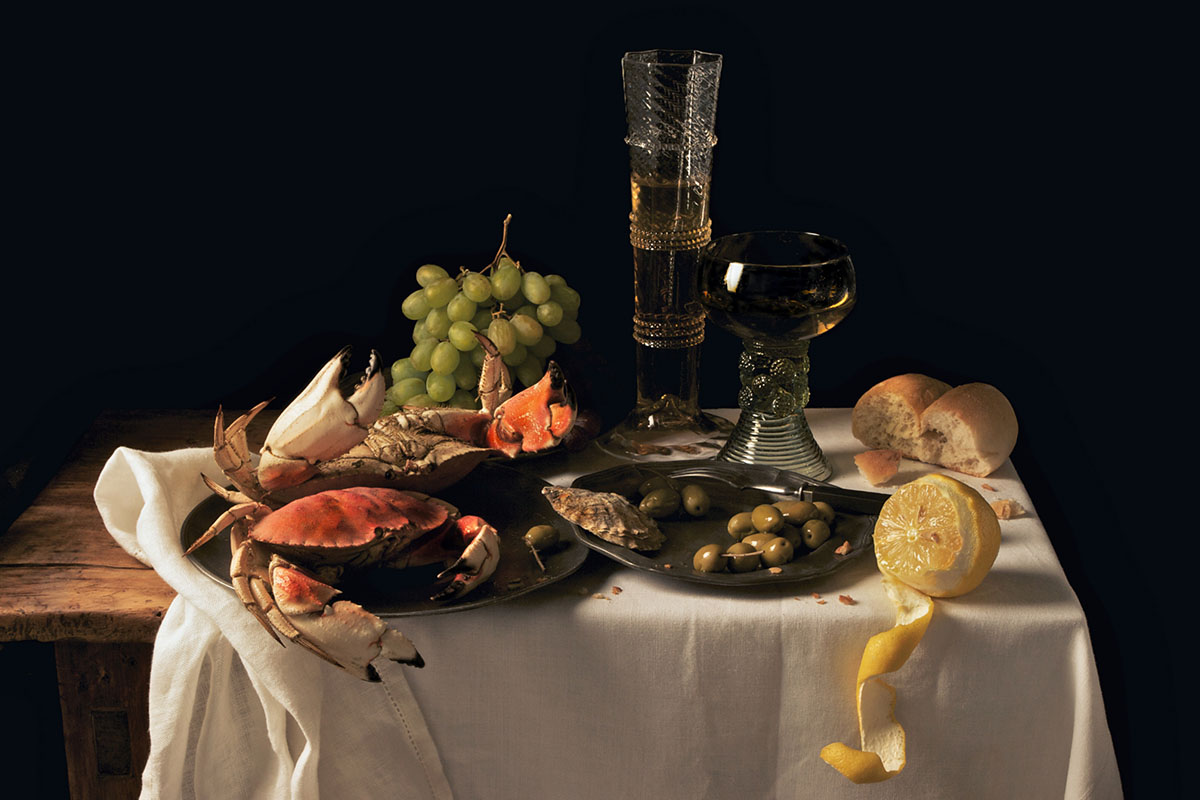
Imagine a world where artists were once shackled to the pursuit of picture-perfect perfectionism, devoting countless hours to mastering techniques that would allow them to create images from a single vantage point and moment in time. This was the reality for centuries, as artists strove to capture the world around them with painstaking accuracy.
Devoting countless hours to mastering techniques that would enable them to create images from a single vantage point and moment in time was an arduous endeavour for artists. This pursuit delved deep into the realms of math and science, particularly in the form of linear perspective. The artist’s journey became intertwined with principles of geometry, as they meticulously studied the convergence of lines and the vanishing points that brought depth and dimension to their creations.
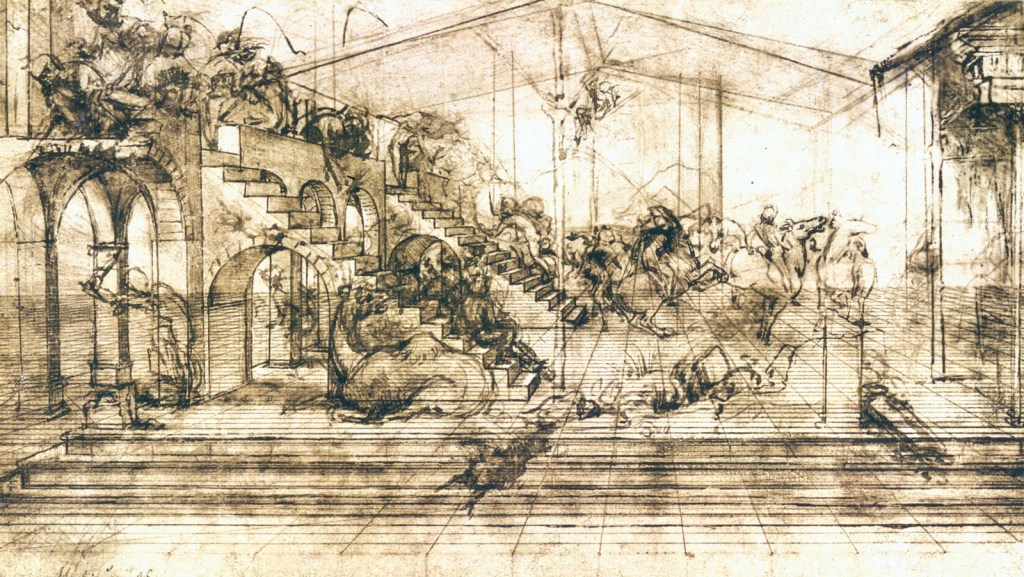
Through intricate calculations and precise measurements, they sought to recreate the world as it appeared to the naked eye, meticulously aligning every element to capture the essence of reality. Hours turned into days, days into weeks, and weeks into years, as artists painstakingly honed their skills, understanding the intricate relationship between angles, distances, and proportions. It was a laborious dance between artistry and science, where the brush became an instrument of mathematical precision, and the canvas became a stage where the principles of perspective took centre stage.
But then, something remarkable happened: the advent of photography and the camera.

Amidst the realm of painstaking artistic and mathematical endeavours to perfect linear perspective, a striking moment of fear gripped the soul of creators. The emergence of the camera cast a shadow of uncertainty, threatening to render their painstaking efforts instantly obsolete. Doubt permeated their thoughts, envisioning a future where they were reduced to mere imitators of reality.
However, amidst the initial unease and uncertainty, a profound transformation unfolded. Artists embarked on a journey of self-discovery, recognizing the camera’s potential as a tool for artistic expression. Rather than an adversary, the camera became a catalyst, inspiring the birth of Modernist movements in art and opening doors to unexplored realms of creativity.
Embracing this newfound realization, artists broke free from the shackles of imitation and ventured into the uncharted territories of the abstract and imaginative. With each brushstroke and pen stroke, they declared their independence, shattering conventions and delving into the multifaceted dimensions of perception.


Their audacious endeavours sparked a revolution that swept across the artistic landscape. Cubism, Impressionism, and Abstract Modernism flourished, infusing the art world with renewed vitality. Witnessing this metamorphosis, a new generation of artists emerged from guilds and academies, forever altering the creation and experience of art. The abstract and visionary triumphed over the confines of realism, breathing fresh life into the very essence of artistic expression.
Enter Cubism, a groundbreaking avant-garde movement pioneered by visionaries like Pablo Picasso and Georges Braque during the early 1900s. Cubism sought to dismantle the long-held belief in the illusionistic portrayal of reality. By deconstructing and reconstructing figures and elements, it challenged the notion that paintings should merely serve as windows into our familiar world. Picasso’s Still Life with Chair Caning stands as a testament to the transformative power of this movement, pushing boundaries and paving the way for a new era in artistic exploration.
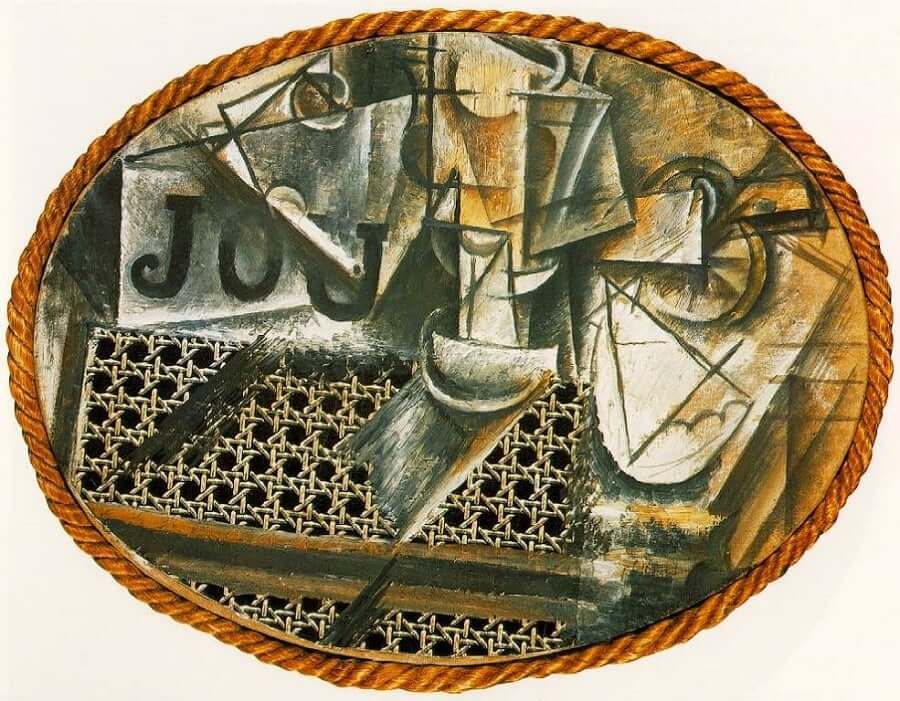
In this iconic work, Picasso presents multiple views of the elements within the artwork, such as the disfigured pipe and wine glass, illustrating their components from various angles. In doing so, he captures the illusion of time in a still life painting, a concept that seems paradoxical until we consider the fleeting and ever-changing nature of our own experiences, and time itself. This innovative approach to art reflects a more abstract yet wonderfully imaginative way of perceiving the world through the mind’s eye. Picasso’s fearless abandonment resonates so deeply, forging an undeniable connection with virtually all avant-garde art to follow for the next century.
While initially appearing as a mix of forms, a closer look reveals a captivating composition waiting to be deciphered. In the upper right corner, a knife handle catches the eye, leading to its blade slicing through a citrus fruit. The rind and segments of the fruit are discernible at the bottom right corner of the blade. Below the fruit, a scalloped edge represents a white napkin.

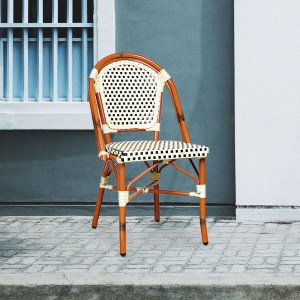



Through the fragmented perspectives of Synthetic Cubism, Picasso challenges conventional visual interpretation. By unraveling the details within Still-Life with Chair Caning, we enter a world of multiple viewpoints, inviting us to explore the rich tapestry of artistic expression.
Moreover, Picasso’s use of collage in Still Life with Chair Caning raises provocative questions about the nature of art, perspective, and the minds eye itself. By incorporating elements of time and space, he forces us to confront the distinction between sight and memory, and whether the inclusion of such elements expands the universe of and realm of perspective. In doing so, Picasso suggests that art may be more about philosophical exploration than about creating convincing replicas of the limited reality we experience in mere snapshots of time and space.
The evolution of art from the pursuit of picture-perfect perfectionism to the more abstract and imaginative realms of perception can be traced back to the advent of photography and the camera. This technological innovation liberated artists from the constraints of single-perspective realism, allowing them to explore new ways of seeing and understanding the world around them. As a result, movements like Cubism emerged, forever changing the way we perceive and appreciate art.

History as it does, did not stop there, the evolution of artistic expression did not end with the advent of photography and modern art. As technology continued to advance, so did the possibilities for capturing and representing the world. A significant leap came with the emergence of time-based photography, also known as video. This revolutionary medium opened up a whole new realm of image-making, documentation, and artistic exploration.
With the ability to capture a sequence of images in rapid succession, artists and visionaries were now able to convey not just a single frozen moment but the passage of time itself. Video photography offered a dynamic and immersive experience, allowing viewers to witness events unfold, stories unfold, and narratives unravel right before their eyes.

The creative and scientific implications of this breakthrough were profound. Artists could now delve into the essence of movement, capturing the fluidity and rhythm of gestures, the changing interplay of light and shadow, and the unfolding of complex scenes. Scientific researchers found new avenues to study motion, behaviour, and natural phenomena with unprecedented detail and accuracy.
The transformative power of time-based photography not only expanded our creative horizons but also reshaped our perception and understanding of reality. It challenged the notion that an image could only depict a single frozen moment, instead embracing the fluidity and continuous nature of existence. The combination of photography, Cubism, and time-based media propelled the art world and the realm of human perception into new frontiers, forever altering the way we perceive, appreciate, and interact with art.
 NOMAD SKETCHBOOK