From Kozy-Korpesh to Romeo and Juliet: Exploring the Power of Love Across Continents
As a traveler, I have been fortunate enough to explore many lands and cultures, each with their own unique stories and legends. Over the course of three years, I encountered several tales of tragic love, each leaving a deep impression on me. It was only after reflecting on these stories that I realized the deeper connection they shared.
During my first year of traveling, I found myself in Istanbul for six months. There, my fascination with Ottoman history led me to discover the story of Layla and Majnun. This classic love story from Arabic and Persian literature tells of two young lovers who are deeply in love but are kept apart by their families and society. Despite the obstacles, they remain devoted to each other until death. As I wandered through the streets of Istanbul, I couldn’t help but feel the powerful emotions that this story evokes, and I was struck by the enduring nature of love, which transcends time and cultural boundaries.

After my time in Istanbul, I traveled to Egypt before making my way to Athens, Greece. There, I learned about the tragic love story of Pyramus and Thisbe, a myth from ancient Greece. The story tells of two young lovers who fall in love despite being forbidden to see each other by their families. They communicate through a crack in a wall, and when they plan to run away together, Thisbe is attacked by a lion. Thinking she is dead, Pyramus takes his own life. When Thisbe finds him dead, she also takes her own life. The symbolism of the bloodstained veil spoke to me on a profound level, reminding me of the power and tragedy of young love torn apart by forces beyond their control. Their tale of forbidden love, symbolized by the bloodstained veil, spoke to me on a profound level.
A year later, I found myself in England for the first time, and as a Canadian, I was raised with strong British and Shakespearean influences. It was in England that I truly began to appreciate the power of Shakespeare’s iconic love story, Romeo and Juliet. The story is set in Verona, Italy, where two young lovers, Romeo Montague and Juliet Capulet, fall in love despite their families’ long-standing feud. The young couple’s love is forbidden, and their families’ enmity leads to a tragic end when they both take their lives.

The story of Romeo and Juliet has been adapted and reimagined countless times in popular culture. From the classic 1968 film adaptation directed by Franco Zeffirelli, to the modernized 1996 version starring Leonardo DiCaprio and Claire Danes, the story continues to capture the imagination of audiences. The play has also inspired a range of musical works, including the 1957 Broadway musical West Side Story, and Taylor Swift’s song “Love Story” which features direct references to the story of Romeo and Juliet.
The enduring popularity of Romeo and Juliet can be attributed to its universal themes of love, passion, and tragedy, which continue to resonate with audiences of all ages and backgrounds. As a traveler and a lover of stories, I couldn’t help but be drawn to the timeless allure of this iconic tale of love and loss.
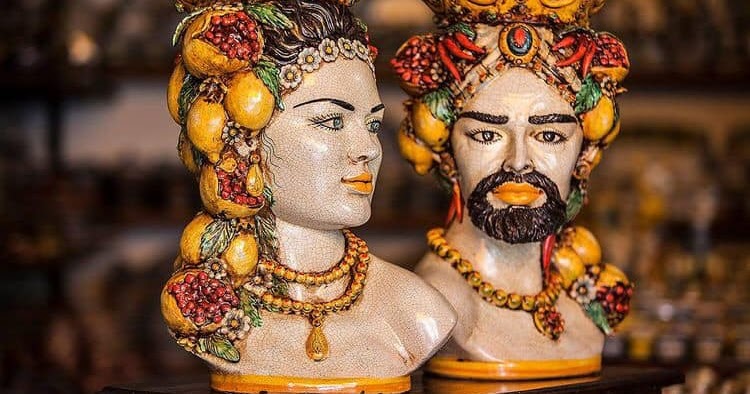
My next stop was Sicily, where I stumbled upon a market selling Sicilian moors heads. I was intrigued by the sculptures, and my curiosity led me to the tragic love story of Bianca and Cesare, two young lovers from rival families whose story inspired the creation of the moors heads. I discovered that the moors heads are a popular icon on the island, with their intricate details and vibrant colours making them stand out. They are often made into high-quality ceramic pieces, with many people displaying them in their homes or businesses. In addition to their visual appeal, the moors heads are also a symbol of the island’s cultural heritage and serve as a reminder of the passion and drama of Bianca and Cesare’s love story. As I delved deeper into their tale, I found myself drawn to the tragic ending that ultimately led to the creation of these iconic sculptures.

The final piece of the puzzle came from my friend in Toronto, who was born in Kazakhstan and shared with me the story of Kozy-Korpesh and Bayan-Sulu. Their tale of forbidden love, set against the backdrop of rival clans, was yet another example of the enduring power of love. I was fascinated by the intricate details of their love story, and how it was celebrated in Kazakhstan with a special holiday called Kozy-Korpesh and Bayan-Sulu Day. Learning about their story and the holiday only added to my growing appreciation for the power of love and the diverse ways it is celebrated around the world.
As I continued my travels, I realized that these stories of tragic love were not just about heartbreak and loss, but also about the strength and resilience of the human spirit. They spoke to the power of love to transcend social barriers and unite people from different backgrounds and cultures. They reminded me of the importance of cherishing those we love, even when faced with seemingly insurmountable obstacles.
As I reflect on my journey and the tales of love and loss that have touched my heart, I am filled with a profound appreciation for the beauty of human connection. From the fiery passion of Layla and Majnun to the tragic fate of Pyramus and Thisbe, I have been moved by the enduring power of love, and the sacrifices that those who are truly devoted will make for one another. These stories have taken me on a romantic and emotional journey that I will never forget, and have taught me to never lose hope in the face of adversity. I will always cherish the memories of my enchanted time in Istanbul, the stunning afflictions of love, and the timeless inspiration of these stories. With every new adventure and experience, I will carry with me the enduring message of these tales: that love, in all its forms, will forever be the most powerful force in the world.
- “Love stories that endure: From Pyramus and Thisbe to Romeo and Juliet” by Alison Flood, published in The Guardian on February 14, 2018
- “A Tale of Three Cities: Romeo and Juliet, Pyramus and Thisbe, Layla and Majnun” by Alexander Nemerov, published in Lapham’s Quarterly on June 24, 2019
- “The Moor’s Head in Sicilian Art: Material Culture and the Making of Identity” by Giuseppe Miccichè, published in the journal The Art Bulletin in December 2017
- “Kozy-Korpesh and Bayan-Sulu: Kazakh Epic about Love and War” by Azamat Junisbai, published on Eurasianet.org on February 14, 2019
 NOMAD SKETCHBOOK