
The Art of Locomotion: A Walking Tour of the Centre Pompidou’s Kinetic Facade
The Centre Pompidou is a cultural centre located in Paris, France, and was designed by the British architect Richard Rogers in collaboration with Italian architect Renzo Piano. The building is known for its unique design, which features a steel structure, brightly coloured exterior pipes, and an exposed skeleton that reveals the building’s inner workings.
Richard Rogers was a British architect renowned for his modernist and high-tech architectural style, which emphasized functionality, transparency, and technological innovation.
Throughout his career, Rogers focused on creating buildings that were not only visually striking but also sustainable and responsive to urban life. He was a strong advocate for urban regeneration and believed that architecture should contribute positively to the public realm. Some of his other prominent works include the Millennium Dome (now The O2) in London and one of his most iconic works is the Lloyd’s Building also in London.
The design principles Rogers established with the Centre Pompidou were influenced by the functionalist and modernist movements of the 20th century. The building was designed to be a flexible and adaptable space, capable of accommodating a wide range of cultural activities. To achieve this, the architects created an open-plan interior with few fixed partitions, allowing for a variety of layouts and uses.
Another key design principle of the Centre Pompidou is the idea of revealing the building’s inner workings. The steel structure, pipes, and other building systems are all exposed on the exterior of the building, giving it a distinctive industrial look. This design also allowed for easy maintenance and repair of the building’s systems.


The brightly coloured pipes on the exterior of the building are not just decorative, but also serve a functional purpose. The colours indicate the different building systems, with blue pipes for air conditioning, green pipes for plumbing, yellow pipes for electrical wiring, and red pipes for elevators and escalators.
Overall, the design of the Centre Pompidou represents a departure from traditional approaches to building design. By exposing the building’s inner workings and creating a flexible and adaptable space, Richard Rogers and Renzo Piano created a building that is both functional and visually striking.
The Cities Meeting Space in Main Square & Ground Floor of Paris’s Most Public Facing Cultural Centre
The main square outside the Centre Pompidou, also known as the Place Georges Pompidou, is a unique and dynamic public space located in the heart of Paris. The square was designed by the architects Renzo Piano and Richard Rogers, who also designed the Centre Pompidou itself.
The architects envisioned the square as an open and inclusive public space, where people could come together and engage in a variety of cultural, social, and educational activities. The square is a popular destination for tourists and locals alike, and it serves as a hub of activity and creativity in the city.
The square is characterized by its bold and colourful design, with large expanses of concrete and glass, and a distinctive network of metal pipes and ducts that provide ventilation for the Centre Pompidou. The design of the square reflects the architects’ commitment to transparency and accessibility, as well as their desire to create a space that would be both functional and aesthetically pleasing.
The ground floor of the Centre Pompidou is also an important public meeting space and open event zone. The architects envisioned the ground floor as a flexible and adaptable space that could be used for a variety of purposes, including exhibitions, performances, and public lectures.


The ground floor features a large, open-plan design, with flexible partitions that can be reconfigured to suit different types of events. The space is also equipped with state-of-the-art audiovisual equipment, which allows for high-quality sound and video presentations.
Overall, the design of the main square and the ground floor of the Centre Pompidou reflect the architects’ vision for an open and inclusive public space that would promote creativity, innovation, and cultural exchange. Today, the square and the ground floor continue to serve as important gathering places for people from all walks of life, and they remain a testament to the enduring legacy of the Centre Pompidou as a hub of cultural and intellectual activity.


Entering the ground floor of the Centre Pompidou is a highly visible and dynamic space that serves as the main entrance and information hub for the building. It is a large, open-plan area with a distinctive industrial feel, thanks in part to the exposed steel structure and brightly coloured pipes that run along the walls and ceilings.
The pipes on the first floor serve both a functional and aesthetic purpose. They are colour-coded to indicate the different building systems, such as air conditioning, plumbing, and electrical wiring. The blue pipes indicate the air conditioning, the green pipes represent plumbing, the yellow pipes are for electrical wiring, and the red pipes denote the elevators and escalators. This colour-coding system not only provides visual interest but also helps visitors to navigate the building.
The elevators themselves are a prominent feature of the first floor. Rather than being hidden away in a service area, the elevators are located in the center of the space, enclosed in a glass shaft that provides a clear view of the building’s internal workings. This design choice emphasizes the building’s openness and transparency, inviting visitors to explore and engage with the space.
The first floor of the Centre Pompidou also features a range of information and service desks, including ticketing, information, and cloakroom facilities. These are arranged in a semi-circular configuration, creating a sense of flow and movement through the space. The walls are decorated with large-scale murals and colourful graphics, adding to the building’s overall sense of vibrancy and energy.
Overall, the first floor of the Centre Pompidou is a striking and functional space that reflects the building’s innovative design principles. With its exposed pipes, central elevators, and bold colour scheme, it sets the tone for the rest of the building, inviting visitors to explore and engage with this unique cultural centre.
Wandering External Walkways, Escalators and Elevators of the Centre Pompidou’s Dynamic and Electric Facade.
The Centre Pompidou is unique in the way it allows visitors to move from floor to floor. The building features a series of external escalators and a moving walkway, all of which are visible from the building’s facade.
The external escalators are located on the north side of the building and provide access to the upper floors. They are housed in a distinctive glass tube that runs along the exterior of the building, creating a dramatic visual effect. As visitors ride the escalators, they can enjoy panoramic views of the surrounding cityscape, including the nearby Saint-Merri Church and the iconic Eiffel Tower.

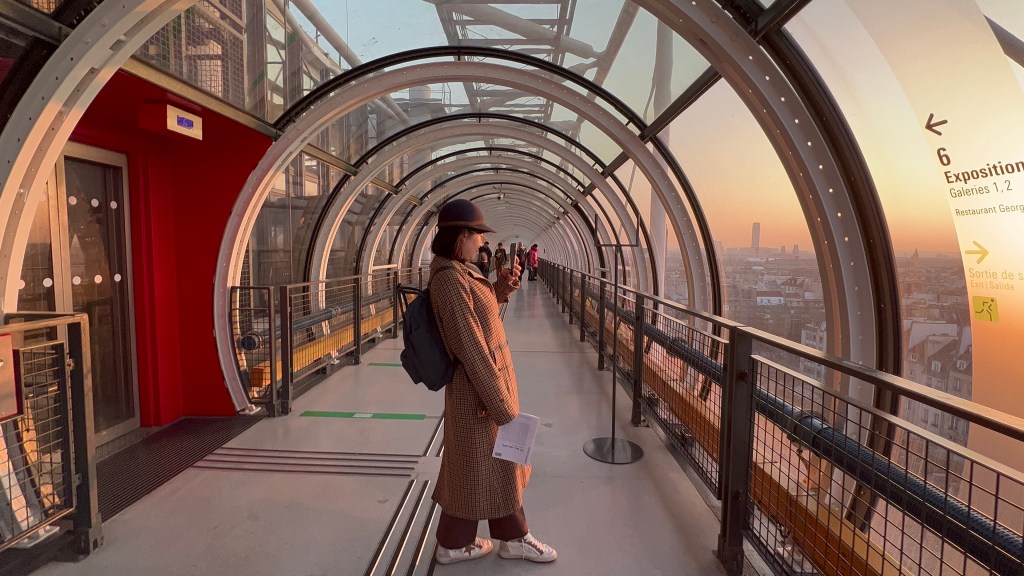
The moving walkway, or travelator, is located on the east side of the building and provides access to the first floor. It is housed in a similar glass tube, which runs parallel to the external escalator tube. This design creates a dynamic interplay between the two tubes, further emphasizing the building’s innovative approach to design.
The tubes that encase the escalators and the moving walkway are also brightly coloured, following the same colour-coding system as the pipes on the building’s exterior. The tubes are painted in shades of blue, green, yellow, and red, making them visually striking and adding to the building’s overall sense of playfulness and creativity.
Overall, the external escalators and moving walkway at the Centre Pompidou are a key feature of the building’s design. They provide a unique and memorable way of moving between floors, while also offering visitors stunning views of the city. The use of coloured tubes adds to the building’s distinctive aesthetic, making it stand out from other buildings and further cementing its status as a landmark of modern architecture.
The rooftop square, also known as the Piazza, is one of the Centre Pompidou’s most iconic features. This open-air space is located on the top floor of the building and offers panoramic views of the city.
The Piazza is designed to be a flexible space, capable of hosting a range of events, from art exhibitions and performances to public gatherings and protests. It is paved with brightly coloured tiles and features a number of sculptures and installations, including works by Alexander Calder and Joan Miró.
In addition to the Piazza, the rooftop level also houses a sculpture gallery, which features a rotating selection of works from the Centre Pompidou’s extensive collection. The gallery is housed in a series of interconnected pavilions, which are arranged around a central courtyard. Visitors can enjoy both the art and the stunning views of Paris as they move through the gallery space.
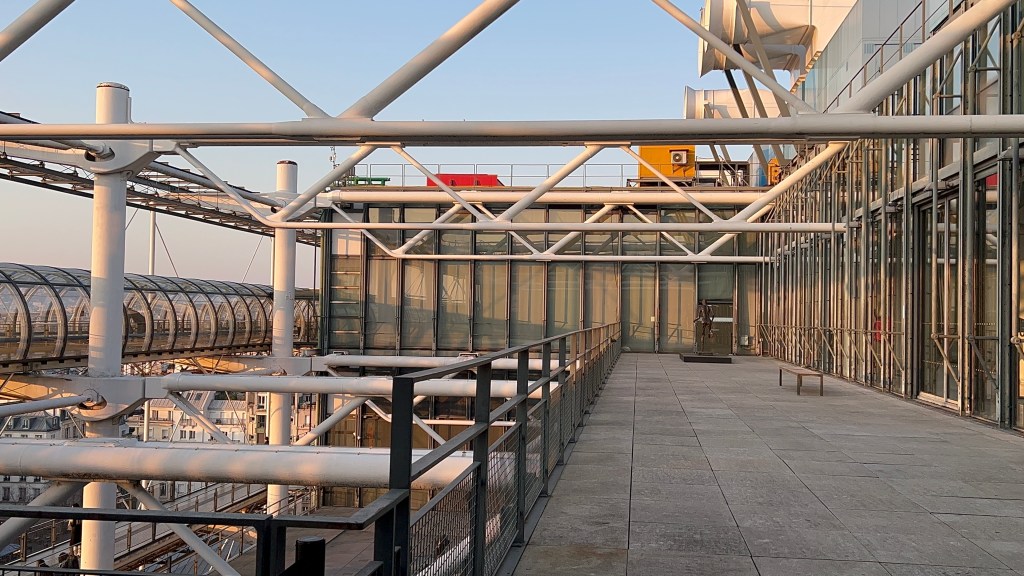

The rooftop level is also notable for its horizontal walkways, which are suspended above the Piazza and provide additional opportunities for visitors to take in the views. The walkways are partially enclosed in glass, creating a sense of openness and transparency.
Finally, the rooftop level includes a restaurant, called Georges, which is housed in a striking glass box that juts out from the building’s exterior. The restaurant offers panoramic views of the city and is a popular destination for both tourists and locals.
Overall, the rooftop level of the Centre Pompidou is a vibrant and dynamic space, offering stunning views, unique artworks, and a range of activities and events. The horizontal walkways, sculpture gallery, and restaurant all contribute to the building’s sense of innovation and creativity, making it a must-visit destination for anyone interested in modern architecture and contemporary art.
 NOMAD SKETCHBOOK