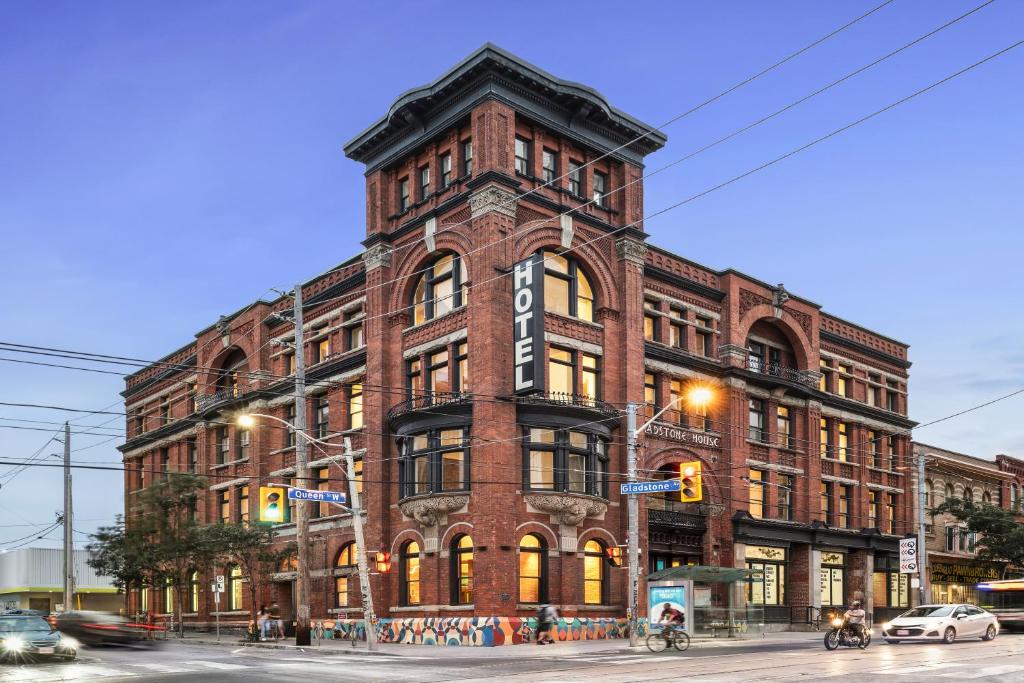
The Cultural History of Toronto’s Gladstone Hotel
The Gladstone Hotel, located in Toronto, Canada, has a rich cultural history that spans over a century.
The hotel was originally built in 1889 by architect George Gooderham, son of the prominent financier William Gooderham. It was designed in the Victorian Romanesque style and was named after William Ewart Gladstone, a British statesman and four-time Prime Minister. The hotel was intended to cater to the upper-class and quickly became a popular destination for wealthy travellers.
Throughout the early 20th century, the Gladstone Hotel continued to be a hub of social and cultural activity in Toronto. It played host to numerous events and gatherings, including balls, concerts, and exhibitions. In the 1920s and 1930s, the hotel was known for its jazz and blues music scene, attracting top performers from around the country.
In the post-war period, the Gladstone Hotel underwent a period of decline as newer and more modern hotels began to spring up in the city. However, it was eventually purchased by artist and activist Christina Zeidler in 2002, who set out to restore the hotel to its former glory. Under Zeidler’s ownership, the Gladstone Hotel became a hub for the arts community in Toronto, hosting exhibitions, concerts, and other events.
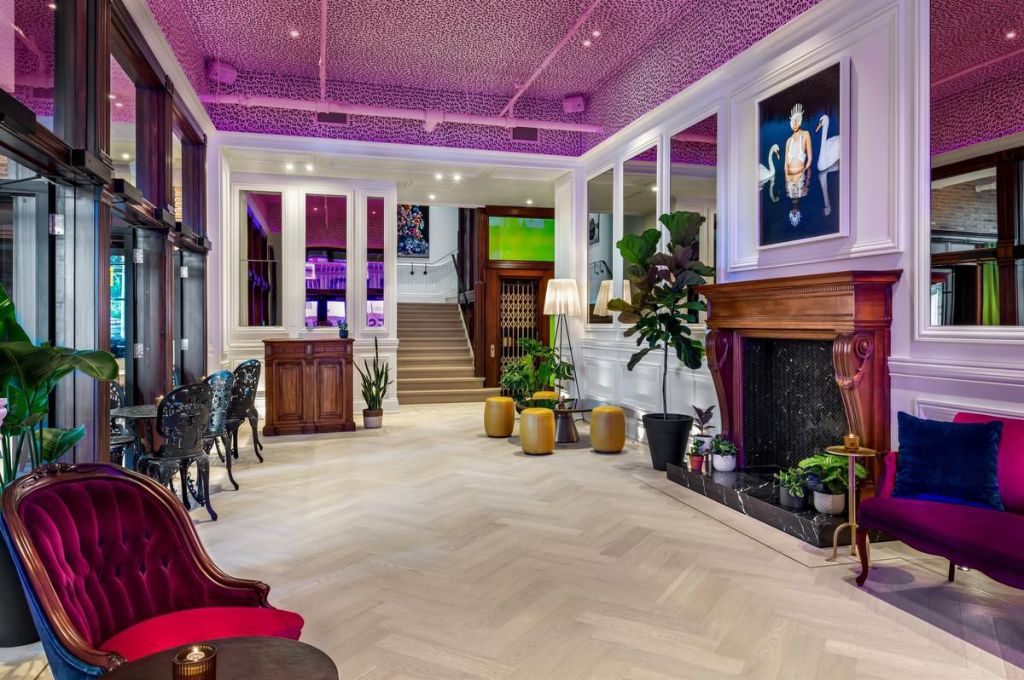
Today, the Gladstone Hotel continues to be a vital part of Toronto’s cultural scene. It is known for its commitment to sustainability and supporting local artists, with many of the hotel’s rooms decorated by local artists. The hotel also hosts a variety of events and exhibitions throughout the year, making it a popular destination for both tourists and locals alike.
The “Come Up to My Room” exhibitions at the Gladstone are a biennial event that showcase the work of local and international artists. The exhibitions, which take place in the hotel’s guest rooms and public spaces, are known for their unique and immersive installations that push the boundaries of traditional art exhibitions.
The first “Come Up to My Room” exhibition took place in 2004, and since then it has become a highly anticipated event in Toronto’s art scene. Each exhibition features a diverse range of artistic mediums, including sculpture, installation, performance, and video art. The exhibitions are curated by a panel of local artists and curators, who work closely with the participating artists to create thought-provoking and visually stunning installations.

One of the key aspects of the “Come Up to My Room” exhibitions is their immersive nature. Rather than simply viewing art from a distance, visitors are invited to interact with the installations and become part of the artwork themselves. This creates a unique and interactive experience for visitors, allowing them to fully engage with the art and the ideas it presents.
In addition to the main exhibitions, the “Come Up to My Room” events also feature a variety of related programming, including artist talks, workshops, and performances. These events provide a platform for artists to engage with the public and share their creative process and ideas.
Overall, the “Come Up to My Room” exhibitions at the Gladstone Hotel are a vital part of Toronto’s art scene, offering a unique and immersive experience for both artists and visitors. They continue to draw crowds and critical acclaim, cementing their place as a must-see event for anyone interested in contemporary art.
Nuit Blanche is an annual all-night contemporary art event that takes place in Toronto, Canada. The event, which occurs on the first Saturday in October, features a variety of exhibitions, performances, and installations at venues throughout the city, including the Gladstone Hotel.
The Gladstone Hotel has played host to a number of Nuit Blanche events over the years, with both indoor and outdoor installations and performances. Some examples of past Nuit Blanche events at the Gladstone Hotel include:
- “The Gladstone Hotel’s Nuit Blanche Sleepover” (2013): This event featured a series of immersive installations and performances in the hotel’s guest rooms and public spaces, as well as a sleepover option for visitors.
- “The Gladstone Hotel’s Nuit Blanche Art Party” (2014): This event featured live music, interactive installations, and a variety of art-themed activities and performances, including a “paint fight” in the hotel’s courtyard.
- “The Gladstone Hotel’s Nuit Blanche Art Hotel” (2015): This event featured a series of installations and performances throughout the hotel, including a projection mapping installation on the hotel’s facade.
- “The Gladstone Hotel’s Nuit Blanche Art Hotel: Reimagined” (2016): This event featured a series of installations and performances that reinterpreted and reimagined the hotel’s spaces and architecture.
Overall, the Gladstone Hotel has played a significant role in Toronto’s Nuit Blanche events, offering a unique and immersive experience for visitors and participating artists. The hotel’s diverse array of spaces and its commitment to supporting local artists make it an ideal venue for Nuit Blanche events.
As Toronto’s oldest continually operating hotel, the Gladstone Hotel has seen much in its 125 years. Its long and rich cultural history that has made it an important part of Toronto’s arts and entertainment scene. From its origins as a destination for wealthy travelers to its current role as a hub for the arts community, the Gladstone Hotel has always been a place where culture and creativity can thrive.
 NOMAD SKETCHBOOK