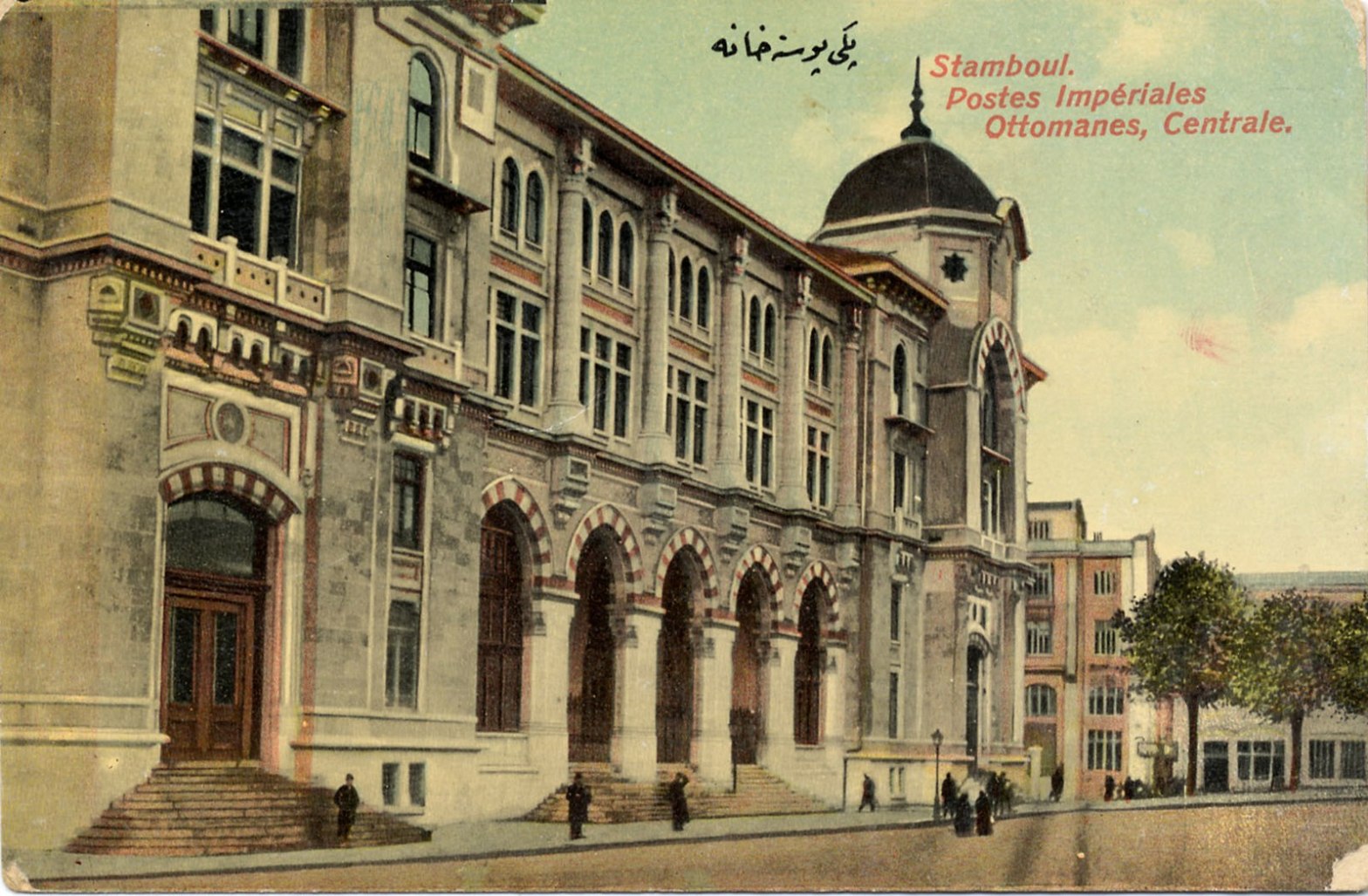
In the historical peninsula, a city heritage shines right in the middle of the famous route from Sultanhamam Street to Mahmutpasa at one end and from Ankara Street to Babiali at the other end; Sirkeci Grand Post Office building. This work, which is located at the most vivid and crowded part of the city, has become one of the motifs that make the city of Istanbul in over a hundred years. The Grand Post Office, which named the street it is located on, successfully reflects the spirits of the last Ottoman and early Republic periods with its story, architecture and the the PTT museum within itself.
After the developments in the telephraph and communication system in the 1800s, the need for a new and central post office emerged. Sultan Abdulhamid II, who built many buildings meeting the needs of the age throughout the empire, wanted to reinforce the communication services too. Thus, the decision to unite the Psthâne-imire (post Office) and Telgrafhâne-i mire (Telegraph Office), which provide service as separate units, was made and a post office building that would gather these services under the same roof.
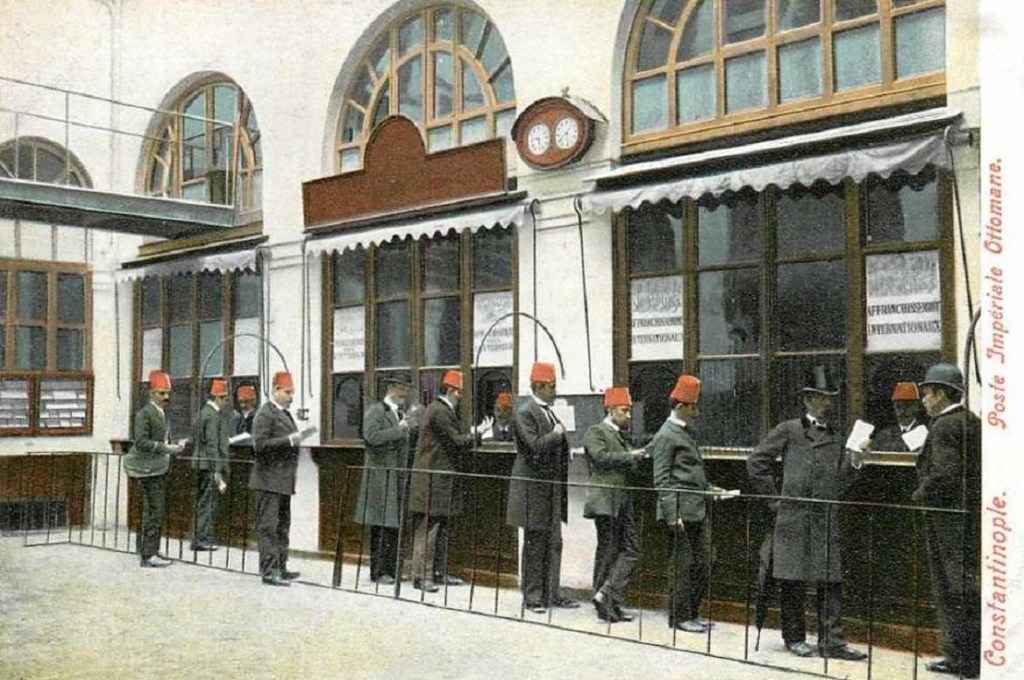
The Grand Post Office, of which was designed and construction started in 1905 under the management of Architect Veat Tok, is also regarded as a matter of dignity against the foreign post renters in Istanbul. The building meets this mission more than enough with the functioning and innovative architecture. Vedat Tok, who was a well educated and talented architect, completed the construction of the building in the short time of merely four years despite many financial and bureaucratic difficulties emerging within the Ottoman Empire.
The building was put into service as the “Post and Telegraphic Office” in 1909, then was later named as the “New Post Office” in 1930, and in the following years, was renamed the “Grand Post Office”.

Vedat Tek | Architectural Genius
The name that comes to mind first when talking about the Grand Post Office is undoubtedly Architect Vedat Tek. Tek had completed other notable buildings is Istanbul such as Kastamonu Government House, Izmit Clock Tower, Defter-i Hakanî (Land Registry and Cadastre Building), Thessaloniki Bank in Eminönü, the Aviation Martyrs’ Monument in Fatih, and the first Peoples Party Gathering-Place (the monumental building used as the Second Parliament Building) in Ankara. These works significantly contributed to the new Turkish Republic identity at an important era of transition.
Vedat Tek, who had knowledge of Western architecture with the education he received abroad, was an extraordinary architect who managed to integrate Ottoman architectural elements into modern buildings. This transitional period in Turkish architectural style is best manifested in the design and construction of the Grand Post Office, a masterful synthesis with its open space plan and technological equipment within, along with authentic elements of the Ottoman identity throughout.

An Architectural Masterpiece: Harmony of Modern and Traditional
When you stand in the marble covered entrance landing of the building, you see five huge arches and towers rise above, and you witness the rise of the building in all its monumentality. Alternating stone arches adorned with turquoise and blue glazed tile panels, marble columns extending along the second and third floors, wooden joinery windows with three sections, stalactites on column headings, all contribute to the traditional Ottoman Style. The writing just above the arch in the middle that welcomes you says “Post and Telegraph Office” in the old alphabet. This old writing invites us to the historical show inside rather than the post office building.
The great hall inspired by Western architecture where the entrance opens is a big innovation for architecture with its geometrical form and coloured high glass ceiling. Rumi and palmettes, classical Ottoman Period ornamental motifs were elegantly crafted on the doors opening to the hall. With these aspects, the architectural approach of Vedat Tok becomes one of the best examples of reaching innovation with traditional elements. At a time, when tradition and modernity are in competition with each other, you can see the harmonious unity of this contrasting eras, resulting in a truly transitional structure. The building is a sample of the Ottoman’s efforts to modernize, while still embracing the traditional elements from the last century and beyond; thus, it is a perfect period piece, as well as showpiece for Vedat Tek.
Telephone & Radio
The Grand Office is the place where the first telephone central was established in 1909. Also, the first radio broadcast in Istanbul was made in this building in 1927. The first broadcast that were made in the basement of the post office were listened to by the public through speakers placed on the building door, since no one else at that time had a radio to receive the transmission. The broadcasts lasted until 1936 when the building temporarily was converted to a courthouse.
Witnessing the History of Turkey
The Grand Post Office is not only an architectural masterpiece, but is also a cultural and historical landmark that played a pivotal role in the founding of the Republic of Turkey. While the Post Office is still actively used as a PTT post office, a part of the building has been transformed into a museum. Important objects and documents that capture the history of communication in Turkey are exhibited in recreations from the revolution. The room of Hamdi Bey, the Grand Posts manager during the invasion of Istanbul by Occupying Forces, and whom sent a telegram to Ankara alerting Gazi Mustafa Kemal of the invasion. It has been noted that the telegraph reporting the invasion of Istanbul to Mustafa Kemal Pasha was one of the historical moments that changes the course of the War of Independence. The table and chair remind intact in the room, along with a portrait of Hamdi Bey who greets the free citizens of a independent, secular Turkey.
The Grand Post Office is undoubtedly one of the most important buildings in Istanbul with its architectural significance, interior equipment and technologies, as of course witnessing the most important years of Turkeys foundation. If you ever go to Sirkeci, sincerely greet this monument. If you have time, visit the museum, and listen to the good news about Ottoman victors in Crimea, the telegraph clicks between Istanbul and Ankara from Hamdi Bey, and the first radio broadcast from the Grand Post Office. The oldest public building in the city, as well as Nation, awaits you in all its glory.
 NOMAD SKETCHBOOK